
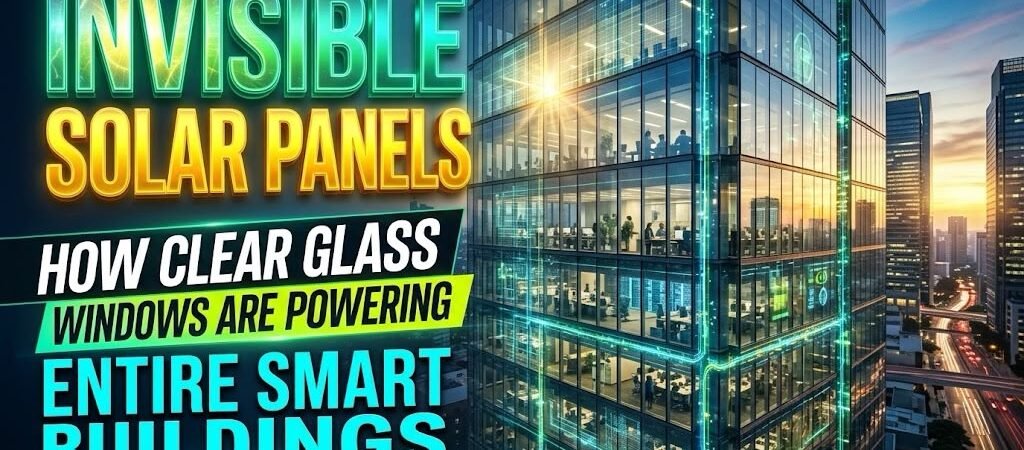
Introduction: The Architectural Paradox of Modern Urban Skylines
For over a century, modern architecture has been defined by a striking paradox. On one hand, urban skylines across the globe are dominated by awe-inspiring skyscrapers wrapped entirely in sleek, floor-to-ceiling glass facades. These transparent curtain walls flood interior workspaces with natural sunlight, reduce artificial lighting requirements, and offer panoramic views of metropolitan landscapes. Traditional window glass absorbs immense amounts of solar radiation, forcing commercial buildings to rely on heavy, energy-intensive air conditioning systems to combat indoor heat buildup.
Furthermore, while traditional opaque silicon solar panels have become remarkably efficient at generating clean renewable energy from rooftops, they suffer from a fatal architectural limitation: they are completely opaque. You cannot mount a traditional solar panel across a skyscraper’s transparent glass windows without blocking the view and plunging interior offices into pitch darkness. For decades, urban planners faced an impossible compromise: maximize natural light or maximize renewable energy generation.
Today’s advanced technology is bringing that compromise to an end. We live in the era of invisible solar devices. Transparent solar concentrators and photovoltaic windows provide us with the unlimited possibilities of using solar energy due to their good design. How does the technology work? In this detailed article, we are going to explore how transparent solar glass functions, how transparent solar windows can be integrated into the smart buildings of the future and whether the technology is going to revolutionize urban architecture. Moreover, for useful materials on clean technology developments and building-integrated photovoltaics (BIPV), please refer to reports at Architectural Record Energy Desk and publications of MIT Energy Initiative Journal and My Tech Hub Innovation Portal.
1. Defining Transparent Photovoltaic s: Harvesting the Invisible Spectrum
To understand how a transparent glass window can double as a solar power generator, you must first examine the foundational physics of sunlight and traditional solar technology.
- The Limitation of Traditional Silicon: Traditional rooftop solar panels are black or dark blue because they absorb visible light spectrum wavelengths to convert photons into electrical current. If window glass absorbed visible light, it would tint dark or become opaque.
- The Magic of the Invisible Spectrum: Transparent solar panels operate on a brilliant principle: they are engineered to be entirely transparent to the human eye by letting visible light pass through unobstructed, while selectively capturing ultraviolet (UV) and near-infrared (NIR) wavelengths—invisible light frequencies that humans cannot see anyway.
2. Transparent Luminescent Solar Concentrators (TLSC): How Clear Glass Generates Electricity
The core technology powering modern invisible solar panels is known as a Transparent Luminescent Solar Concentrator (TLSC). Unlike conventional photovoltaic panels that wire thousands of visible silicon cells together across a bulky grid, TLSC windows utilize organic salts and specialized nanotech coatings.
The Mechanism of Invisible Energy Harvesting
- Wavelength Shifting: When sunlight strikes a TLSC window, the invisible ultraviolet and infrared photons are absorbed by organic luminescent salts embedded within the glass or applied as a microscopic coating.
- Guiding Light to the Edges: Instead of converting the light directly at the point of impact, these molecules re-emit the absorbed energy at specific infrared wavelengths. Because of total internal reflection, that trapped infrared light is guided invisibly through the glass pane toward the ultra-thin, nearly invisible solar strips lining the aluminum window frames. Those frame-mounted photovoltaic cells convert the concentrated light into electrical current. For further software and energy monitoring evaluations, read reports via IEEE Smart Grid Portal or tutorials on My Tech Hub Software Directory.
3. Transforming Skyscrapers Into Vertical Power Plants
When you analyze a typical modern skyscraper, rooftop surface area represents a tiny fraction of the building’s total exterior envelope. A 50-story commercial tower has thousands of square meters of vertical glass facade but only a small flat roof shared with HVAC cooling towers and telecommunication antennas.
- The Power of Vertical Real Estate: By turning every exterior window into an invisible solar generator, commercial buildings unlock massive, previously wasted surface area. The vertical glass facade captures solar energy from sunrise to sunset, tracking low-angle morning and evening sun far more effectively than flat rooftop panels.
- Net-Zero Energy Buildings: Integrating transparent photovoltaics allows skyscrapers to generate a substantial percentage of their total daily operational electricity on-site, moving dense metropolitan hubs closer to true net-zero energy independence.
4. Smart Building Integration: Powering HVAC, Lighting, and IoT Sensors
Generating electricity from windows is only half the equation; how that energy is managed and utilized defines a truly “smart building.”
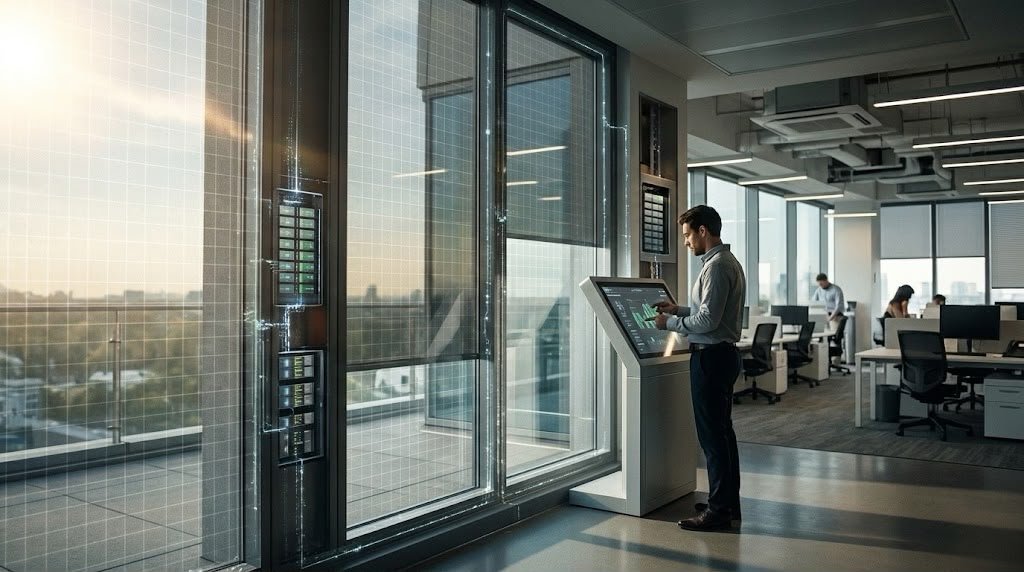
- Microgrid Energy Storage: Electricity harvested from invisible window frames is routed into localized battery banks and building microgrids, providing clean energy to power interior LED lighting, automated motorized blinds, and smart climate control dampers.
- Dynamic Tinting Glass Synchronization: Advanced smart buildings pair invisible solar glass with electrochromic dynamic tinting. When sunlight intensity spikes during peak afternoon hours, the windows tint automatically to block solar heat gain, while the harvested solar electricity powers the tinting transition autonomously without drawing grid power.
5. Manufacturing Scalability, Durability, and Architectural Aesthetics
For transparent solar technology to transition from elite experimental science projects into widespread commercial adoption, it must meet stringent architectural standards.
- Aesthetic Neutrality: Architects refuse to install windows that exhibit strange green, brown, or distorted color tints. Modern TLSC glass is engineered for absolute optical clarity, ensuring zero visual distortion or color alteration for occupants inside the building.
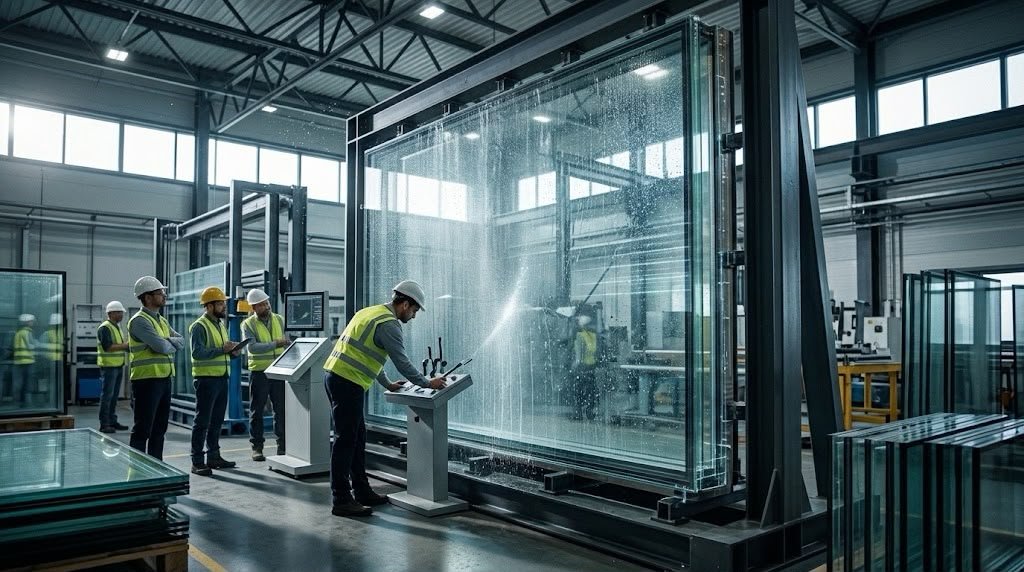
- Structural and Weatherproof Resilience: Exterior architectural glass must withstand punishing environmental forces—including hurricane-force winds, torrential rain, heavy snow loads, and intense thermal expansion. Transparent solar coatings are hermetically sealed between laminated double- or triple-pane safety glass units, ensuring a 25-to-30-year operational lifespan matching traditional commercial glazing.
6. Energy Efficiency Payback and Return on Investment (ROI)
Like any cutting-edge green building technology, transparent solar panels require navigating higher upfront manufacturing and installation costs compared to standard architectural glass.
- Calculating Long-Term Savings: While initial capital expenditure is higher, the return on investment is realized through drastically reduced monthly commercial electricity bills and lower peak cooling loads.
- Regulatory Incentives and Carbon Credits: Governments across North America, Europe, and Asia offer lucrative tax incentives, green building certifications (such as LEED and BREEAM), and carbon offset credits for commercial real estate developers who incorporate building-integrated photovoltaics (BIPV). For further financial and real estate market analyses, read reports via Urban Land Institute Sustainability Desk or market guides on My Tech Hub Business Portal.
7. Comprehensive Transparent Solar vs. Traditional Glass Matrix
To help you evaluate how invisible solar panels compare against traditional architectural glass and opaque rooftop solar, review the comparison matrix below:
| Performance Metric | Traditional Clear Window Glass | Opaque Rooftop Silicon Solar Panels | Invisible Solar Glass Panels (TLSC) | Winner |
| Visible Light Transmission | High (~85% to 90% clear view) | Zero (Completely opaque black/blue) | High (~70% to 80% clear view) | Invisible Solar Glass |
| Electricity Generation | Zero (Purely passive barrier) | High efficiency (~18% to 22%) | Moderate efficiency (~5% to 10%) | Rooftop Panels |
| Architectural Surface Area | Massive vertical skyscraper surface area | Limited strictly to flat rooftop space | Massive vertical skyscraper surface area | Invisible Solar Glass |
| Thermal Heat Blocking | Varies by low-E coating | Blocks roof heat absorption | Absorbs infrared heat to generate power | Invisible Solar Glass |
Smart Building Energy Pricing & Tier Guide
To help you map out your smart architectural glazing budget, review the industry tier guide below:
| Glazing Category | Estimated Cost Premium | Primary Target Market | Core Capabilities |
| Standard Low-E Architectural Glass | Baseline cost | Residential homes, standard commercial builds | Thermal insulation, UV filtering, zero power generation |
| Electrochromic Dynamic Smart Glass | Moderate premium ($50–$100 / sq. ft.) | Modern corporate offices, luxury high-rises | Automated tinting, glare control, external sensor sync |
| Invisible Solar PV Glass (TLSC) | High premium (Declining with scale) | Net-zero skyscrapers, flagship sustainable HQs | Transparent electricity generation + thermal heat conversion |
8. Advanced Nanotechnology Coatings, Quantum Dot Photovoltaic s, and Wavelength-Selective Absorption Physics
When evaluating the technological evolution from traditional opaque silicon solar panels to advanced transparent photovoltaic windows, the foundational breakthrough lies in sophisticated nanotech-enabled materials science. Traditional rooftop solar panels are manufactured from crystalline silicon, a semiconductor material that absorbs visible light wavelengths to generate electrical current. Because visible light accounts for the primary spectrum perceived by human eyes, capturing it requires blocking or absorbing it, which results in the opaque black or dark blue appearance of conventional solar panels. Applying such materials to architectural glass would immediately plunge interior office spaces into darkness, defeating the primary purpose of windows.
To resolve this architectural paradox, materials scientists and nanotechnologists developed wavelength-selective absorption physics, leveraging advanced quantum dots and organic luminescent salts. Quantum dots are microscopic semiconductor nanocrystals whose electronic characteristics are closely bound to their particle size. By tuning quantum dots at the nanometer scale, engineers can program them to remain entirely transparent to visible light wavelengths while exhibiting extreme sensitivity to invisible solar radiation—specifically ultraviolet (UV) and near-infrared (NIR) light. When sunlight strikes a window coated with these engineered quantum dot layers, visible photons pass straight through the glass undisturbed, ensuring pristine optical clarity for occupants inside the building. Simultaneously, the UV and NIR photons are captured by the quantum dots and converted or re-emitted as different wavelengths of light.
This selective harvesting mechanism represents a massive triumph in optical physics. The re-emitted energy is guided through total internal reflection toward the invisible peripheral frames of the window, where ultra-thin photovoltaic strips harvest the concentrated photons and convert them into clean electrical power. Furthermore, advances in molecular engineering ensure these nanotech coatings withstand prolonged exposure to intense solar radiation without degrading, oxidizing, or losing their optical neutrality over decades of commercial operation. For deeper academic insights into quantum dot physics and wavelength-selective photovoltaic coatings, read research papers via Nature Nanotechnology Journal alongside advanced materials evaluations at My Tech Hub Innovation Portal.
9. Transparent Luminescent Solar Concentrators (TLSC) and Total Internal Reflection Mechanics
The core engineering architecture powering modern invisible solar panels relies on a sophisticated optical technology known as Transparent Luminescent Solar Concentrators (TLSC). Unlike conventional solar panels that wire thousands of visible silicon cells together across a bulky grid, TLSC window units operate on an entirely different optical principle. The primary glass pane acts as an optical waveguide, capturing and channeling light rather than merely serving as a passive physical barrier between indoor and outdoor environments.
When sunlight floods an architectural facade equipped with TLSC glazing, the invisible ultraviolet and infrared wavelengths strike organic luminescent salts and specialized fluorophores embedded directly within the glass matrix or applied as microscopic laminated films. Upon absorbing these invisible photons, the luminescent molecules enter an excited quantum state and re-emit the energy at longer, specific infrared wavelengths. Because of the refractive index differential between the glass pane and the surrounding air, this re-emitted infrared light becomes trapped inside the glass via total internal reflection (TIR). Instead of escaping outward or inward, the light bounces continuously along the interior of the glass sheet, migrating inexorably toward the perimeter edges.
Lining the inner frame of the window are ultra-thin, highly efficient photovoltaic solar strips that intercept this concentrated stream of edge-guided infrared light and convert it into direct electrical current. This clever optical funneling allows the actual solar cells to occupy less than one percent of the total window surface area, preserving absolute visual clarity across the main viewing pane while maximizing energy capture efficiency. For further technical analyses on waveguide optics and luminescent solar concentrator physics, explore documentation via Optica Publishing Group Energy Optics Portal or hardware reviews on My Tech Hub Hardware News.
10. Unlocking Vertical Real Estate: Transforming Skyscraper Facades Into Power Plants
For decades, urban planners, architects, and renewable energy engineers confronted a severe spatial limitation: urban density restricts clean energy generation because flat rooftop surface area represents only a tiny fraction of a commercial building’s total exterior envelope. A 50-story corporate skyscraper features thousands of square meters of vertical glass facade but shares a cramped flat roof cluttered with HVAC cooling towers, elevator penthouses, and telecommunication hardware. Traditional rooftop solar panels could never generate enough electricity to satisfy the massive energy demands of a towering commercial enterprise.
The commercialization of invisible solar panels shatters this spatial constraint by unlocking vast, previously wasted vertical real estate. By transforming every exterior window into an active renewable energy generator, commercial buildings acquire enormous new surface area dedicated to power harvesting. Vertical glass facades possess a unique operational advantage over flat rooftops: they capture sunlight dynamically from sunrise to sunset, intercepting low-angle morning and evening solar radiation far more effectively than flat rooftop arrays. As high-density metropolitan areas continue to expand upward, converting towering glass skyscrapers into vertical power plants represents the single most viable pathway toward achieving true urban energy independence and net-zero carbon emissions.
11. Smart Building Microgrids, Energy Storage, and Dynamic Load Balancing
Generating clean electricity from transparent window glass is a monumental achievement, but managing that harvested energy efficiently within a commercial complex requires sophisticated smart building infrastructure. Unlike fossil-fuel generators that provide steady, controllable power, solar generation fluctuates continuously based on passing clouds, seasonal changes, and diurnal cycles. Therefore, electricity harvested by invisible window frames must be integrated seamlessly into intelligent building microgrids and advanced energy storage systems.
Modern smart buildings connect TLSC window frames directly to localized lithium-iron-phosphate (LiFePO4) battery banks and bidirectional inverters. When the building’s facade generates surplus electricity during peak afternoon sunshine, the excess energy is routed instantly into storage batteries or fed into internal building sub-circuits to power continuous background loads such as LED emergency lighting, smart thermostats, motorized window blinds, and IoT security sensors. Furthermore, integrated building management systems (BMS) utilize artificial intelligence to analyze weather forecasts and predict energy generation curves, balancing electrical loads dynamically to ensure uninterrupted operational efficiency across the entire commercial facility.
12. Electrochromic Dynamic Tinting Integration and Thermal Heat Rejection
One of the greatest operational expenses for modern commercial skyscrapers is climate control. Large glass facades act as massive thermal traps, absorbing intense solar radiation and driving up indoor temperatures. To combat this heat buildup, buildings rely on energy-intensive air conditioning systems that run continuously during warm summer months, consuming staggering amounts of electrical grid power. Invisible solar panels address this thermal challenge not only by generating electricity but also by actively rejecting solar heat gain.
By integrating transparent photovoltaic glazing with electrochromic dynamic tinting technology, smart buildings achieve unprecedented thermal autonomy. Electrochromic glass features microscopic metal-oxide layers that transition from clear to tinted when a low-voltage electrical current is applied. When invisible solar windows capture intense afternoon sunlight, a portion of the harvested electricity is routed immediately to power the electrochromic tinting transition, darkening the windows automatically to block solar heat. This simultaneous reduction in thermal load and localized power generation creates a powerful synergistic loop that drastically lowers HVAC energy consumption without requiring external grid electricity.
13. Structural Lamination, Weatherproof Durability, and Architectural Standards
Architectural glass used in commercial skyscrapers must adhere to some of the most rigorous safety and structural durability standards in the engineering world. Exterior glazing is subjected to severe environmental forces—including hurricane-force wind loads, torrential rainstorms, heavy snow accumulations, seismic shifts, and extreme thermal expansion cycles caused by radical day-to-night temperature fluctuations. For invisible solar panels to gain widespread commercial adoption, they must prove they can withstand these punishing conditions while maintaining structural integrity for a guaranteed operational lifespan of 25 to 30 years.
To achieve this required resilience, transparent solar components are hermetically sealed within heavy-duty laminated double- or triple-pane insulated glass units (IGUs). The sensitive quantum dot coatings and organic light-concentrating layers are sandwiched securely between thick sheets of chemically strengthened safety glass and bonded with polyvinyl butyral (PVB) interlayers that block moisture ingress and protect the internal electronics from ultraviolet degradation. Furthermore, these advanced window units pass stringent impact testing, fire resistance certifications, and wind-shear evaluations, ensuring that sustainability never compromises structural safety or occupant protection in high-rise construction.
14. Economic Payback, Tax Incentives, and Return on Investment (ROI)
Like any cutting-edge green building technology, invisible solar panels require navigating higher upfront manufacturing and installation costs compared to traditional, passive architectural glass. For real estate developers and commercial property owners operating on tight construction budgets, justifying this initial capital expenditure requires a clear, quantifiable financial return on investment (ROI). Fortunately, the economic equation for building-integrated photovoltaics (BIPV) is becoming increasingly compelling.
While the initial cost premium for transparent solar glazing is higher than standard low-E glass, the financial payback is realized through multiple compounding revenue streams and savings. First, commercial property owners experience drastically reduced monthly electricity bills as the building generates a substantial percentage of its own daily operational power on-site. Second, lower peak cooling loads translate directly into reduced HVAC wear-and-tear and smaller mechanical equipment sizing during construction. Finally, developers benefit from lucrative government tax incentives, renewable energy grants, and premium green building certifications (such as LEED and BREEAM) that elevate commercial property valuations and attract high-paying corporate tenants.
15. The Future of Zero-Energy Urban Architecture and Smart Cities
Looking toward the horizon of urban planning and civil engineering, invisible solar panels represent a foundational cornerstone in the global transition toward zero-energy smart cities. As municipal governments enact increasingly stringent carbon neutrality mandates and building energy codes, traditional construction methodologies are rapidly becoming obsolete. The ability to transform transparent exterior surfaces into active renewable energy generators redefines what a building is: no longer a passive energy consumer, but an active, self-sustaining ecosystem.
As manufacturing processes scale globally, quantum dot efficiencies improve, and production costs decline, transparent photovoltaic glazing is poised to transition from elite flagship architectural marvels into the standard baseline for all commercial and residential construction. By harmonizing aesthetic transparency with clean energy generation, invisible solar panels ensure that future urban skylines can grow ever taller and brighter without accelerating planetary climate degradation.
16. Intellectual Property, Patent Landscapes, and Global Corporate Rivalries in Transparent Photovoltaic Nanotechnology
The rapid commercial maturation of invisible solar panels, transparent luminescent solar concentrators (TLSC), and quantum dot photovoltaic window glazing has triggered an intense, multi-billion-dollar corporate race for global intellectual property dominance. Major architectural glass conglomerates, chemical manufacturing giants, and specialized deep-tech clean energy startups are fiercely patenting every conceivable breakthrough in molecular light absorption, nanometer-scale quantum dot tuning, total internal reflection waveguide optimization, and frame-mounted solar cell integration. Securing foundational patents in this nascent industry dictates which corporations will control global supply chains, manufacturing licensing frameworks, and commercial distribution channels across the upcoming net-zero real estate construction era.
This high-stakes corporate rivalry has transformed university research laboratories and advanced materials spin-offs into prime acquisition targets. Venture capital firms, sovereign wealth funds, and real estate investment trusts are pouring massive capital injections into nanotech engineering teams capable of solving the notoriously difficult manufacturing yield hurdles associated with large-scale quantum dot lamination and durable waveguide sealing. Furthermore, navigating global patent landscapes requires aggressive international legal strategies to prevent intellectual property infringement across competing jurisdictions. As patent portfolios expand rapidly, cross-licensing agreements between legacy window manufacturers and cutting-edge photovoltaic pioneers are beginning to emerge, laying the legal foundation for standardized commercial production. For comprehensive analyses on clean tech patent filings and intellectual property trends in building-integrated photovoltaics, explore reports via World Intellectual Property Organization (WIPO) Analytics Portal alongside market strategy guides at My Tech Hub Business Portal.
17. The Ethical, Urban, and Societal Implications of Net-Zero Skyscraper Integration
The widespread architectural transition toward vertical power generation and self-sustaining smart buildings introduces profound urban, ethical, and societal considerations. For decades, commercial real estate developers faced minimal regulatory penalties for constructing energy-inefficient glass towers that consumed vast amounts of fossil-fuel-generated grid electricity. Today, as municipal governments enact stringent carbon neutrality mandates, building energy caps, and zero-emission zoning laws, commercial real estate developers face immense financial pressure to retrofit existing structures or adopt building-integrated photovoltaics (BIPV) in new construction.
This regulatory shift elevates sustainable architecture from an optional corporate marketing luxury into an urgent ethical necessity. However, it also raises important questions concerning urban equity and socioeconomic access to green technology. If high-performance transparent solar glazing remains locked behind high luxury price premiums, sustainable energy benefits may concentrate exclusively in corporate headquarters and high-end residential towers, leaving older, affordable urban housing stock vulnerable to municipal carbon penalties and rising utility costs. Ensuring equitable manufacturing cost reductions and accessible municipal incentive programs for green retrofitting represents a critical societal challenge in the equitable transition toward net-zero smart cities. For deeper ethical explorations into urban sustainability and environmental justice, read papers via Urban Land Institute Sustainability Desk alongside building policy guides on My Tech Hub Innovation Portal.
18. Architectural Aesthetics, Glare Reduction, and Human Well-Being in Sunlight-Optimized Workspaces
When architects design commercial skyscrapers, the psychological and physiological well-being of the human occupants working inside the building is just as critical as structural engineering calculations. For generations, window glass was selected primarily for its visual clarity and natural lighting benefits. However, excessive solar glare, unwanted thermal heat buildup, and extreme brightness fluctuations throughout the day can cause severe eye strain, headaches, and circadian rhythm disruption among office workers, ultimately diminishing productivity and workplace satisfaction.
Invisible solar panels equipped with quantum dot coatings and electrochromic dynamic tinting offer a remarkable psychological advantage: they act as intelligent optical filters. By selectively absorbing invisible ultraviolet and near-infrared radiation while permitting soothing, balanced visible daylight to pass through unobstructed, TLSC windows regulate indoor light quality naturally. This precise optical management eliminates harsh glare, stabilizes interior temperatures, and supports healthy human circadian rhythms by maintaining a vibrant connection to natural outdoor lighting cycles without inducing thermal discomfort. For further research documentation on architectural daylighting psychology and workplace productivity, explore papers via American Institute of Architects (AIA) Research Portal or clinical evaluations on My Tech Hub Software Directory.
19. Neurological and Cognitive Ergonomics: How Smart Glass Environments Affect Daily Focus
The integration of smart building technologies—specifically transparent photovoltaic windows synchronized with electrochromic dynamic tinting and IoT sensor networks—creates responsive interior environments that actively communicate with building occupants. In traditional office spaces, workers frequently struggle with physical discomfort caused by fluctuating indoor temperatures, blinding afternoon glare, and stale air resulting from rigid HVAC schedules. These constant physical distractions impose subtle cognitive friction, breaking deep focus and draining mental energy over the course of a workday.
Advanced smart buildings utilize invisible solar energy to power real-time environmental optimization systems. As sun angles shift across the facade throughout the day, integrated IoT sensors monitor light intensity and thermal load, prompting the electrochromic window panes to adjust their tinting density autonomously. This seamless microclimate regulation maintains an optimal indoor environment without requiring manual intervention from office workers. By eliminating environmental stressors, smart glass architectures support sustained cognitive focus, mental clarity, and overall occupational well-being in high-density corporate environments.
20. Environmental Sustainability, Circular Economics, and End-of-Life Recycling of Photovoltaic Glass
As the global architecture and construction industry commits to aggressive carbon neutrality targets, evaluating the complete lifecycle environmental footprint of green building materials becomes paramount. While invisible solar panels generate clean, renewable electricity during their 25-to-30-year operational lifespan, questions inevitably arise regarding what happens to these advanced architectural glass units when they reach the end of their operational usefulness. Traditional architectural glass is notoriously energy-intensive to melt and recycle, and embedding semiconductor quantum dots, organic salts, and microscopic wiring harnesses into laminated glass panes introduces complex recycling challenges.
To prevent future e-waste and chemical pollution crises, sustainable manufacturing pioneers are heavily prioritizing circular economy principles. Leading transparent solar manufacturers are designing modular laminated IGU units featuring easily separable polymer interlayers and non-toxic, biodegradable quantum dot compounds. These circular design methodologies ensure that when a commercial building undergoes eventual renovation or deconstruction, the glass panels, aluminum framing, and photovoltaic elements can be efficiently disassembled, recovered, and recycled back into raw manufacturing streams. This commitment to ecological responsibility guarantees that the clean energy transition does not inadvertently create new environmental hazards.
21. Accessibility, Urban Resilience, and Disaster Mitigation in Self-Sustaining Buildings
While mainstream commercial marketing frequently highlights invisible solar panels as sleek architectural marvels for corporate headquarters, their most vital societal function may ultimately lie in urban resilience and emergency disaster mitigation. Modern metropolitan centers are increasingly vulnerable to extreme weather events—including severe winter freezes, unprecedented summer heatwaves, and powerful hurricanes—that frequently overload municipal power grids, leaving entire urban districts stranded in darkness without electricity for days or weeks.
Buildings equipped with transparent solar facades and localized battery microgrids possess a profound operational advantage during regional grid failures. Even when the central municipal power grid collapses, self-sustaining smart buildings continue to harvest localized solar energy through their vertical glass envelopes. This harvested electricity powers emergency lighting, refrigeration for medical supplies, critical communication nodes, and essential climate control shelters, transforming commercial skyscrapers into resilient urban lifelines that protect vulnerable citizens during catastrophic climate emergencies.
22. The Ultimate Convergence: Autonomous Smart Cities, AI Microgrids, and Ambient Energy
Looking far beyond the immediate horizon of quantum dot window coatings and commercial skyscraper retrofitting, visionary urban planners and computer scientists are charting the ultimate trajectory of sustainable civil engineering: fully autonomous smart cities powered by ambient energy harvesting. Invisible solar panels represent a foundational stepping stone in this macro-evolutionary trend—proving that our built environment can actively harvest renewable energy from natural sunlight without sacrificing aesthetic beauty or functional transparency.
As artificial intelligence microgrids mature, machine learning algorithms will coordinate electricity generation across thousands of interconnected smart buildings in real time—routing surplus solar power from sun-drenched downtown skyscrapers to residential neighborhoods seamlessly. Whether through transparent photovoltaic windows, kinetic pavement, or ambient thermal harvesting, our urban infrastructure is ceasing to be an energy-draining parasite on the natural environment. It is rapidly transforming into a self-sustaining, carbon-negative ecosystem that harmonizes human civilization with planetary ecological health.
23. The Ultimate Decision Framework: Evaluating Building Readiness for Transparent Solar Glazing
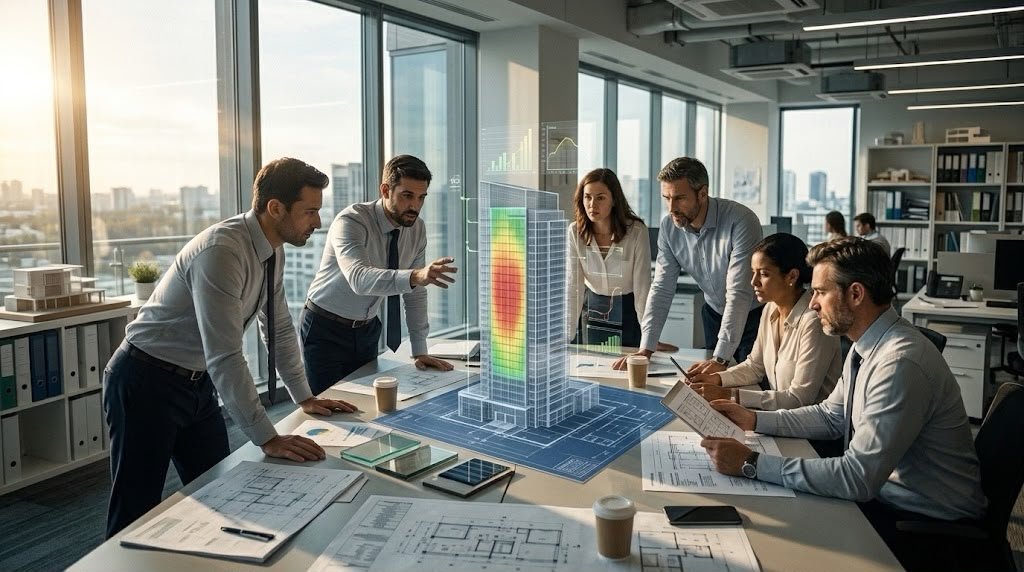
As commercial real estate developers, property managers, and architectural engineers stand at this historic crossroads between traditional passive glass and emerging transparent photovoltaic technology, evaluating building readiness requires disciplined strategic planning. Rushing out to install bleeding-edge sustainable glazing without analyzing structural load capacities, local solar irradiance angles, and electrical microgrid compatibility can lead to operational inefficiencies and unjustified capital expenditures.
To determine whether integrating invisible solar panels makes financial and technical sense for your construction project today, evaluate three core pillars: facade solar exposure, energy cost differentials, and long-term carbon reduction mandates. If you are designing a new high-rise tower with unobstructed southern or western solar exposure in a municipality offering aggressive green energy tax credits, incorporating transparent solar glazing delivers immediate, transformative sustainability and economic value. Evaluate your architectural blueprint, balance upfront capital investment against long-term operational energy savings, and decide whether your next building is ready to embrace the vertical solar revolution.
Frequently Asked Questions (FAQ)
Q1: Do invisible solar panels block natural sunlight or make windows look tinted?
A: No. Advanced transparent luminescent solar concentrators and quantum dot coatings are engineered to be optically clear to the human eye, allowing visible daylight to pass through unobstructed while harvesting invisible ultraviolet and infrared wavelengths.
Q2: How much electricity can a transparent solar window actually generate?
A: While individual conversion efficiency is currently lower than opaque rooftop silicon panels (typically ranging between 5% and 10%), the massive vertical surface area of a multi-story skyscraper compensates for the lower percentage, generating significant localized power overall.
Q3: Can invisible solar panels be retrofitted onto existing older buildings?
A: Retrofitting existing buildings requires replacing older single- or double-pane windows with insulated laminated TLSC glass units. While most common in new construction, retrofitting is increasingly utilized during major commercial green-building renovations.
Conclusion: Are Invisible Solar Panels Powering Smart Buildings?
So, are invisible solar panels powering entire smart buildings? The definitive answer is yes, the transition from architectural passive glass to active vertical power generation is officially underway.
- The architectural compromise is solved. Urban designers no longer have to choose between natural light and renewable energy; transparent photovoltaics deliver both simultaneously.
- The future of smart cities is self-sustaining. As manufacturing yields scale and energy conversion efficiencies climb, invisible solar panels will transform global skylines, turning every glass window into an active contributor to our clean energy future.