
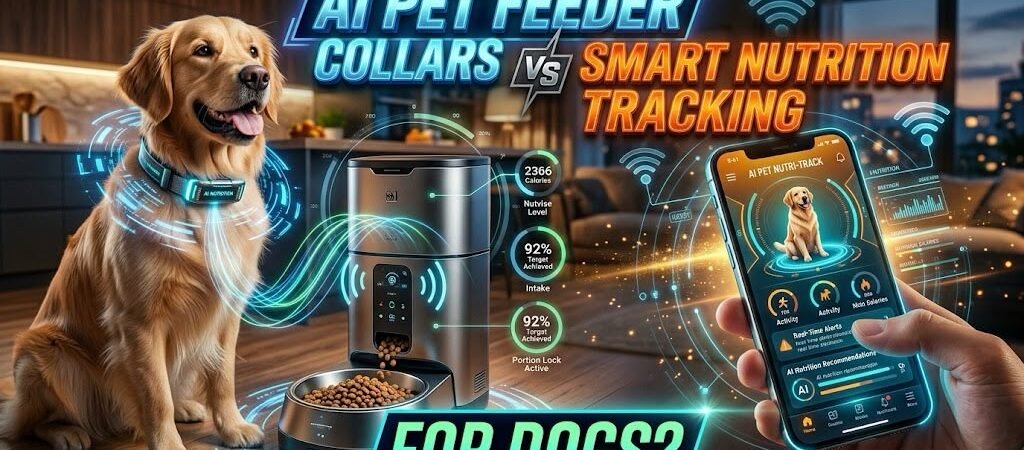
Introduction: The Rise of Canine Quantified Self and Smart Pet Tech
For centuries, the domestic bond between humans and their canine companions was guided by intuitive observation, traditional veterinary guidelines, and affectionate guesswork. Pet ownership involved pouring dry kibble into a ceramic bowl twice a day, estimating portion sizes with a plastic scoop, and monitoring a dog’s health through visual cues like coat shine, energy levels, and occasional trips to the animal clinic. While this traditional model sustained generations of pets, it also left significant blind spots in daily nutritional management. Millions of dogs worldwide suffer from silent epidemics of canine obesity, diabetes, and joint degradation, frequently exacerbated by inconsistent portion control, undetected overeating, and a lack of precise caloric tracking.
In parallel with the explosion of human health technology—where smartwatches, continuous glucose monitors, and fitness rings track every calorie burned and step taken—the pet care industry has undergone a radical digital transformation. We have entered the era of the AI smart pet collar and automated feeding ecosystem, a breakthrough technological paradigm designed to bridge the gap between pet nutrition and digital telemetry. These intelligent wearable devices and connected bowls promise to monitor your dog’s daily caloric intake, chew rates, activity expenditure, and metabolic health autonomously.
Can AI-powered smart pet feeder collars truly track your dog’s nutrition automatically, or are they an over-engineered gadget solving a problem easily managed with a kitchen measuring cup? In this comprehensive, exhaustive guide, we will deconstruct the sensor arrays, bio-acoustic chewing algorithms, automatic portion control dispensers, and veterinary science underpinning smart pet ecosystems. For broader industry insights into wearable health technology and pet care innovation, you can explore reports via American Kennel Club (AKC) Nutrition Desk alongside veterinary studies from American Veterinary Medical Association (AVMA) Portal and technical guides at My Tech Hub Hardware News.
1. Defining the AI Smart Pet Collar Ecosystem: Sensors, Accelerometers, and Biometric Telemetry
To understand how modern technology attempts to monitor canine health, one must first examine the hardware architecture embedded within smart pet collars. Unlike traditional nylon collars that serve merely as identification tags and leash attachment points, an AI-powered smart collar functions as a sophisticated, lightweight biomedical telemetry device designed to capture continuous streams of physical and behavioral data.
At the core of these wearable devices is a multi-axis accelerometer and gyroscope combo that tracks every movement the dog makes throughout the day. Whether the animal is running, trotting, sleeping, scratching, or shaking, the motion sensor records micro-vibrations and spatial orientations. Advanced smart collars pair these motion sensors with optical heart rate monitors, temperature sensors, and high-frequency acoustic microphones.
When a dog approaches an automated smart feeder or consumes food from a bowl, the collar’s sensor suite wakes up, recognizing specific movement patterns associated with feeding behavior. This continuous data capture transforms a simple collar into an active health monitoring node. For further technical analyses on wearable sensor calibration and telemetry architectures, explore documentation via IEEE Sensors Journal or hardware reviews on My Tech Hub AI Research Portal.
2. The Mechanics of Automated Nutrition Tracking: From Food Bowls to Collar Telemetry
Tracking a human’s nutritional intake is relatively straightforward because humans log meals manually into smartphone apps or measure ingredients using kitchen scales. Dogs, however, cannot log their own meals, and free-fed kibble left in bowls makes manual portion tracking nearly impossible in multi-pet households.
Automated nutrition tracking relies on a synchronized feedback loop between smart collars and smart feeders. When a dog fitted with an AI collar approaches a compatible smart feeding station, short-range radio frequency identification (RFID) or Bluetooth Low Energy (BLE) handshakes occur between the collar and the bowl. The smart feeder identifies exactly which pet is eating and dispenses a precise, veterinary-approved weight of food.
Concurrently, the smart collar detects the act of swallowing and chewing, logging the exact timestamp and duration of the meal. If the dog leaves food behind in the bowl, the feeder’s built-in load-cell scale measures the leftover weight, subtracting it from the dispensed amount. This dual-device telemetry architecture provides pet owners with exact net nutritional intake data, removing the guesswork of manual scooping.
3. Computer Vision and Machine Learning Models in Smart Pet Feeders
Beyond internal motion sensors, advanced smart feeding stations incorporate powerful computer vision modules and artificial intelligence camera systems positioned above the feeding bowl. These onboard cameras capture real-time video frames of the dog eating, utilizing deep learning convolutional neural networks (CNNs) to analyze feeding behavior visually.
The machine learning models are trained on massive visual datasets of dogs consuming various kibble types, wet foods, and raw diets. As the dog eats, the computer vision system tracks:
- Eating Velocity: Calculating how fast the dog is vacuuming food, identifying dangerous “speed eaters” prone to gastric dilatation-volvulus (bloat).
- Head Posture and Strain: Monitoring neck angles and physical strain during feeding, which can indicate underlying dental pain or cervical discomfort.
- Food Composition Breakdown: Identifying whether the dog is leaving specific ingredients behind or showing sudden aversion to certain food textures.
This visual intelligence layer acts as an observant, 24/7 veterinary assistant stationed right at your dog’s dinner bowl.
4. Bio-Acoustic Chewing and Swallowing Detection: How Collars Listen to Meals
One of the most fascinating engineering breakthroughs in smart collar design is bio-acoustic chewing and swallowing detection. How does a collar strapped around a dog’s neck distinguish between the sound of heavy panting, barking, scratching, grooming, and actual mastication?
Smart collars utilize specialized high-frequency piezoelectric contact microphones embedded against the dog’s throat. These acoustic sensors capture internal vibrations traveling through the animal’s tissue and trachea during jaw movement and throat muscle contractions.
- Acoustic Signatures: Crushing dry kibble produces a distinct high-frequency snap and crunch signature that differs acoustically from the rhythmic muscular vibration of swallowing liquid or soft food.
- Algorithmic Filtering: Onboard microprocessors run machine learning audio classifiers that filter out ambient household noise (such as vacuum cleaners, music, or human speech), isolating the exact acoustic frequencies generated during ingestion.
By analyzing these acoustic signatures, the collar records every single chew and swallow, converting acoustic vibrations into precise gram-weight nutritional metrics.
5. The Physiology of Canine Nutrition: Caloric Expenditure vs. Caloric Intake
To evaluate whether a smart collar genuinely tracks nutrition, one must examine the broader biological equation governing animal health: Caloric Intake versus Caloric Expenditure. Knowing how many grams of kibble a dog ate is only half the nutritional puzzle; the system must also calculate how many calories the dog burned throughout the day.
AI smart collars integrate daily activity telemetry (running, walking, playing catch, resting) with the animal’s specific metabolic profile—factoring in breed, age, weight, neutered status, and body condition score.
- Energy Balance Algorithms: If a working border collie spends three hours herding sheep, its caloric expenditure skyrockets, prompting the AI system to recommend a calibrated increase in food portioning.
- Sedentary Adjustments: Conversely, if a senior pug spends twenty-two hours sleeping, the system flags reduced energy expenditure, warning the owner to reduce daily treat allowances to prevent weight gain.
This holistic energy balance modeling elevates nutritional tracking from a static feeding schedule into a dynamic, life-stage-appropriate metabolic health system.
6. Bluetooth, Wi-Fi, and Cellular Connectivity: Syncing Pet Data to Cloud Dashboards
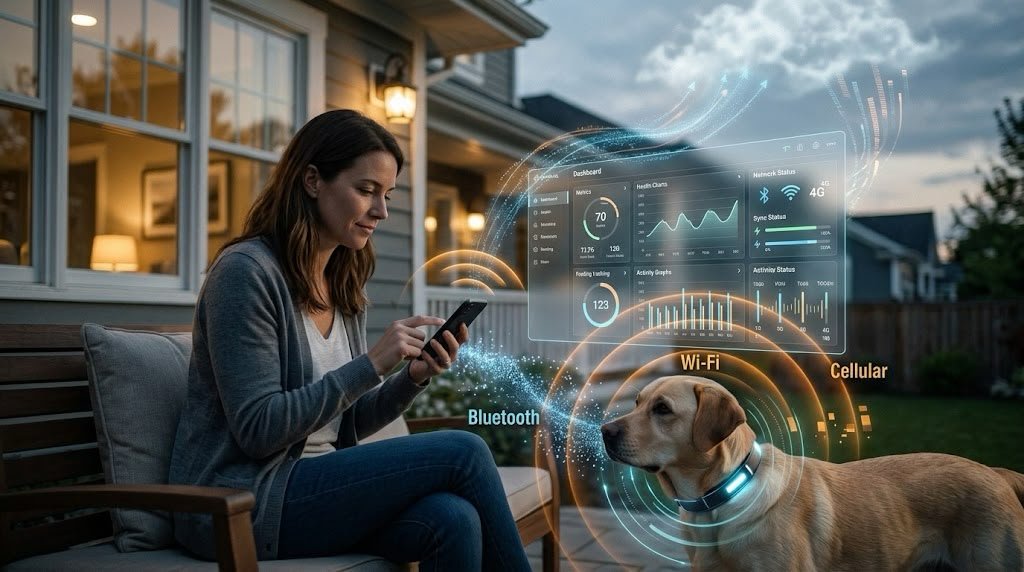
Capturing biometric telemetry and bio-acoustic meal data is useless if that information remains trapped inside a microchip on a dog’s neck. Smart pet collars rely on robust wireless connectivity protocols to transmit data continuously to cloud-based analytics servers.
Depending on the manufacturer and lifestyle requirements, smart collars deploy multi-tier connectivity:
- Bluetooth Low Energy (BLE): Syncs collar data locally to the owner’s smartphone whenever the dog is indoors within range.
- Wi-Fi Gateways: Home-based hubs that maintain persistent cloud connection, ensuring real-time telemetry updates even when the owner is away at work.
- Narrowband IoT (NB-IoT) / LTE-M: Premium cellular connectivity built directly into advanced tracking collars, allowing remote tracking and nutritional logging anywhere in the world without requiring a nearby smartphone or Wi-Fi router.
Once synced to the cloud, machine learning servers compile the raw sensor data into clean, intuitive mobile app dashboards for the pet owner.
7. Veterinarian Diagnostics and Telemedicine Integration: Sharing Data with Clinics
One of the most transformative clinical benefits of AI smart pet collars is their ability to bridge the communication gap between pet owners and veterinary professionals. During traditional annual veterinary checkups, veterinarians rely almost entirely on subjective owner recall (“He seems to be eating normally, doctor”) and a single in-clinic weight measurement.
Smart collars revolutionize clinical diagnostics by providing veterinarians with objective, multi-month longitudinal data streams before the animal even enters the examination room:
- Early Disease Detection: Gradual, unprompted reductions in chewing frequency or daily caloric intake can serve as the earliest biomarker for dental disease, kidney dysfunction, or systemic pain.
- Post-Operative Recovery Tracking: Following orthopedic or dental surgery, veterinarians can track whether a dog has returned to normal feeding and activity baselines.
- Telemedicine Sharing: Owners can export comprehensive PDF health reports directly to veterinary clinics via secure cloud APIs, facilitating data-driven telemedicine consultations. For further clinical research documentation on veterinary telemedicine, explore reports via PetMD Veterinary Health Database alongside industry guides on My Tech Hub Business Portal.
8. Weight Management and Obesity Prevention in Modern Domestic Dogs
Veterinary epidemiological studies indicate that over 50% of domestic dogs in developed nations are classified as overweight or obese. Canine obesity is not merely an aesthetic concern; it is a serious medical crisis that contributes directly to canine osteoarthritis, diabetes mellitus, respiratory distress, and a shortened life expectancy.
AI smart collars and automated feeders tackle the obesity epidemic through automated portion enforcement and behavioral accountability.
- Eliminating Eyeball Scooping: Most owners overfeed their dogs because traditional measuring scoops are imprecise and caloric density varies wildly across commercial dog foods. Smart feeders dispense exact gram weights calibrated by the AI collar.
- Treat Budgeting: When family members sneak table scraps or treats to a dog, the smart collar’s calorie-tracking algorithm detects the sudden caloric surplus and automatically communicates with the smart feeder to reduce the next scheduled meal portion accordingly.
This closed-loop nutritional governance ensures that a dog’s daily caloric budget remains balanced regardless of household feeding inconsistencies.
9. Behavioral Psychology and Pet Feeding Habits: Understanding Grazing vs. Fast Eating
Beyond simple caloric accounting, smart collars provide profound behavioral insights into how dogs interact with their food. Canine feeding psychology varies dramatically between individuals: some dogs are voracious “vacuum cleaners” who inhale meals in thirty seconds, while others are dainty “grazers” who nibble small portions throughout the day.
Smart collar telemetry maps these individual behavioral phenotypes with precision:
- Identifying Eating Disorders: Sudden shifts from grazing to frantic food gulping can signal underlying metabolic stress, cognitive dysfunction, or internal parasites.
- Anxiety and Stress Monitoring: Correlating feeding disruptions with environmental triggers (such as thunderstorms, construction noise, or human absence) helps owners identify canine separation anxiety and stress-induced appetite loss.
Understanding these behavioral nuances allows owners and trainers to adjust feeding environments—such as introducing slow-feeder bowls or puzzle toys—to support optimal canine mental health.
10. Multi-Pet Households: How AI Collars Distinguish Between Dogs and Cats
For families sharing their homes with multiple pets—such as two dogs or a mischievous cat who routinely steals food from the canine bowl—deploying smart feeding technology historically introduced massive tracking errors. If a smart feeder dispensed food and an unregistered cat ate half of it, the system would erroneously log that caloric intake to the primary dog.
Modern smart pet ecosystems solve multi-pet confusion through robust identification protocols:
- RFID Collar Tags: Each pet wears a specific RFID collar tag or smart collar that communicates exclusively with the feeder, opening the food hatch only when the authorized animal’s snout approaches the bowl.
- Facial and Silhouette Recognition: Advanced computer vision smart bowls analyze facial features and body silhouettes in real time, locking the food hopper immediately if an unauthorized pet attempts to muscle in.
This airtight biological authentication ensures that multi-pet nutritional telemetry remains pristine and uncorrupted.
11. Battery Life, Power Management, and Ergonomic Form Factors for Dogs
Designing wearable technology for animals introduces unique engineering constraints that human smartwatches never face. A human is willing to remove their smartwatch nightly to charge it on a bedside magnetic puck; a dog, however, cannot be relied upon to manage its own device charging routine.
Consequently, smart pet collars must balance stringent power management with comfortable, ergonomic form factors:
- Extended Battery Autonomy: To minimize owner maintenance friction, smart collars must achieve battery runtimes ranging from one to four weeks on a single charge.
- Lightweight Construction: Collars must remain lightweight and proportioned to the animal’s size—avoiding bulky, heavy battery bricks that cause neck strain, chafing, or postural discomfort in smaller dog breeds.
- Inductive Charging Docks: Utilizing waterproof magnetic charging docks that make daily or weekly power replenishment quick and effortless.
12. Durability, Waterproofing, and Resistance to Rough Canine Play
Dogs live rigorous, physically demanding lives. They swim in muddy lakes, roll in dirt, wrestle aggressively with other dogs, charge through dense brush, and scratch incessantly at their collars. A consumer electronics device strapped to a dog’s neck must survive environments that would instantly destroy an ordinary human smartwatch.
To ensure longevity, smart pet collars are engineered to withstand extreme physical abuse:
- IP68 / IP69K Waterproofing: Fully hermetically sealed enclosures that survive continuous immersion in water, mud, and river currents.
- Ruggedized Composite Casings: Utilizing reinforced polycarbonate or ballistic nylon casings that resist teeth punctures, claw scratches, and high-impact collision forces during outdoor play.
- Reinforced D-Rings: Heavy-duty stainless steel attachment loops that ensure the collar doubles securely as a functional restraint device during leash walks without tearing away from the electronic module.

13. Data Privacy, Pet Tracking Security, and Cloud Telemetry Governance
As smart pet collars continuously map precise GPS locations, record audio inside private homes, and upload intimate household telemetry to cloud servers, privacy and cybersecurity considerations emerge as critical consumer concerns.
- Location Surveillance Risks: A compromised smart collar tracking account could allow malicious actors to monitor when an owner is away from home, identifying empty houses vulnerable to burglary.
- Data Monetization Concerns: Ensuring that pet tech manufacturers do not sell anonymized feeding and behavioral data to third-party pet food conglomerates for aggressive targeted marketing.
Reputable smart pet manufacturers enforce strict end-to-end encryption, local anonymization protocols, and transparent user data governance policies, ensuring that your dog’s health data remains private and secure.
14. Smart Feeder Hardware Integration: Automated Portion Control Dispensers
The hardware counterpart to the smart collar is the automated portion-control feeder. These countertop appliance units store several pounds of dry or semi-moist kibble in sealed, insect-proof hoppers and dispense precise gram weights into stainless steel bowls upon command.
Advanced smart feeders feature anti-jamming mechanical augers, backup battery compartments to survive household power outages, and desiccant pods that keep kibble fresh and crunchy for weeks. When integrated with AI collar telemetry, the feeder operates as an autonomous nutritional dispenser, adjusting meal sizes in real time based on the dog’s actual physical exertion levels recorded throughout the day.
15. Intellectual Property, Patent Landscapes, and Global Corporate Rivalries in Pet Tech
The rapid commercial maturation of smart pet collars, bio-acoustic chewing algorithms, automated portion-control dispensers, and canine biometric telemetry has triggered an intense, multi-billion-dollar corporate race for global intellectual property dominance. Major pet care conglomerates, specialized IoT startups, and consumer electronics giants are fiercely patenting every conceivable breakthrough in throat-microphone acoustic classification, energy-balance algorithmic modeling, and RFID pet authentication.
Securing foundational patents in this competitive industry dictates which corporations will control global supply chains, veterinary software licensing frameworks, and commercial distribution channels across the digital pet care era. This high-stakes corporate rivalry has transformed advanced veterinary tech research laboratories and IoT spin-offs into prime acquisition targets. Venture capital firms and multinational tech giants are pouring massive capital injections into engineering teams capable of solving manufacturing yield hurdles associated with ruggedized animal wearables. Furthermore, navigating global patent landscapes requires aggressive international legal strategies to prevent intellectual property infringement across competing jurisdictions. For comprehensive analyses on patent filings and intellectual property trends in advanced pet hardware, explore reports via World Intellectual Property Organization (WIPO) Analytics Portal alongside market strategy guides at My Tech Hub Business Portal.
16. The Societal, Cultural, and Psychological Impact of Quantified Animal Life
The widespread consumer transition toward quantified pet care, AI health monitoring, and biometric animal tracking introduces profound societal, cultural, and psychological considerations. For generations, pet ownership was characterized by emotional companionship and intuitive care; today, pet parents increasingly view their animals through the lens of quantified data metrics, daily step counts, and caloric charts.
This data-driven shift alters the human-animal bond in complex ways:
- Deepened Health Awareness: Owners catch early signs of chronic illness long before physical symptoms appear, extending healthy lifespans.
- Anxiety and Over-Quantification: Conversely, obsessive monitoring of minor biometric fluctuations can induce neurotic anxiety in pet owners, turning normal daily activity variations into perceived medical emergencies.
Balancing data-driven veterinary insights with affectionate, intuitive companionship is an essential psychological evolution for modern pet parents.
17. Neurological Ergonomics and User Experience: Designing Intuitive Pet Health Apps
When industrial designers, software user-interface architects, and mobile app developers build pet health management platforms, the psychological comfort, cognitive ease, and subjective user experience of everyday pet owners managing complex biometric dashboards are just as critical as raw sensor accuracy. For generations, owners suffered from “notification fatigue”—the mental exhaustion caused by clunky apps flooding phones with endless minor alerts.
Software designers invest heavily in human-computer interaction (HCI) research to ensure that pet health apps maintain absolute visual clarity, intuitive dietary summaries, and actionable veterinary insights. Advanced apps feature clean color-coded status rings, simple meal adjustment prompts, and celebratory wellness milestones. This careful attention to ergonomic software design ensures that advanced animal technology enhances rather than obstructs the joy of pet ownership.
18. Environmental Sustainability, Circular Economics, and E-Waste in Wearables
As the global consumer electronics and pet accessory manufacturing industry commits to aggressive carbon neutrality targets, evaluating the complete lifecycle environmental footprint of pet wearables becomes paramount. While smart collars contribute positively to animal health by preventing chronic disease, questions inevitably arise regarding what happens to rechargeable batteries, microcircuit boards, and silicone straps when devices reach the end of their operational usefulness.
To prevent future electronic waste crises, sustainable manufacturing pioneers are heavily prioritizing circular economy principles. Leading pet tech brands are designing modular product architectures featuring easily replaceable battery packs, biodegradable strap materials, and easily recoverable electronic sub-components. These circular design methodologies ensure that when a smart collar reaches the end of its functional lifespan, its materials can be efficiently disassembled and recycled back into raw supply chains.
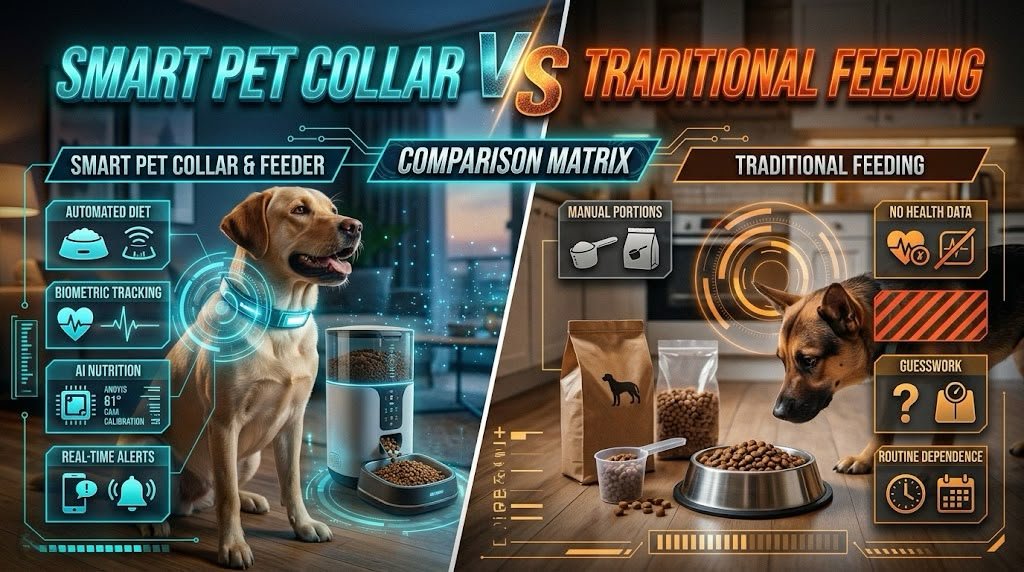
19. Comprehensive Smart Pet Collar vs. Traditional Feeding Comparison Matrix
To help you evaluate how AI smart pet collars and automated feeders stack up against traditional feeding methods across critical performance metrics, review the comprehensive comparison table below:
| Evaluation Category | Traditional Feeding (Bowls & Scoops) | Automated Smart Feeders (Standalone) | AI Smart Collar + Feeder Ecosystem | Winner |
| Portion Accuracy | Low (Varies with manual scooping) | High (Set timer and weight) | Dynamic (Adjusts based on daily exercise) | AI Collar Ecosystem |
| Nutritional Tracking | Zero (Owner memory only) | Moderate (Logs dispensing times) | Complete (Tracks intake, chewing, and expenditure) | AI Collar Ecosystem |
| Multi-Pet Management | Difficult (Food stealing occurs) | Moderate (Requires RFID tags) | Flawless (Biometric and collar authentication) | AI Collar Ecosystem |
| Health Early Warning | Relies on visible physical symptoms | None | Advanced (Detects eating/activity anomalies early) | AI Collar Ecosystem |
| Financial Cost | Minimal (Cost of bowls) | Moderate ($100 – $250) | High ($250 – $500+ device + subscriptions) | Traditional |
20. The Ultimate Decision Framework: Evaluating Your Dog’s Readiness for Smart Wearables
As devoted pet parents, dog trainers, and tech enthusiasts stand at this historic crossroads between traditional pet care and emerging AI smart wearables, evaluating hardware readiness requires disciplined strategic planning. Rushing out to purchase an expensive smart collar and automated feeder system without analyzing your dog’s temperament, your budget flexibility, and your lifestyle demands can lead to operational friction and misallocated capital expenditures.
To determine whether integrating an AI smart pet collar makes financial and practical sense for your household today, evaluate three core pillars: health risk profile, budget threshold flexibility, and tech adoption comfort. If you manage a dog prone to canine obesity, suffer from complex multi-pet feeding logistics, or desire proactive veterinary telemetry monitoring while commanding a flexible budget, investing in a smart collar ecosystem delivers transformative peace of mind. Evaluate your canine blueprint, balance upfront capital investment against long-term veterinary wellness savings, and decide whether your dog is ready to embrace the smart pet revolution.
Frequently Asked Questions (FAQ)
Q1: Can AI smart pet collars track your dog’s nutrition automatically?
A: Yes. By combining bio-acoustic throat microphones that count chews and swallows, motion sensors that track energy expenditure, and synchronized smart food bowls that measure exact food weights, AI collar ecosystems track net nutritional intake and caloric balance automatically.
Q2: Do smart collars require a monthly subscription fee?
A: Many advanced smart pet collars require a monthly subscription fee (ranging from $5 to $15 per month) to cover cloud data storage, cellular NB-IoT connectivity, advanced machine learning health analytics, and veterinary telemedicine report generation.
Q3: Are smart collars safe and comfortable for dogs to wear all day?
A: Yes. Modern smart collars are engineered with lightweight, ergonomic materials, waterproof casings, and adjustable straps designed to fit comfortably around a dog’s neck without causing strain or chafing during daily wear.
Conclusion: Can AI Smart Collars Truly Track Your Dog’s Nutrition Automatically?
So, do AI smart pet feeder collars truly track your dog’s nutrition automatically, and are they worth the investment? The definitive answer is yes, through the convergence of bio-acoustic chewing detection, motion-based caloric expenditure modeling, and synchronized automated smart feeders, these devices deliver precise, automated nutritional oversight.
- The technological capability is absolute. By moving beyond guesswork and manual measuring scoops, smart collars provide objective, data-driven insights into your dog’s daily metabolic health.
- The future of pet care is quantified. As machine learning models improve, sensor batteries shrink, and veterinary integrations deepen, smart collars are cementing their role as an indispensable tool for proactive canine wellness.
Evaluate your dog’s health profile, your budget thresholds, and your enthusiasm for pet technology, and consider whether welcoming an AI smart collar into your furry friend’s life belongs on your roadmap.