
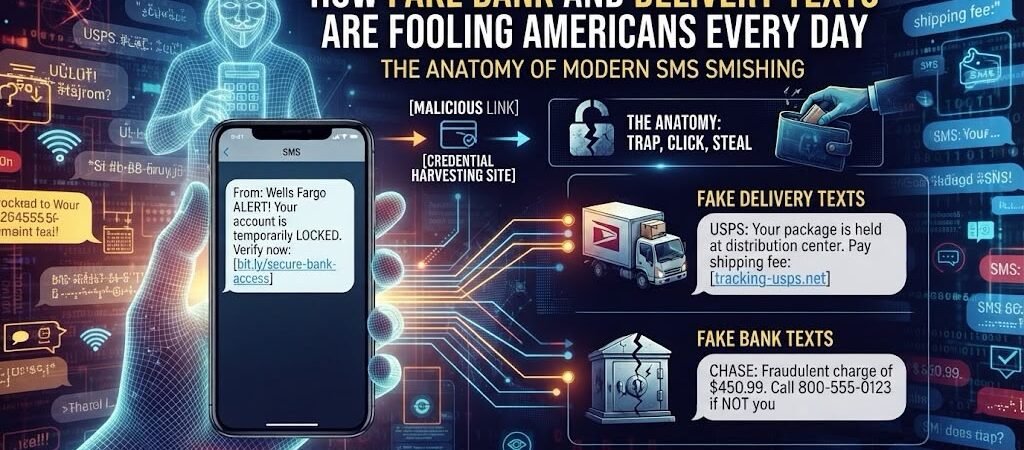
Introduction: The Ubiquitous Threat in Your Pocket
For decades, digital security education focused primarily on suspicious email links, sketchy computer attachments, and aggressive pop-up advertisements. Most internet users learned early on to look out for strange sender addresses and obvious grammatical errors in their email inboxes. However, over the past few years, cybercriminals have shifted their primary attack vector away from email and directly into the most trusted, intimate communication channel we use every day: our smartphone text messaging apps.
Every single day, millions of Americans receive urgent SMS text messages claiming that their bank account has been locked due to suspicious activity, a package delivery has failed because of an incorrect address, a toll fee is overdue, or a streaming subscription payment has bounced. These messages are crafted with chilling precision. They arrive with a sense of urgent panic, mimic the exact branding of trusted institutions like Chase, Bank of America, FedEx, USPS, or Netflix, and include convenient shortened links designed to be tapped in a split second of anxiety.
This deceptive practice—known in the cybersecurity industry as SMS phishing, or “smishing”—has evolved into a multi-billion-dollar enterprise. It is no longer just about clumsy Nigerian prince scams; it is a sophisticated, automated, psychological warfare campaign targeting the friction of modern fast-paced life. In this comprehensive, in-depth security guide, we will deconstruct how fake bank and delivery texts are fooling Americans every day, analyze the psychological traps that make these scams so effective, and outline the exact defensive protocols you need to protect your personal finances and identity.
1. The Anatomy of a Smishing Attack: Why SMS Feels Inherently Trustworthy
Why do millions of intelligent people who would instantly spot a fake email fall victim to a fraudulent text message? The answer lies in human psychology and the unique medium of SMS.
The Trust Factor of Text Messaging
- The Intimacy of the Inbox: For most people, text messages are reserved for close friends, family members, and trusted personal notifications. We rarely receive junk mail or promotional spam via SMS compared to our overflowing email inboxes. When an alert pops up on our home screen from what appears to be our bank, our guard is naturally lowered because we associate text alerts with high-priority urgency.
- The Illusion of Authenticity: Modern SMS spoofing technology allows malicious actors to manipulate sender ID headers, enabling fake texts to thread themselves directly into legitimate conversation histories from your bank or delivery service. When a fraudulent alert appears directly beneath genuine fraud alerts you received months ago, your brain accepts it as a continuation of a trusted thread.
For deeper technical breakdowns on mobile network vulnerabilities and carrier protocols, read Ars Technica Security Lab or explore software security guides on My Tech Hub Software Directory.
2. The Fake Bank Fraud Alert Scam: Panic, Urgency, and Account Lockouts
One of the most destructive smishing campaigns targeting Americans involves fraudulent bank alerts. Victims receive an SMS reading something like:
“URGENT: Chase Bank Alert. We detected an unauthorized $849.50 wire transfer from your checking account. If this was not you, click here immediately to secure your funds: [Malicious Link]”
The Psychological Trap
Human beings are hardwired to react with immediate panic when threatened with financial loss. When you read that hundreds of dollars are actively being drained from your bank account, rational analytical thought is instantly overridden by an adrenaline-fueled fight-or-flight response.
What Happens When You Tap the Link?
- The Phishing Portal: The link directs your mobile browser to a pixel-perfect clone of your bank’s login portal. The branding, fonts, color schemes, and login boxes look entirely authentic.
- Credential Harvest: You input your username, password, and personal PIN. The system records your raw credentials in real-time.
- The 2FA Interception: Sophisticated smishing kits feature automated scripts that instantly prompt you for your two-factor authentication (2FA) SMS code or push notification approval. The moment you type the code, the cybercriminal logs into your actual bank account from a remote device, changes your password, locks you out, and initiates unauthorized wire transfers before you realize what happened.
3. The Package Delivery Scam: Capitalizing on Modern E-Commerce Habits
With millions of Americans receiving online deliveries from Amazon, USPS, FedEx, and UPS on a daily basis, package-related smishing has become an epidemic. A typical text reads:
“USPS Notice: Your package could not be delivered due to an incomplete street address. Update your delivery preferences to reschedule dispatch: [Malicious Link]”
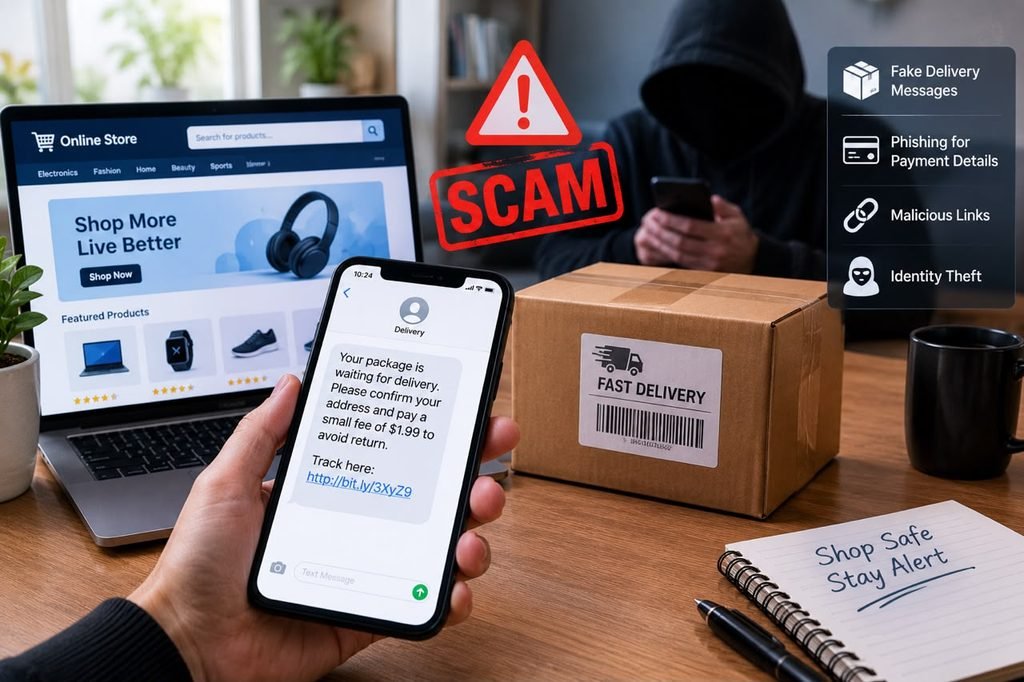
Why Delivery Scams Work So Well
- The Law of Averages: Almost everyone living in America is waiting on a package at any given moment. Statistically, if you send out ten million generic delivery texts, hundreds of thousands of recipients will genuinely be expecting an order, making the scam feel uncannily relevant.
- Micro-Transactions: These landing pages rarely ask for bank logins immediately. Instead, they ask you to “pay a $0.30 redelivery fee” using your credit card. Victims willingly type in their credit card numbers, expiration dates, and CVV codes, handing scammers complete access to their payment cards for recurring fraudulent charges.
4. Toll Road, IRS, and Utility Scams: Expanding the Net
Beyond banks and postal services, scammers have expanded their playbook to target essential civic obligations and municipal services.
Common Municipal Smishing Variants
- E-ZPass / Toll Violations: Texts claiming you owe $3.50 in unpaid toll road fees that will incur a massive $50 late penalty if not settled immediately via a provided link.
- IRS Tax Refunds: Messages promising a government tax refund or threatening immediate legal action and police arrest for unpaid back taxes unless you verify your Social Security number on a rogue portal.
- Utility Shut-Off Warnings: Alerts claiming your power or water will be disconnected within two hours unless you clear an overdue balance over the phone or web link.
For further reading on municipal fraud trends and consumer protection warnings, consult resources via Federal Trade Commission (FTC) Consumer Advice or research reports from Consumer Reports Tech Lab.
5. How Smishing Campaigns Are Automated at Massive Scale
The scale at which these scams operate is industrial. Cybercriminals no longer sit around manually typing out phishing texts. Instead, they deploy automated infrastructure known as Smishing-as-a-Service (SaaS).
The Mechanics of Industrial Smishing
- SIM Farms and Gateway Hardware: Criminal syndicates utilize hardware boxes equipped with dozens of cellular SIM cards to blast out tens of thousands of automated SMS messages per hour without triggering standard carrier spam filters.
- Dynamic Domain Generation: Phishing URLs rotate constantly. The moment a security provider flags a malicious domain, the automated system generates a fresh domain name hosted on compromised cloud servers to keep the campaign running uninterrupted.
6. What to Do If You Fall Victim to a Smishing Scam
If you realize you have clicked a suspicious link, typed in your banking credentials, or shared your credit card information, you must take immediate, decisive action to mitigate the damage.
Emergency Response Checklist
- Sever All Access: If you gave away banking credentials, call your bank’s fraud department immediately to freeze your accounts, cancel compromised cards, and flag unauthorized transactions.
- Change Master Passwords: From a separate, trusted device (such as a secure computer), change your primary email and banking passwords and enable hardware-based multi-factor authentication.
- Report the Text: Forward the fraudulent SMS to 7726 (SPAM) to help your mobile carrier identify and block the transmitting gateway, and file an official complaint with the Federal Trade Commission (FTC).
Smishing Threat Reference & Response Matrix
To help you quickly identify and neutralize fraudulent text messages, review the reference matrix below:
| Scam Type | Common Hook / Premise | Danger Level | Recommended Action |
| Fake Bank Alert | Unauthorized wire transfer or locked account warning | Critical (Financial theft) | Do not click links; call official number on back of card |
| Delivery Failure | Undeliverable package requiring address update | High (Credit card skimming) | Check tracking directly on official carrier app/website |
| Toll Road Fee | Overdue E-ZPass or highway toll penalty | Moderate (Minor fee fraud) | Verify account status via official state toll portal |
| IRS / Tax Threat | Unpaid taxes or government refund pending | Severe (Identity theft) | Hang up / delete text; IRS never initiates contact via SMS |
7. The Psychological Manipulation Tactics Behind Emergency Smishing Alerts
The terrifying effectiveness of modern SMS smishing campaigns relies less on advanced technical exploits and more on master-class psychological manipulation. Cybercriminals construct their fraudulent text messages to exploit human cognitive biases, specifically targeting the natural desire to resolve uncertainty and avoid immediate negative consequences. When a smartphone vibrates with an urgent notification, the brain experiences a micro-surge of adrenaline, particularly if the text warns of impending financial ruin, legal prosecution, or package loss.
Cognitive Vulnerabilities Exploded by Scammers
- The Urgency Trap: By manufacturing artificial time constraints—such as claiming your bank account will be permanently frozen within thirty minutes unless you click a link—scammers intentionally bypass analytical, logical thought processing. They force the victim into an impulsive fight-or-flight response where critical evaluation of the URL is entirely bypassed.
- Authority Bias: Messages meticulously mimic the exact brand voice, terminology, and bureaucratic formatting of federal agencies, major financial institutions, or national postal carriers. This creates an unquestioned illusion of official authority, making victims hesitant to challenge the legitimacy of the warning.
Understanding these psychological hooks is the first and most powerful line of defense against falling victim to social engineering.
8. Technical Mechanics of SMS Spoofing and Gateway Hijacking
To the average consumer, it appears impossible that a text message from a fraudulent source could slide directly into an established, legitimate conversation thread from a bank or shipping courier. This illusion of authenticity is made possible by sophisticated telecommunication vulnerabilities exploited by organized cyber syndicates.
How Telecom Networks Are Compromised
- SMS Gateway Exploits: Attackers leverage rogue commercial bulk-messaging gateways and unsecured API endpoints provided by international telecommunications partners to inject forged sender IDs directly into cellular routing tables.
- Thread Spoofing: Because mobile operating systems group text messages by the originating sender ID string (alphanumeric headers like “USPS” or “CHASE”), spoofing that exact string causes the phone’s operating system to visually group the malicious phishing text directly beneath years of genuine fraud alerts from your actual bank.
Awareness of these routing loopholes explains why traditional visual inspection of a text thread is no longer a reliable indicator of message safety.
9. The Role of Cryptographic Phishing Kits in Modern Financial Theft
Gone are the days when a phishing link led to an obviously amateur website riddled with spelling errors and broken graphics. Today’s cybercrime economy runs on highly sophisticated, turn-key Phishing-as-a-Service (PaaS) platforms equipped with advanced cryptographic engines.
Enterprise-Grade Phishing Infrastructure
- Pixel-Perfect Cloning: Phishing kits automatically scrape live banking portals in real-time, replicating the exact CSS stylesheets, logos, and security certificates of target financial institutions.
- Bypassing SSL Encryption: These fraudulent sites utilize valid SSL certificates (HTTPS), meaning your mobile browser displays a reassuring padlock icon, tricking victims into believing they are on a secure, encrypted corporate server while their credentials are actively harvested in the background.
10. Financial Fraud Prevention: Steps to Take With Your Bank and Credit Card Issuers
If you suspect you have engaged with a fraudulent text message and compromised your personal banking or credit card details, every single minute counts. Swift institutional intervention can freeze fraudulent transactions before they clear processing networks.
Immediate Institutional Protocols
- Instant Card Freezing: Open your banking mobile app or call the dedicated 24/7 fraud hotline on the back of your physical credit card to temporarily lock or permanently cancel compromised payment cards.
- Disputing Unauthorized Charges: File formal billing error and unauthorized transaction disputes under the Fair Credit Billing Act, which limits consumer liability for fraudulent credit card charges when reported promptly.
11. Carrier-Level Spam Filtering and Mobile Device Defense Settings
Relying entirely on human vigilance is exhausting; modern smartphones and mobile network operators offer powerful automated tools to intercept smishing attempts before they ever hit your notification shade.
Hardening Your Phone Against Smishing
- Enabling Carrier Spam Filtering: Contact your mobile network provider (such as Verizon, AT&T, or T-Mobile) and ensure network-level scam blocking and spam-filtering services are actively enabled on your account.
- Filtering Unknown Senders: On iOS, navigate to Settings > Messages and toggle on Filter Unknown Senders to separate messages from people not in your contacts list into a separate tab, drastically reducing accidental link taps.
12. Corporate and Institutional Liabilities in the Age of Smishing
As text-based fraud costs consumers billions of dollars annually, legal questions surrounding corporate accountability have taken center stage. Financial institutions and shipping giants face growing scrutiny over how criminals easily hijack their brand identities.
The Push for Telecommunication Accountability
- Verified Sender Protocols: Regulatory bodies and consumer advocates are pushing carriers worldwide to mandate cryptographic sender verification frameworks (such as STIR/SHAKEN for voice and corresponding A2P messaging authentication standards) to stamp out caller ID and SMS header spoofing entirely.
- Consumer Education Duties: Banks and delivery networks are investing heavily in customer awareness campaigns, emphasizing that legitimate institutions will never text customers asking for passwords, PINs, or direct login link clicks.
13. Global Smishing Trends: How International Rings Target American Consumers
SMS smishing is not an isolated domestic issue; it is orchestrated by massive, transnational cybercrime cartels operating across multiple continents.
The Global Cybercrime Supply Chain
- Distributed Operations: Software developers in one country build automated phishing kits, money launderers in another manage cryptocurrency conversion channels, and localized call centers or automated SMS blasters target consumers in the United States.
- Targeting High-Density Populations: Because of high smartphone penetration and rapid e-commerce adoption rates in the U.S., American consumers remain prime targets for automated delivery and banking text scams.
14. Advanced Threat Vectors: AI-Generated Phishing and Voice Spoofing
As artificial intelligence capabilities advance, cybercriminals are integrating generative AI tools to make smishing attacks even more deceptive and personalized.
The Next Wave of AI-Driven Scams
- Hyper-Personalized Scripting: AI models can ingest leaked data breaches to craft custom SMS messages referencing specific recent purchases, local zip codes, or personal names, increasing psychological credibility.
- Conversational Chatbot Phishing: Future smishing links may lead to automated AI chatbots that converse dynamically with victims in real-time, answering security questions and coaching them through multi-factor authentication bypass steps.
15. Comprehensive Smishing Prevention & Threat Matrix
To summarize the key characteristics of modern text scams and the appropriate defensive actions, review the reference matrix below:
| Scam Category | Primary Attack Vector | Primary Target | Recommended Defensive Action |
| Banking Smishing | Fake fraud alerts & security locks | Bank accounts & 2FA codes | Never click links; call official number on card back |
| Delivery Smishing | Redelivery fees & address errors | Credit card CVV & PII data | Check tracking inside official carrier app |
| Municipal Toll Scam | Overdue tolls & late penalties | Small payment card data | Verify account directly on state transit website |
| Tax & IRS Fraud | Arrest threats & government refunds | Social Security & Identity | Delete text; IRS never initiates contact via SMS |
Smart Text Scam Prevention Pricing & Security Tool Reference
To help you evaluate digital security tools designed to block mobile scams, review the reference guide below:
| Security Solution Type | Core Functionality | Estimated Cost (USD) | Primary Benefit |
| Carrier Spam Blocker | Network-level filtering of known smishing gateways | Free (Included with carrier) | Stops bulk automated text floods at the tower level |
| Mobile Antivirus & SMS Scanner | Scans incoming links and blocks phishing domains | $20 – $50 / year | Real-time browser redirection protection |
| Hardware Security Key | Physical FIDO2 token for ultra-secure 2FA | $25 – $55 (One-time) | Completely blocks remote 2FA interception via SMS |
| Password Manager with Phishing Guard | Auto-fills credentials only on verified domains | Free – $36 / year | Prevents credential entry on fake phishing clones |
Frequently Asked Questions (FAQ)
Q1: Why do banks send text alerts if text messages can be easily spoofed?
A: Legitimate banks use SMS notifications as a convenient way to update customers, but they are increasingly moving away from including direct login links in texts, instead urging customers to open their official banking applications independently.
Q2: Can a scammer drain my bank account using only my phone number?
A: No. A phone number alone is generally insufficient to drain an account. Scammers require your active participation—such as clicking a phishing link, divulging credentials, or reading aloud a 2FA verification code—to complete unauthorized transfers.
Q3: What should I do if I accidentally typed my password into a fake banking link?
A: Immediately change your password from a secure device, contact your bank’s fraud department to freeze accounts, enable multi-factor authentication with an authenticator app, and run a security scan on your phone.
Conclusion: Securing Your Mobile Inbox Against Modern Fraud
Fake bank and delivery texts represent one of the most pervasive cyber threats facing everyday Americans because they exploit our most trusted communication channels and our fastest psychological triggers. By understanding the intricate mechanics of SMS spoofing, recognizing the urgency traps set by cybercriminals, and establishing rigid personal protocols—such as never tapping unsolicited links and verifying alerts independently—you can safeguard your financial assets and personal identity.
Always prioritize caution over convenience when dealing with urgent financial or delivery notifications. A few moments spent verifying an alert through an official mobile application will protect you from the devastating consequences of identity theft and financial fraud.