
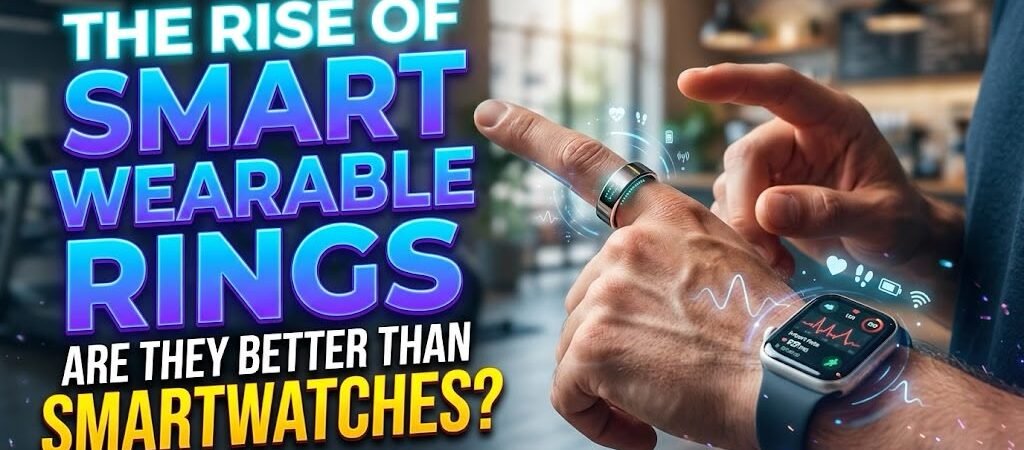
Introduction: The Rise of Smart Rings and Smartwatches
The smart ring vs smartwatch debate is changing how consumers think about personal health tracking and wearable technology. For years, smartwatches have dominated the market, giving users an easy way to monitor daily steps, track heart rates, analyze workouts, and receive smartphone notifications. Tech giants have continuously improved these wrist-worn devices with brighter displays, faster processors, and increasingly sophisticated health-monitoring features.
However, a growing number of consumers are looking for a simpler, less distracting way to stay connected with their health data. Constant notifications, glowing screens, and bulky wristwear have encouraged interest in a more discreet alternative: the smart ring. Designed to look like ordinary jewelry, modern smart rings use miniature biometric sensors to monitor sleep patterns, heart rate, skin temperature, and daily activity without requiring users to wear a screen on their fingers.
So, is a smart ring better than a smartwatch, or does the traditional wearable still offer more value? The answer depends on your priorities. Smart rings generally emphasize comfort, discreet health tracking, and overnight recovery monitoring, while smartwatches offer interactive displays, advanced workout features, GPS capabilities, and convenient access to notifications.
In this guide, we’ll compare smart rings and smartwatches across health tracking, sleep monitoring, battery life, fitness features, comfort, pricing, and subscription costs. By understanding the strengths and limitations of each device, you’ll be able to choose the wearable that best fits your lifestyle, health goals, and budget.
Are smart rings destined to completely replace smartwatches, or are they simply a specialized niche accessory for fitness purists? In this comprehensive, in-depth guide, we will deconstruct the underlying sensor technology of smart rings, compare their real-world performance against traditional smartwatches, analyze pricing tiers, and help you determine which wearable deserves a permanent spot on your body. For broader industry insights into emerging wearable form factors and digital health trends, you can explore reports via Wired Consumer Tech Desk alongside hardware evaluations from Engadget Wearables Lab and tech breakdowns at My Tech Hub Innovation Blog.
1. Defining the Smart Ring Ecosystem: Form Factor and Minimalist Philosophy
To understand why smart rings have captured the imagination of modern tech consumers, you must first examine their core design philosophy. Smart rings reject the screen-heavy notifications culture entirely.
- Screen-Free Discretion: By eliminating LCD or OLED touchscreens, smart rings operate in absolute silence. They do not vibrate with incoming group chat messages, display flashing emails, or distract you during dinner conversations.
- The Comfort of Continuous Sleep Tracking: One of the greatest hurdles of traditional smartwatches is their bulky physical footprint. Sleeping with a heavy smartwatch strapped to your wrist is uncomfortable for many users, frequently resulting in skin irritation or accidental sleep mode toggles. Smart rings are featherlight (typically weighing between 2 to 6 grams) and ergonomically contoured for effortless, 24/7 overnight wear.
For deeper architectural breakdowns on miniaturized biometric sensors, explore technical documentation via IEEE Spectrum Biometrics Portal or device design guides on My Tech Hub Hardware News.
2. Biometric Accuracy: How Ring Sensors Compare to Wrist-Bound Devices
A common skepticism surrounding smart rings is whether a tiny band worn on your finger can possibly match the health-tracking precision of a smartwatch equipped with a massive flat caseback pressing against your wrist.
The Advantage of Finger-Based Plethysmography
- Superior Blood Flow Access: Medical researchers have long noted that the finger offers an exceptionally stable vascular environment. The skin on the palmar side of your finger is thin, packed with dense capillary beds, and less susceptible to the movement artifacts caused by loose watch bands sliding up and down your arm during exercise.
- Photoplethysmography (PEG) Precision: Smart rings utilize high-precision green, red, and infrared optical sensors that illuminate the finger’s inner blood vessels, measuring heart rate variability (HRV).
3. Battery Endurance: Multi-Day Power vs. Daily Charging Chores
If there is one universal complaint shared by smartwatch owners across every brand, it is battery anxiety. Flagship smartwatches from Apple and Samsung routinely demand a nightly recharge, forcing users to interrupt their data tracking routine every 24 hours.
The Power Efficiency of Display-Free Engineering
Because smart rings do not waste precious milliamps powering backlit color touchscreens or rendering animated user interfaces, their internal batteries stretch phenomenally far.
- The 4-to-7 Day Window: Leading smart rings comfortably deliver anywhere from four to seven days of continuous, uninterrupted biometric tracking on a single rapid charge.
- Compact Charging Cradles: When a smart ring finally depletes its battery, charging takes less than an hour via a dedicated ring stand or portable charging case, keeping downtime to an absolute minimum.
4. The Notification Dilemma: Peace of Mind vs. Functional Utility
The choice between a smartwatch and a smart ring ultimately boils down to how you prefer to interact with incoming digital information.
The Smartwatch Camp (Hyper-Connected Utility)
Smartwatches are miniature communication hubs. They allow you to glance at navigation directions while walking through a new city, dictate quick text message replies using your voice, answer phone calls mid-stride, and control your smart home devices directly from your wrist.
The Smart Ring Camp (Digital Minimalism)
Smart rings champion digital detox and mental clarity. They collect your biometric data silently in the background, syncing analytics to your smartphone companion app only when you open it. If you want a device that improves your sleep hygiene and physical recovery without turning your arm into an extension of your smartphone notification tray, the ring wins decisively.
5. Fitness and Activity Tracking: Where Smartwatches Still Dominate
While smart rings excel at passive health monitoring, sleep staging, and recovery calculations, they face strict limitations when it comes to active workout tracking.
Limitations During Intense Exercise
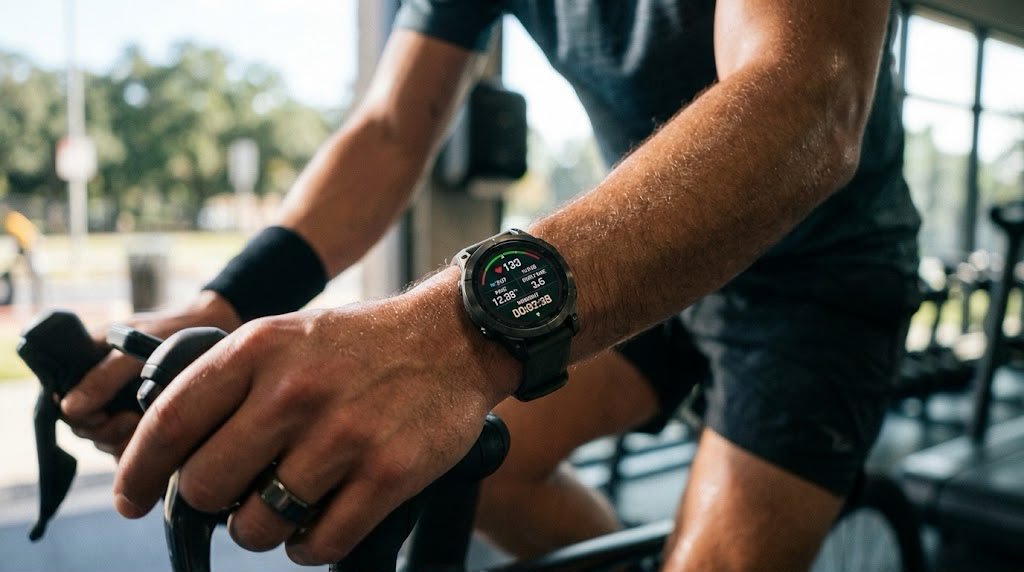
- Lacking Real-Time Visual Feedback: If you are out on a vigorous trail run or cycling session, a smart ring cannot display your live pace, heart rate zones, or split times. You cannot look down at your finger to check your workout metrics mid-stride.
- Durability During Weightlifting: Wearing a titanium or ceramic smart ring while gripping heavy steel barbells or dumbbells can lead to uncomfortable finger pinching, scratching the ring’s exterior, or risking finger injuries (such as ring avulsion) during intense cross-training.
6. Sizing, Fit, and the Psychological Hurdle of Ring Procurement
Unlike smartwatches—which feature adjustable bands and one-size-fits-all hardware—purchasing a smart ring requires a unique, highly specific logistical sizing process.
- The Sizing Kit Ritual: Because fingers expand and contract based on temperature, hydration, and salt intake, manufacturers typically mail a physical plastic sizing kit to your home before shipping the actual ring. You must wear the plastic test sizer for 24 to 48 hours to ensure a snug, comfortable fit across different daily activities.
- No Adjustability: If you gain or lose weight, or if your fingers swell during long-haul flights, your smart ring may suddenly feel too tight or too loose, whereas a smartwatch strap can be adjusted with a single buckle notch.
7. Subscription Paywalls: The Hidden Cost of Smart Rings
When purchasing a traditional smartwatch, the companion software app and health analytics dashboards are generally free to use indefinitely. In the smart ring market, however, business models have taken a controversial turn.
Understanding Ring Software Subscriptions
Several prominent smart ring manufacturers bundle their hardware with mandatory monthly software membership fees (typically ranging from $5 to $10 per month) to unlock advanced recovery insights, personalized coaching trends, and historical health data analysis. Without an active subscription, basic app functionality can sometimes be heavily restricted. When budgeting for a smart ring, consumers must calculate ongoing subscription overhead alongside initial hardware costs. For deeper consumer rights analyses, read consumer protection guides via Consumer Reports Tech Lab or software reviews on My Tech Hub Software Directory.
8. Comprehensive Smart Wearable Comparison Matrix
To help you evaluate whether a smart ring or a smartwatch fits your lifestyle, review the comparison matrix below:
| Feature / Metric | Smart Ring (e.g., Oura, Samsung Galaxy Ring) | Smartwatch (e.g., Apple Watch, Garmin Fenix) | Winner |
| Battery Life | 4 to 7 days continuous wear | 18 hours to 3 weeks (model dependent) | Smart Ring |
| Sleep Tracking Comfort | Featherlight, seamless, zero wrist bulk | Can feel bulky or intrusive overnight | Smart Ring |
| Live Workout Feedback | None (Requires smartphone screen check) | Real-time wrist metrics, GPS mapping, pacing | Smartwatch |
| Notification Management | Silent biometric capture (Zero distractions) | Full interactive alerts, calls, and app widgets | Smartwatch |
| Aesthetic Versatility | Looks like high-end fashion jewelry | Looks unmistakably like computer tech | Smart Ring |
Smart Ring Pricing & Tier Reference Guide
To help you map out your wearable budget, review the pricing breakdown below:
| Smart Ring Model | Core Material | Estimated Price Range (USD) | Subscription Requirement | Best Suited For |
| Oura Ring (Gen 4 / Horizon) | Titanium | $299 – $499 | ~$5.99 / month (Required for deep analytics) | Sleep optimization, recovery tracking, & health purists |
| Samsung Galaxy Ring | Titanium | $399 | None (Free Samsung Health app) | Android ecosystem users wanting screen-free tracking |
| Amazfit Helio Ring | Titanium Alloy | $149 – $299 | Optional / Low tier | Budget-conscious fitness and recovery tracking |
| Ultrahuman Ring AIR | Titanium | $349 | None (Free lifetime app analytics) | Lightweight sleep tracking with zero monthly fees |
9. Material Science, Titanium Alloys, and Ceramic Durability in Smart Rings
Because smart rings are worn constantly on your fingers—where they inevitably bang against coffee mugs, steering wheels, gym equipment, and metal door handles—their outer shell material must be exceptionally tough. Unlike smartwatches, which can sometimes absorb impacts across a broader wrist surface area, rings take direct, focused blunt-force contact throughout daily tasks.
Engineering Exterior Resilience
- Aerospace-Grade Titanium: Most flagship smart rings are forged from titanium alloys, providing an extraordinary strength-to-weight ratio. Titanium is exceptionally resistant to corrosion, hypoallergenic against sensitive skin, and rigid enough to withstand deep impacts without bending or cracking.
- PVD Coatings and Scratch Resistance: To prevent unsightly scuffs, manufacturers utilize Physical Vapor Deposition (PVD) coatings or protective diamond-like carbon (DLC) finishes. However, users should note that matte black or gold-colored coatings can still develop micro-scratches over years of heavy friction against metal objects.
10. Battery Degradation, Micro-Battery Engineering, and Lifespan Realities
One of the hidden technical hurdles facing manufacturers of miniature smart rings is managing lithium-ion micro-battery lifespan. Because a smart ring must measure only a few millimeters in thickness, its internal battery is microscopically small—often delivering less than 20 milliamp-hours of capacity.
The Physics of Miniature Power Cells
- Rapid Charge Cycles: Because micro-batteries hold very little charge, they cycle through complete charge and discharge states much faster than large smartwatch batteries. Over two to three years of daily use, micro-batteries inevitably experience chemical degradation, shortening the device’s multi-day battery endurance down to a single day.
- Non-Serviceable Hardware Seals: Due to the waterproof resin seals required to protect internal circuitry from moisture and swimming submersion, smart rings are virtually impossible to open for battery replacements. When the internal battery finally dies, the ring must typically be replaced entirely, making long-term hardware longevity an important economic consideration.
11. Integration With Apple Health, Google Health Connect, and Fitness Aggregators
A wearable device is only as valuable as the data ecosystem supporting it. When you purchase a smart ring, you want your sleep scores, resting heart rate averages, and recovery metrics to synchronize smoothly with your primary health dashboard rather than remaining trapped inside a standalone manufacturer app.
Breaking Down Ecosystem Silos
- Cross-Platform Synchronization: Leading smart rings integrate seamlessly with major health aggregators like Apple Health on iOS and Google Health Connect on Android. This allows your ring to feed its biometric data directly into your master medical profile alongside scale data, nutrition logs, and workout records.
- Third-Party Fitness App Support: Many rings allow you to export workout and sleep metrics to popular athletic training platforms like Strava or TrainingPeaks, ensuring athletes don’t have to abandon their preferred training apps to benefit from continuous ring telemetry.
12. Waterproofing Engineering, Pressure Ratings, and Aquatic Wearability
Unlike electronics designed for indoor office environments, smart rings are subjected to intense aquatic environments, ranging from hot showers and saltwater ocean swimming to high-pressure scuba diving and vigorous water sports.
Understanding Water Resistance Standards
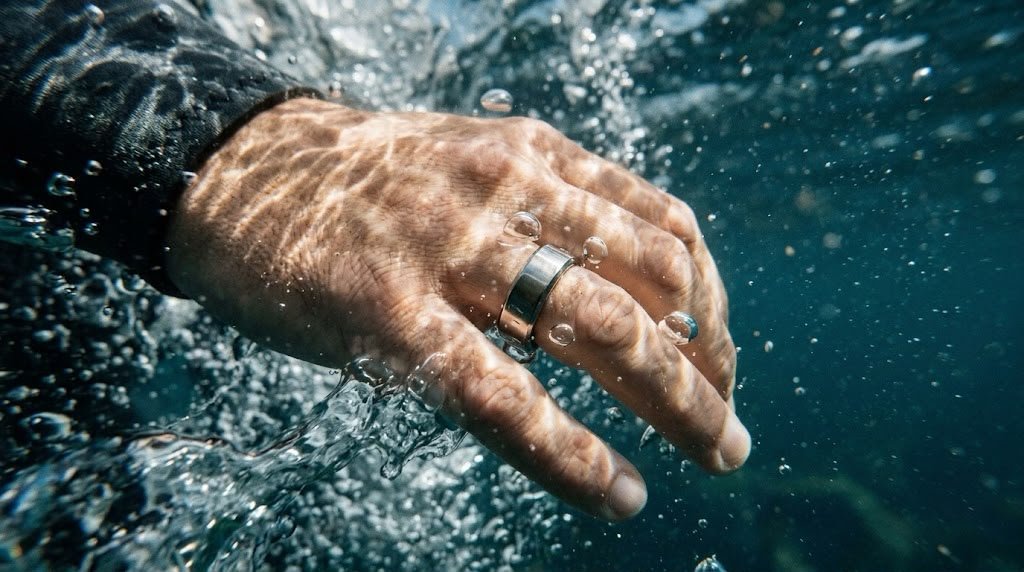
- ATM Ratings Explained: Reputable smart ring brands engineer their hardware to withstand pressures of 5 ATM (50 meters) or 10 ATM (100 meters). This ensures the device is completely safe for lap swimming, snorkeling, and surfing.
- Soap and Chemical Degradation: While water pressure poses little threat to titanium shells, prolonged exposure to harsh shower soaps, chlorine in swimming pools, and abrasive body scrubs can gradually degrade exterior surface finishes and adhesive waterproof seals over time. Rinsing your ring with clean tap water after swimming in chlorinated pools is always recommended.
13. The Future of Smart Ring Micro-Gestures and Hands-Free Device Control
While current-generation smart rings function primarily as passive biometric collectors, research and development laboratories are actively exploring the next frontier of ring utility: micro-gesture control.
Transforming Rings Into Digital Input Devices
- Accelerometer-Driven Commands: Future smart rings packed with ultra-sensitive 6-axis accelerometers and gyroscopes will allow users to control external smart devices through subtle finger flicks and taps. You could answer a phone call with a finger snap, skip a music track with a subtle wrist twist, or advance presentation slides during a business meeting without touching your phone or computer.
- AR/VR Spatial Computing Integration: As augmented reality glasses and spatial headsets gain popularity, lightweight smart rings serve as ideal, low-profile physical controllers for navigating virtual menus and interacting with holographic interfaces.
14. Ergonomic Sizing Discrepancies: Why Finger Choice Alters Biometric Accuracy
Choosing which finger to place your smart ring on is not just a matter of fashion or personal comfort—it has a direct, measurable impact on biometric sensor accuracy.
Optimizing Sensor Placement for Data Precision
- The Index Finger Sweet Spot: Most manufacturers strongly recommend wearing your smart ring on your index finger. The index finger possesses the largest surface area for optical sensor contact, stays securely positioned during hand movements, and features optimal vascular density.
- The Handedness Factor: Many users prefer wearing the ring on their non-dominant hand (e.g., your left hand if you are right-handed) to minimize accidental scratching against keyboards, gym equipment, and tools during daily manual labor.
15. Discretion, Workplace Professionalism, and the Social Stigma of Smart Tech
In professional boardrooms, formal galas, and conservative corporate environments, wearing a bulky, flashing smartwatch can sometimes feel out of place or overly casual. Smart rings offer a unique social advantage through absolute discretion.
The Power of Invisible Technology
- Blending Tech With High Fashion: Because smart rings are forged from polished titanium, gleaming gold PVD finishes, and deep ceramics, they resemble high-end wedding bands or luxury fashion jewelry rather than digital computers.
- Eliminating Digital Distraction: In social settings, glancing down at a flashing smartwatch screen signals to the person speaking with you that your attention is divided. Smart rings maintain absolute social etiquette by collecting data silently without demanding your visual attention.
16. Analyzing the Total Cost of Ownership: Hardware, Subscriptions, and Lifespan
When budgeting for a wearable gadget, looking solely at the initial retail sticker price can be misleading. Calculating the true total cost of ownership (TCO) requires evaluating ongoing software fees and expected hardware replacement cycles.
Calculating Long-Term Wearable Expenses
- Upfront Hardware vs. Recurring Fees: A $300 ring with a mandatory $6-per-month subscription costs roughly $660 over a three-year lifespan, making it significantly more expensive than a competing ring with a free lifetime app model.
- Battery Obsolescence Factor: Because micro-batteries degrade past usable utility within two to four years, smart rings represent a recurring capital expense rather than a permanent lifetime jewelry purchase.
17. The Environmental and Health Impact of 24/7 Finger Confinement
Wearing any piece of jewelry or electronic hardware continuously around your finger for twenty-four hours a day, seven days a week introduces unique dermatological considerations that users should monitor.
Maintaining Healthy Skin Hygiene
- Moisture Trapping and Dermatitis: If you wash your hands frequently and allow water or harsh soap to become trapped underneath the interior band of a tight smart ring, it can cause localized skin maceration, irritation, or contact dermatitis.
- Best Practices for Skin Health: Periodically remove your smart ring while washing your hands or showering, dry your finger thoroughly before sliding the ring back on, and clean the interior sensor surface with a soft microfiber cloth to prevent bacterial buildup.
18. Global Market Trends: How Smart Rings Are Disrupting the Traditional Watch Industry
The explosive commercial growth of smart rings has sent shockwaves through the traditional consumer electronics and Swiss watchmaking industries, forcing legacy brands to rethink their product roadmaps.
Shifting Consumer Preferences
- The Rise of Hybrid Wearers: A growing segment of tech consumers now practices “hybrid wearing”—sporting a classic, beautiful mechanical watch on their left wrist for timeless elegance while wearing a discreet smart ring on their right hand for passive health and sleep tracking.
- Mainstream Tech Giants Entering the Ring Market: With tech giants like Samsung launching dedicated smart rings and Apple exploring ring patents, the category has transitioned from an experimental Kickstarter novelty into a multi-billion-dollar mainstream hardware pillar.
19. Open-Source Ecosystems vs. Walled Gardens in Personal Biometric Data
As consumers grow increasingly protective of their personal health metrics, the debate between open-source data ownership and corporate walled gardens has become a defining battleground in the wearable tech industry.
Data Ownership and Portability
- Exporting Your Health Logs: Ensure your chosen smart ring ecosystem allows you to easily export your raw HRV, sleep, and activity logs into standard CSV formats or external fitness aggregators. Avoid platforms that lock your historical health data behind proprietary software walls with no export options.
- Privacy and Medical Research Compliance: Premium brands often adhere to strict regional privacy frameworks (like HIPAA and GDPR), ensuring your sensitive physiological data is never sold to third-party data brokers or targeted advertising networks.
20. The Ultimate Buying Framework: How to Choose Between a Ring and a Watch
Navigating the modern wearable market comes down to understanding your core priorities. To summarize your decision-making framework, review the core guiding principles:
- Choose a Smart Ring if: You prioritize deep, effortless sleep tracking, multi-day battery autonomy, timeless jewelry aesthetics, and escaping the constant distraction of wrist-based notification screens.
- Choose a Smart Watch if: You demand real-time workout metrics, active GPS mapping, voice call functionality, instant message replies, and interactive productivity apps on your arm.

Frequently Asked Questions (FAQ)
Q1: Can a smart ring completely replace my smartwatch?
A: It depends entirely on your daily needs. If you only care about tracking sleep quality, daily steps, resting heart rate, and overall recovery without wanting notifications or live workout stats, a smart ring can easily replace a smartwatch. If you rely on wrist-based notifications, GPS mapping, and phone calls, it cannot.
Q2: Are smart rings waterproof for swimming and showering?
A: Most leading smart rings feature water resistance ratings ranging from 5 ATM to 10 ATM, making them fully waterproof for swimming, showering, and shallow diving. Always verify the specific water resistance rating of your chosen brand before submerging.
Q3: Do smart rings require a monthly subscription fee to work?
A: Some brands (such as Oura) require a monthly membership fee to unlock advanced health analytics and long-term trend dashboards, while other brands (like Samsung and Ultrahuman) provide free lifetime app access without recurring subscription walls.
Conclusion: Which Wearable Actually Wins?
So, are smart rings better than smartwatches? The definitive answer is that they do not compete directly—they serve entirely different psychological and functional needs.
- Smart rings win decisively if your primary goals are effortless sleep tracking, multi-day battery endurance, discreet jewelry aesthetics, and escaping constant digital distractions. If you want health insights without screen addiction, the smart ring is an extraordinary technological triumph.
- Smartwatches win decisively if you demand live workout metrics, active GPS route mapping, instant notification management, and hands-free communication. If you view your wearable as an interactive productivity tool rather than a passive health monitor, the traditional smartwatch remains unmatched.
Evaluate your daily routine, your tolerance for charging cables, and your digital wellness goals, and choose the form factor that elevates your lifestyle without weighing you down.