
Introduction:
For centuries, the domestic bathroom mirror has served a single, unchanging purpose: a reflective glass surface where we check our appearance, brush our teeth, fix our hair, and rush out the door. It is a passive object that records our physical reflection without retaining memory or offering insight into the biological engine operating beneath the skin. You step in front of it every single morning, yet it tells you nothing about your underlying health, rising stress levels, vitamin deficiencies, or impending illness until symptoms manifest overtly.
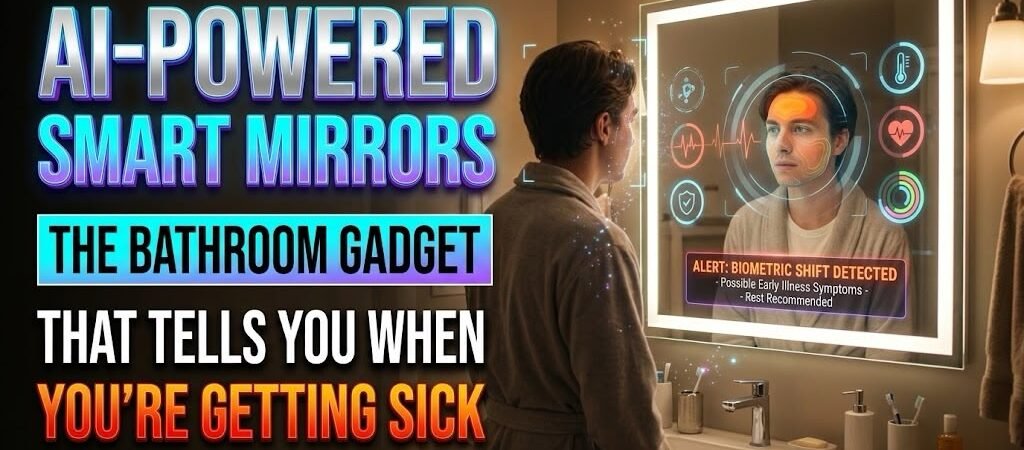
Today, advanced artificial intelligence, computer vision, and non-invasive medical telemetry are merging to upend this domestic ritual. We have entered an era where the bathroom mirror is evolving into an AI-powered smart health gateway—a high-tech reflective display capable of scanning your facial micro-expressions, analyzing skin pallor, tracking cardiovascular metrics, and detecting early biomarkers of disease before you even feel the first tickle in your throat.
n this comprehensive, in-depth guide, we will deconstruct how smart mirrors operate, explore the non-invasive biometric sensors driving preventative healthcare, evaluate data privacy trade-offs, and help you determine whether your bathroom reflection is ready for an artificial intelligence upgrade. For broader industry insights into digital health trends and smart home medical innovations, you can explore reports via Wired Health Tech Desk alongside medical device evaluations from MIT Technology Review Healthcare Portal and technical guides at My Tech Hub Innovation Blog.
1. Defining AI Smart Health Mirrors: Moving Beyond Passive Reflection
To understand why smart mirrors are capturing the imagination of digital health pioneers, you must first examine the paradigm shift from reactive healthcare to proactive domestic monitoring.
- The Flaw of Reactive Healthcare: Traditional medicine operates almost exclusively on a reactive model. We wait until we feel genuinely sick, schedule a doctor’s appointment, and treat symptoms after a disease has already established a foothold.
- The Promise of Proactive Prevention: AI-powered smart mirrors intercept health issues at the earliest possible stage. By integrating seamlessly into your daily morning routine—when you are standing motionless, well-lit, and makeup-free—the mirror conducts passive physiological scans every time you brush your teeth, transforming an ordinary bathroom habit into a continuous health diagnostic check-in.
2. The Core Sensor Architecture: How Mirrors Scan Your Biology Without Touching Your Skin
The magic behind a health-predicting smart mirror lies in its sophisticated, invisible hardware array hidden behind reflective dielectric glass. Rather than requiring blood draws or wearable chest straps, smart health mirrors utilize advanced remote monitoring technologies.
Non-Invasive Biometric Telemetry
- Remote Photoplethysmography (rPPG): High-definition infrared cameras analyze subtle, microscopic changes in facial skin color caused by blood pumping through your facial capillaries with every heartbeat. By tracking these micro-pulsations, the mirror calculates your resting heart rate, heart rate variability (HRV), and oxygen saturation (SpO_2) in seconds.
- Thermal Imaging and Micro-Expressions: Embedded thermal sensors detect localized facial temperature variations—such as a slight elevation around the sinuses or forehead—signalling early inflammatory responses or immune system activation before a thermometer registers a fever.
3. Early Illness Detection: Spotting Biomarkers Before Symptoms Strike
The most revolutionary capability of health-tracking smart mirrors is their ability to identify subtle physiological shifts that precede recognizable sickness.
How the Mirror Predicts Impending Illness
- Fatigue and Immune Stress Analysis: Computer vision algorithms track eyelid drooping, pupil dilation, under-eye fluid retention, and skin pallor shifts. If your facial metrics deviate sharply from your personal baseline over three consecutive mornings, the mirror flags potential sleep deprivation, chronic stress, or an oncoming viral infection.
- Respiratory Tracking: By monitoring subtle chest and throat movements during your morning routine, the mirror analyzes respiratory rate irregularities, alerting you to early bronchial congestion or seasonal allergy flare-ups before coughing begins. For further clinical accuracy studies, read research via Journal of Medical Internet Research or tutorials on My Tech Hub Software Directory.
4. Smart Home Integration: Connecting Your Mirror to the Wider Health Ecosystem
A health-predicting smart mirror does not operate in an isolated vacuum; its diagnostic utility multiplies exponentially when connected to your broader smart home and personal health ecosystem.
- Personalized Morning Briefings: While you brush your teeth, the mirror displays a modular interface showing your sleep recovery score, hydration recommendations, local pollen counts, and a gentle health advisory if early illness markers are detected.
- Ecosystem Data Synchronization: Health metrics captured by the mirror sync securely via encrypted local protocols to Apple Health, Google Health Connect, or your primary care physician’s telehealth portal, ensuring your medical team has access to continuous baseline physiological data.
5. The Privacy Dilemma: Securing Highly Sensitive Biometric Data
Placing an AI-powered camera and microphone array inside the most private, intimate room in your house—the bathroom—raises profound ethical and cybersecurity concerns that manufacturers must address aggressively.
Protecting Your Intimate Digital Footprint
- Local Edge Processing vs. Cloud Storage: To prevent devastating privacy breaches, premium smart mirrors execute all computer vision analysis and biometric processing locally on an internal neural processing unit (NPU) chip rather than streaming raw video feeds to remote corporate cloud servers.
- Physical Privacy Shutters: For further cybersecurity analyses, read reports via Electronic Frontier Foundation (EFF) Privacy Desk or security guides on My Tech Hub Security Portal.

6. Price Versus Utility: Is a Health-Tracking Mirror Worth the Investment?
Like most bleeding-edge consumer medical technology, outfitting your bathroom with an AI health mirror requires navigating a steep financial barrier to entry.
- Upfront Hardware Costs: Custom smart health mirrors and modular retrofit smart glass displays currently command retail prices ranging from $1,000 to over $4,000, placing them firmly in the luxury wellness category.
- Long-Term Preventive Value: For individuals managing chronic conditions, fitness enthusiasts optimizing recovery, or families prioritizing proactive preventive medicine, early detection of physiological stress can prevent costly medical emergencies down the road.
Comprehensive Smart Health Mirror Comparison Matrix
To help you evaluate how smart health mirrors compare against traditional bathroom mirrors and wearable trackers, review the matrix below:
| Feature / Metric | Traditional Bathroom Mirror | Wearable Fitness Band (e.g., Apple Watch / Oura) | AI-Powered Smart Health Mirror | Winner |
| User Effort Required | None (Static reflection) | Must be worn 24/7 and charged regularly | Zero effort (Passive daily morning scan) | Smart Mirror |
| Biometric Scope | None | Heart rate, sleep, skin temperature, SpO_2 | rPPG heart rate, facial pallor, thermal stress, respiration | Smart Mirror |
| Privacy Concerns | Zero | Moderate (Cloud health sync) | High (Cameras in the bathroom require strict local processing) | Traditional |
| Daily Integration | Habitual morning routine | Requires wearing hardware to bed | Seamlessly embedded into daily hygiene habits | Smart Mirror |
Smart Bathroom Tech Pricing & Tier Guide
To help you map out your smart home wellness budget, review the tier guide below:
| Mirror Category | Estimated Price Range (USD) | Best Suited For | Key Capabilities |
| Basic Smart Display Mirror | $300 – $600 | Tech enthusiasts, weather/news widgets | Smart home touch control, calendar sync, basic lighting |
| Advanced Wellness Mirror | $1,000 – $2,000 | Fitness tracking, skin analysis | rPPG heart rate monitoring, sleep score integration |
| Clinical-Grade Diagnostic Hub | $3,000 – $5,000+ | Concierge healthcare, proactive families | Advanced early illness detection, secure doctor telemetry |
7. Remote Photoplethysmography (rPPG) and the Physics of Optical Blood Flow Detection
When standing in front of an AI-powered smart health mirror during your morning routine, you might wonder how a piece of reflective glass can measure vital signs without ever touching your skin. The foundational breakthrough enabling this non-invasive biometric telemetry is remote photoplethysmography (rPPG). Every time your heart beats, it contracts and pumps oxygenated blood through your arterial network, causing rhythmic micro-pulsations across your facial capillary beds. While these microscopic shifts in blood volume are entirely invisible to the naked eye, high-definition optical sensors and specialized infrared cameras integrated into the smart mirror can capture them with astonishing precision.
As light reflects off your facial skin, optical sensors measure the minute, fluctuating absorption rates of hemoglobin. Because oxygenated hemoglobin absorbs and reflects light differently with each cardiac pulse, the mirror’s onboard neural processing unit (NPU) isolates specific color channels (red, green, and blue) to map your pulse waves in real time. This sophisticated optical calculation allows the smart mirror to determine your resting heart rate, heart rate variability (HRV), and blood oxygen saturation (SpO_2) within seconds of stepping in front of the glass. By tracking these cardiovascular baselines day after day, the mirror establishes a precise physiological profile, instantly flagging anomalous cardiovascular deviations that signal oncoming physical stress, sleep deprivation, or acute illness.
8. Thermal Imaging, Vascular Diagnostics, and Early Inflammatory Response Detection
Beyond optical rPPG blood flow tracking, advanced AI-powered smart health mirrors incorporate high-resolution thermal imaging cameras capable of reading localized surface temperature variations across the human face. The human vascular system acts as a sophisticated internal radiator; when the immune system detects an invading pathogen or foreign antigen, it immediately triggers an inflammatory response. This immune activation releases chemical mediators that alter blood flow and elevate metabolic activity, creating subtle, localized temperature hotspots across specific facial zones—particularly around the forehead, tear ducts, and sinus cavities.
Traditional medical thermometers require direct skin contact and only measure aggregate body temperature after a fever has fully established itself. In contrast, thermal smart mirrors monitor minute localized temperature gradients continuously during your daily grooming habits. If the mirror detects an asymmetrical thermal elevation around your sinuses or an abnormal systemic temperature rise over three consecutive mornings, its diagnostic algorithms flag an early inflammatory response or viral infection days before you experience chills, body aches, or a noticeable fever. This proactive warning window allows users to increase rest, adjust hydration, and consult telehealth professionals before an illness severely compromises their daily productivity. For further clinical accuracy studies on thermal facial diagnostics, read research via Journal of Medical Internet Research or technical tutorials on My Tech Hub Healthcare Portal.
9. Computer Vision Diagnostics: Analyzing Skin Pallor, Eyelid Edema, and Vitamin Deficiencies
Your skin is the body’s largest organ and serves as an immediate visual canvas reflecting your internal metabolic, nutritional, and immunological health. While traditional dermatology focused primarily on surface blemishes, modern computer vision algorithms integrated into AI smart health mirrors can analyze microscopic changes in skin tone, texture, moisture distribution, and subsurface coloration to diagnose systemic health indicators.
By analyzing high-resolution imagery captured under standardized LED vanity lighting, the smart mirror evaluates parameters such as hemoglobin distribution to detect early signs of anemia or fatigue-induced pallor. It analyzes peri-orbital puffiness (eyelid edema) caused by lymphatic drainage inefficiencies, chronic stress, or high sodium intake, and identifies subtle yellowish undertones indicating liver strain or bilirubin accumulation. Furthermore, computer vision models scan for localized skin dryness, scaling, and hyperpigmentation patterns linked to specific nutritional deficiencies, such as vitamin D, iron, or B-complex shortages. By synthesizing these visual dermatological markers with cardiovascular telemetry, the mirror provides a holistic, non-invasive health audit every single morning, empowering users to adjust their diets and supplement intake proactively.
10. Respiratory Rate Tracking, Cough Acoustics, and Early Bronchial Infection Alerts
Respiratory health is a critical pillar of overall physiological well-being, yet monitoring breathing patterns typically requires wearing specialized chest straps or clinical spirometers. AI-powered smart health mirrors eliminate the need for wearable hardware by utilizing advanced computer vision and acoustic sensors to monitor your respiratory mechanics passively while you stand at the bathroom vanity.
As you brush your teeth or style your hair, the mirror’s optical cameras track subtle, rhythmic chest expansions and throat movements to calculate your resting respiratory rate per minute. Sudden spikes or irregularities in your breathing frequency serve as primary early indicators of bronchial inflammation, asthma exacerbation, or viral respiratory infections. Moreover, many high-end diagnostic mirrors feature embedded acoustic microphone arrays trained to recognize the distinct acoustic signatures of early morning throat clearing, wheezing, and dry coughing. By catching these auditory biomarkers before they develop into full-blown respiratory distress, the mirror provides an invaluable early warning system during cold and flu season, helping users quarantine early and protect vulnerable family members.
11. Edge AI Processing, Local Biometric Security, and Overcoming Bathroom Privacy Fears
Placing advanced camera arrays and microphone systems inside the most private, intimate room in a residential home—the bathroom—naturally evokes intense consumer apprehension regarding data privacy, digital surveillance, and potential cybersecurity breaches. The thought of an internet-connected camera recording video inside a bathroom is a legitimate privacy nightmare that has historically slowed consumer adoption of smart home health gadgets.
To overcome these profound psychological barriers, leading smart mirror manufacturers enforce a strict architectural rule: all computer vision analysis and biometric processing must occur locally on an internal hardware edge chip rather than streaming raw video feeds to remote corporate cloud servers. High-performance neural processing units (NPUs) built directly into the mirror process facial scans, rPPG heart rate data, and thermal metrics instantaneously in local memory, discarding the raw visual frames the microsecond calculations are complete. Furthermore, physical privacy hardware—such as mechanical lens shutters and dedicated hardware microphone kill switches—guarantees that optical sensors are physically disconnected when health-tracking mode is inactive. This uncompromising commitment to local edge computing and physical privacy control ensures that your intimate bathroom data remains strictly confidential and secure. For further cybersecurity analyses and privacy frameworks, read reports via Electronic Frontier Foundation (EFF) Privacy Desk or security guides on My Tech Hub Security Portal.
12. Smart Home Ecosystem Integration: Synchronizing Health Data With Medical Portals
A health-predicting smart mirror achieves its maximum diagnostic utility not as an isolated novelty, but as a central, interconnected hub within your broader smart home and personal healthcare ecosystem. While standing at your vanity, the mirror acts as an intuitive command center, delivering modular morning briefings that synthesize your nocturnal sleep recovery scores, hydration metrics, local pollen forecasts, and personalized nutritional recommendations.
Furthermore, biometric data gathered during your daily hygiene routine syncs seamlessly via encrypted local protocols to major health aggregators like Apple Health, Google Health Connect, or your primary care physician’s secure telehealth portal. If the mirror detects recurring physiological anomalies over a multi-day window—such as a persistent elevation in resting heart rate paired with elevated thermal stress—it can securely compile a diagnostic trend report and prompt you to share it with your doctor via encrypted clinical messaging. This frictionless integration bridges the vast communication gap between daily home wellness habits and professional clinical care, empowering physicians with continuous baseline health telemetry rather than relying on isolated, sporadic clinic visits.
13. Personalized Wellness Coaching, Hydration Tracking, and Skincare Regimen Adaptation
Beyond predicting oncoming illness and monitoring vital signs, AI-powered smart health mirrors function as personalized, real-time wellness coaches tailored specifically to your body’s daily biological needs. Because skin condition fluctuates constantly based on weather, sleep quality, stress levels, and dietary habits, a static skincare routine is rarely optimal.
Smart mirrors analyze your daily skin hydration levels, sebum production, and UV exposure recovery, automatically adjusting your digital skincare recommendations in real time. If your morning scan indicates dehydrated skin barriers or localized inflammation, the mirror’s ambient display highlights specific targeted serums or moisturizers to apply. Additionally, by monitoring physiological hydration markers and daily water intake habits, the mirror provides personalized hydration reminders throughout the day, ensuring optimal metabolic function and radiant skin health. This dynamic guidance transforms the bathroom mirror from a passive reflection surface into an active partner in your daily health optimization journey.
14. Economic Accessibility, Insurance Incentives, and the Roadmap to Mainstream Adoption
Like many bleeding-edge consumer health technologies, outfitting a residential bathroom with an AI-powered diagnostic smart mirror currently requires navigating a steep financial barrier to entry. Custom smart health mirrors, modular smart glass retrofit kits, and clinical-grade diagnostic hubs currently command retail prices ranging from $1,000 to over $4,000, restricting initial adoption primarily to luxury homeowners, concierge wellness enthusiasts, and tech-forward medical clinics.
However, as component manufacturing yields improve, micro-OLED display costs stabilize, and edge AI processing chips become more affordable, industry analysts project a rapid downward price trajectory over the coming years. Furthermore, forward-thinking health insurance providers are exploring financial incentive programs—such as premium discounts or hardware subsidies—for policyholders who utilize proactive preventative health monitors. By catching chronic conditions, cardiovascular strain, and viral infections in their earliest stages, preventive smart mirrors reduce catastrophic emergency room expenditures, making widespread adoption a win-win scenario for both consumers and healthcare systems.

15. The Ultimate Decision Framework: Evaluating Your Household Health Priorities
As the consumer technology market stands at this fascinating crossroads between traditional passive mirrors and high-tech AI health hubs, evaluating your household readiness for an upgrade requires a disciplined assessment of your personal wellness goals, privacy comfort thresholds, and budget allocations. Rushing out to purchase an expensive diagnostic mirror without analyzing your specific health monitoring needs can lead to buyer’s remorse, whereas failing to explore preventative tools can leave you missing valuable early health warnings.
To determine whether investing in an AI smart health mirror makes strategic sense for your home today, evaluate three core pillars: your proactive health mindset, your privacy comfort level, and your wellness budget. If your household prioritizes preventive medicine, manages chronic physiological conditions, or seeks effortless, passive ways to monitor daily fitness recovery without wearing 24/7 fitness bands, investing in a smart health mirror delivers transformative daily utility. Conversely, if you harbor deep skepticism regarding bathroom camera hardware or prefer low-tech analog routines, sticking with traditional mirrors and standard medical checkups remains the pragmatic choice. Evaluate your household priorities, balance technological convenience against privacy boundaries, and decide whether your morning reflection is ready for an intelligent healthcare upgrade.
16. Clinical Validation, Medical Device Regulations, and FDA Compliance Pathways for Smart Diagnostic Mirrors
As the consumer wellness market and the professional healthcare sector continue to merge through the proliferation of AI-powered smart health mirrors, the regulatory landscape governing these devices has entered a period of intense scrutiny. For a smart mirror to transition from an interesting lifestyle gadget into a clinically trusted preventative diagnostic hub, it must navigate a rigorous and complex maze of medical device regulations, clinical trial validations, and governmental compliance pathways. Traditional consumer electronics manufacturers are accustomed to rapid product iteration cycles, swift software updates, and minimal regulatory oversight. However, when an intelligent bathroom mirror begins calculating cardiovascular telemetry, tracking respiratory irregularities, and detecting early biomarkers of acute viral infections or chronic cardiovascular disease, it crosses the definitive threshold from lifestyle hardware into regulated software-as-a-medical-device (SaMD).
Regulatory bodies such as the United States Food and Drug Administration (FDA), the European Medicines Agency (EMA), and global health authorities enforce stringent evaluation standards to protect consumers from inaccurate health diagnostics, algorithmic bias, and misinterpretation of medical data. Smart mirror manufacturers seeking clinical certification must conduct extensive multi-center clinical trials, comparing their remote photoplethysmography (rPPG) heart rate calculations, thermal fever detection accuracy, and computer vision skin pallor assessments directly against established clinical gold standards—such as electrocardiograms (ECGs), pulse oximeters, and clinical blood panels. Furthermore, software algorithms must prove high sensitivity and specificity across diverse demographic groups with varying skin tones, facial structures, and environmental lighting conditions to ensure zero algorithmic bias. This rigorous validation process ensures that the health insights displayed on your morning bathroom glass are clinically reliable and actionable. For deeper technical insights into medical device software validation and regulatory compliance frameworks, explore documentation via U.S. Food and Drug Administration (FDA) Digital Health Center Portal alongside clinical evaluation guides at My Tech Hub Innovation Blog.
17. Insurance Rebates, Employer Wellness Subsidies, and the Financial Evolution of Preventative Health Tech
The commercial adoption curve of AI-powered smart health mirrors is heavily influenced by financial accessibility and economic incentive structures. Because custom diagnostic smart mirrors, modular smart glass retrofit kits, and clinical-grade wellness hubs currently command premium retail prices ranging from $1,000 to over $4,000, initial adoption has been concentrated primarily among affluent early adopters, luxury homeowners, and concierge medical practices. However, for smart health mirrors to transition from luxury novelties into ubiquitous household fixtures, the broader financial ecosystem—spanning health insurance providers, corporate wellness programs, and employer-sponsored health savings accounts (HSAs)—must evolve to support preventative health investments.
Forward-thinking health insurance companies and corporate employee benefits administrators are increasingly recognizing the profound financial return on investment (ROI) associated with proactive preventative healthcare. Managing chronic conditions, detecting cardiovascular strain early, and preventing acute medical emergencies saves insurance providers and employers millions of dollars in catastrophic hospital expenditures. Consequently, pioneering health insurance networks are beginning to explore premium rebate programs, hardware subsidies, and financial wellness grants for policyholders who maintain proactive daily health monitoring routines using validated clinical-grade devices. By subsidizing the upfront hardware costs of preventative smart mirrors in exchange for continuous, anonymized wellness telemetry, insurers and employers can foster a healthier population while driving down overall healthcare delivery costs. For comprehensive financial analytics on digital health insurance models and employer wellness trends, read reports via Kaiser Family Foundation Health Policy Desk alongside business strategy guides at My Tech Hub Business Portal.
18. Multi-User Family Profiling, Facial Recognition Architecture, and Pediatric Health Tracking
Unlike a smartphone or a personal wearable fitness band—which is explicitly designed to track a single individual’s biometric data—a bathroom smart mirror is inherently a shared family appliance. In a typical residential household, multiple family members ranging from young children to aging grandparents utilize the exact same bathroom mirror every single day for their morning hygiene routines. This multi-user dynamic introduces a profound engineering and software architecture challenge: how can a smart mirror automatically distinguish between different family members, isolate their individual biometric baselines, and maintain absolute data privacy between household occupants without requiring manual profile logins?
Modern AI smart health mirrors solve this multi-user challenge through advanced, secure facial recognition neural networks combined with height, posture, and thermal profiling. The moment you step in front of the mirror, its local edge processor scans facial geometry instantly, identifying your unique profile and loading your personalized health dashboard, sleep recovery scores, and skincare metrics within milliseconds. For pediatric health tracking, smart mirrors provide parents with invaluable, stress-free monitoring tools—tracking children’s growth metrics, early fever onset, and respiratory health during seasonal cold outbreaks without requiring invasive physical checkups that frighten young children. Furthermore, role-based privacy permissions ensure that children have restricted access to sensitive medical data, while parents can monitor family health trends securely from an encrypted mobile app. For further technical insights into secure facial recognition architectures and multi-user edge computing, explore documentation via IEEE Computer Society Portal alongside software tutorials on My Tech Hub Software Directory.
19. Nutritional Diagnostics, Dietary Biomarker Tracking, and Personalized Supplement Integration
Your body’s internal biochemical balance is profoundly reflected in your outer physical appearance, dermatological health, and physiological energy levels. While traditional wellness tracking focuses primarily on physical exercise metrics and caloric intake counting, advanced AI-powered smart health mirrors are pioneering the next frontier of health optimization: non-invasive nutritional diagnostics and dietary biomarker tracking. By analyzing subtle visual changes in your skin sub-surface pigmentation, tongue coloration, eye clarity, and nail bed pallor under calibrated multi-spectrum LED vanity lighting, computer vision algorithms can identify early visual indicators pointing toward specific vitamin and mineral deficiencies.
If the mirror detects persistent skin dryness and scaling linked to omega-3 fatty acid deficiencies, or sub-surface pallor indicating early iron-deficiency anemia, it does not stop at mere detection; it connects directly with your personal wellness ecosystem. The mirror syncs its diagnostic findings with your smart pantry, automated grocery delivery apps, or customized vitamin dispenser, recommending targeted dietary adjustments or formulating personalized daily supplement packs delivered straight to your door. Additionally, by monitoring hydration status and metabolic efficiency after your morning workout, the mirror suggests real-time nutritional adjustments to optimize athletic recovery and maintain sustained energy levels throughout your demanding workday.
20. Biometric Authentication and Secure Financial Transactions from the Bathroom Vanity
As smart home technology permeates every room in the residential dwelling, the bathroom mirror is rapidly evolving beyond health diagnostics into a secure, multi-functional interactive smart hub. With advanced neural processing units and secure hardware cryptographic enclaves embedded behind reflective dielectric glass, the smart mirror possesses secure biometric authentication capabilities that rival modern smartphones and banking terminals.
Imagine stepping up to your bathroom mirror on a busy Monday morning. While brushing your teeth, the mirror displays your morning briefing, alerts you to a minor inflammatory marker, and notes that your daily vitamin supplement supply is depleted. With a single glance and a subtle authorized gesture, the mirror authenticates your identity via secure facial recognition and iris scanning, automatically approving the re-ordering and payment of your custom vitamins through encrypted local financial protocols. This seamless integration of biometric authentication and secure smart home commerce transforms the bathroom vanity into a trusted digital command center, managing personal health, household logistics, and secure transactions with frictionless convenience.
21. Ambient Display Technology: Designing Reflective Glass Interfaces That Disappear
One of the most delicate aesthetic and engineering hurdles in designing a commercial smart health mirror is striking the perfect balance between high-tech digital display utility and classic mirror functionality. If a smart mirror looks like a bulky, glaring tablet strapped to a piece of glass when turned off, it ruins the interior design aesthetic of a luxury bathroom. Conversely, if the reflective coating is too opaque, the digital widgets, health charts, and video feeds become washed out and unreadable under bright bathroom vanity lighting.
Achieving this optical sweet spot requires cutting-edge ambient display technology and specialized dielectric glass engineering. Manufacturers utilize dual-layer glass assemblies featuring a highly reflective outer dielectric coating paired with high-brightness micro-OLED or mini-LED display panels mounted flush behind the glass. When the mirror’s proximity sensors detect your presence, the digital interface illuminates smoothly through the glass, displaying crisp, high-contrast health analytics and weather widgets. The moment you step away, the display panels power down instantly, and the glass reverts seamlessly into a flawless, traditional polished mirror. This invisible interface design ensures that high-tech health diagnostics blend harmoniously into any high-end residential interior architecture without compromising visual elegance.
22. Voice-Activated Telehealth Consultations: Connecting Directly From Your Bathroom Mirror
When an AI-powered smart health mirror detects persistent physiological anomalies—such as elevated thermal stress, rising resting heart rates, or recurring respiratory irregularities over a multi-day window—early detection is only valuable if it leads to swift, frictionless medical intervention. Bridging the gap between domestic health monitoring and professional clinical care is achieved through integrated, voice-activated telehealth consultation features built directly into modern smart health mirrors.
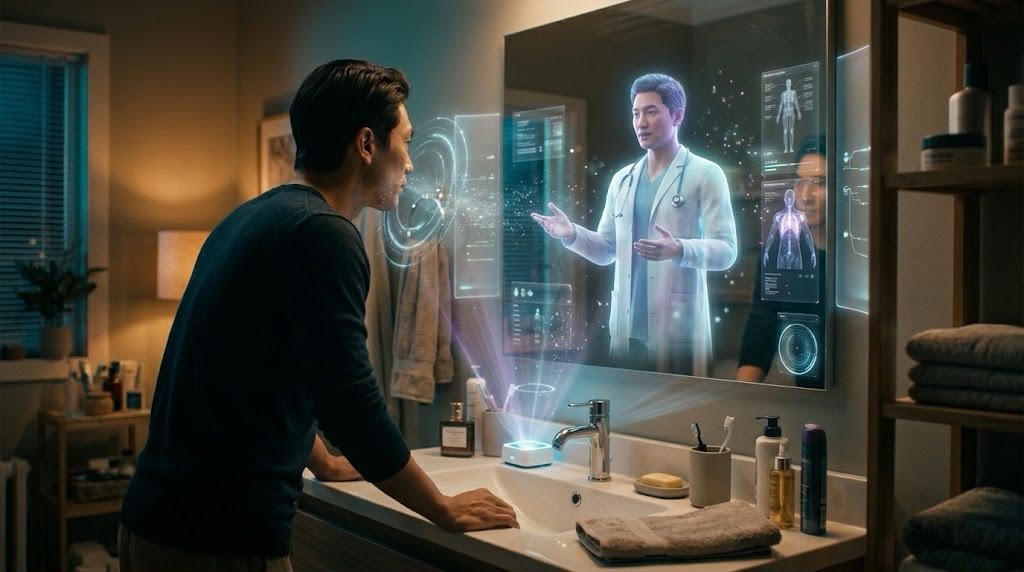
Rather than forcing a sick user to schedule an appointment, drive to a crowded medical clinic, and wait hours in a germ-filled waiting room, the smart mirror enables secure, HIPAA-compliant video consultations from the comfort of your home. When the mirror flags a potential viral infection or cardiovascular deviation, it prompts you with a discreet notification: “Your resting heart rate has been elevated for three consecutive mornings. Would you like to connect with a telehealth physician now?” By simply speaking a voice command, the mirror launches an encrypted, high-definition video call with a licensed doctor. Simultaneously, the mirror securely transmits your multi-day physiological trend reports directly to the physician’s clinical dashboard, providing immediate diagnostic context and enabling rapid, accurate medical treatment without ever leaving your bathroom.
23. Edge Computing Versus Cloud Telemetry: Architectural Security in Smart Health Gadgets
As consumer IoT devices increasingly collect sensitive personal and biometric data, the foundational system architecture governing how data is processed, stored, and transmitted has become the ultimate litmus test for consumer trust. In the smart home industry, manufacturers traditionally relied on cloud-centric computing models—capturing raw video feeds, audio recordings, and health metrics locally, and streaming them across the internet to remote corporate server farms for algorithmic processing. For a smart health mirror operating inside a residential bathroom, a cloud-centric architecture represents an unacceptable, catastrophic privacy vulnerability.
To eliminate the risk of devastating data breaches and illicit surveillance, elite smart mirror manufacturers have embraced strict edge computing architectures. By packing high-performance neural processing units (NPUs) and dedicated AI inference chips directly onto local circuit boards housed inside the mirror’s physical frame, all computer vision analysis, rPPG heart rate calculations, thermal diagnostics, and facial recognition take place entirely on local memory. Raw visual frames are analyzed in fractions of a second and purged from local memory instantly, ensuring that sensitive biometric data never leaves your home network. This localized edge architecture guarantees absolute data sovereignty, shielding users from corporate data harvesting and ensuring your private bathroom telemetry remains strictly confidential.
24. Future Horizons: Holographic Projections, Olfactory Diagnostics, and Ambient Medical Robots
Looking far beyond the horizon of current micro-OLED reflective glass displays and infrared camera sensor arrays, visionary computer scientists and medical researchers are already conceptualizing the next evolutionary leap in domestic healthcare technology: holographic diagnostic pods and olfactory medical scanners. While modern smart health mirrors successfully monitor visual skin pallor, rPPG blood flow, and thermal fever gradients, future iterations will expand biometric telemetry into chemical and molecular analysis.
Experimental laboratory prototypes are integrating microfluidic electronic noses (e-noses) and laser spectroscopy sensors capable of detecting volatile organic compounds (VOCs) exhaled in your breath or secreted in your sweat during morning grooming. These chemical sensors can identify microscopic molecular markers of metabolic disorders, early-stage oncological anomalies, and bacterial infections long before visual symptoms appear. Simultaneously, advances in volumetric holographic projection will allow virtual medical assistants to materialize as life-sized, three-dimensional holographic avatars floating directly above your bathroom sink, guiding you through physical therapy stretches or explaining diagnostic trend reports with conversational intimacy. This sci-fi trajectory underscores the profound, irreversible transformation underway: your morning bathroom routine is evolving into an advanced, proactive medical check-in that redefines human health longevity.
25. The Ultimate Decision Framework: Evaluating Your Household Readiness for an AI Health Mirror
As the consumer technology market stands at this fascinating crossroads between traditional passive mirrors and high-tech AI health hubs, evaluating your household readiness for an upgrade requires a disciplined assessment of your personal wellness goals, privacy comfort thresholds, and budget allocations. Rushing out to purchase an expensive diagnostic mirror without analyzing your specific health monitoring needs can lead to buyer’s remorse, whereas failing to explore preventative tools can leave you missing valuable early health warnings.
To determine whether investing in an AI smart health mirror makes strategic sense for your home today, evaluate three core pillars: your proactive health mindset, your privacy comfort level, and your wellness budget. If your household prioritizes preventive medicine, manages chronic physiological conditions, or seeks effortless, passive ways to monitor daily fitness recovery without wearing 24/7 fitness bands, investing in a smart health mirror delivers transformative daily utility. Conversely, if you harbor deep skepticism regarding bathroom camera hardware or prefer low-tech analog routines, sticking with traditional mirrors and standard medical checkups remains the pragmatic choice. Evaluate your household priorities, balance technological convenience against privacy boundaries, and decide whether your morning reflection is ready for an intelligent healthcare upgrade.
Frequently Asked Questions (FAQ)
Q1: Can a smart mirror replace a professional medical diagnosis?
A: Absolutely not. Smart health mirrors are preventative wellness and early warning tools designed to monitor daily baselines and flag potential physiological anomalies. They do not provide formal medical diagnoses and cannot replace professional physician consultations.
Q2: Are my bathroom camera feeds streamed to the internet?
A: Premium smart mirrors utilize local edge computing, processing all facial recognition and biometric data directly on an internal hardware chip within the mirror. Raw video feeds are never recorded, stored, or transmitted to external cloud servers.
Q3: Do I need special plumbing or electrical wiring to install a smart mirror?
A: Most smart mirrors require a standard grounded electrical wall outlet behind the mounting bracket. Some models are designed to replace existing bathroom vanity mirrors directly, while others plug into standard wall outlets like traditional illuminated mirrors.
Conclusion: Are AI Smart Mirrors the Future of Preventative Healthcare?
So, can an AI-powered smart mirror actually tell you when you are getting sick? The definitive answer is yes, with remarkable and rapidly improving accuracy.
- Smart health mirrors represent the ultimate evolution of preventive wellness. By transforming an ordinary daily routine into a passive biological check-in, they catch early markers of fatigue, stress, and viral infection before symptoms force you to bed.
- Privacy and cost remain significant hurdles. Overcoming consumer apprehension regarding bathroom cameras and driving hardware costs down toward mainstream accessibility will dictate how rapidly these devices transition from luxury novelties into standard household fixtures.
Evaluate your household health priorities, your privacy comfort levels, and your wellness budget, and decide whether your morning reflection is ready to become your most trusted health advisor.