
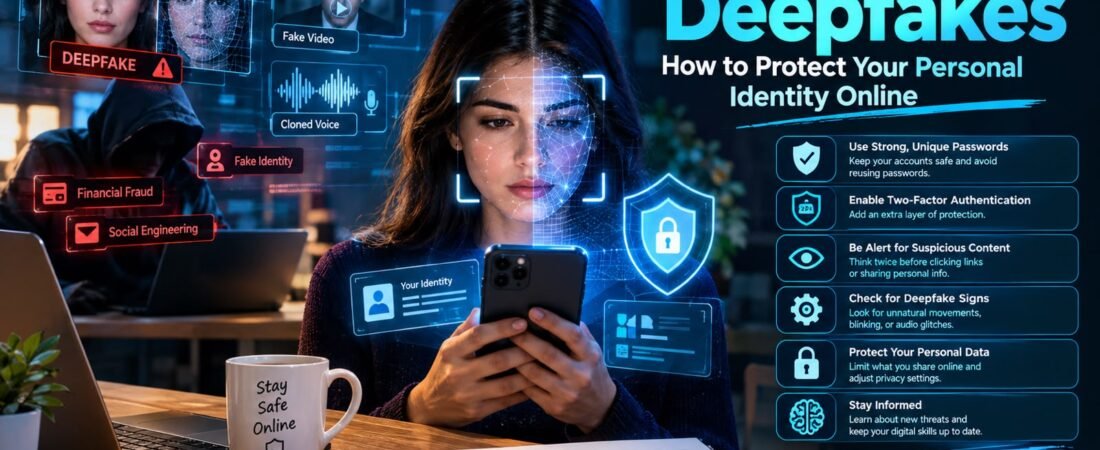
Introduction: The Generative AI Threat Landscape
For decades, digital identity theft and online fraud followed a predictable, easily recognizable pattern. If you received an email from an unknown sender requesting money, or noticed awkward spelling, broken grammar, and sketchy domain names, your instinctual scam-radar immediately went off. Traditional cybersecurity education taught us to look for typos, verify strange links, and guard our Social Security numbers.
Today, that defensive playbook has been rendered obsolete. We have entered an era where generative artificial intelligence has industrialized deception. With just a few seconds of public audio harvested from an Instagram video, a TikTok clip, or a corporate webinar, cybercriminals can clone a person’s exact voice tone, vocal cadence, and accent. With a handful of high-resolution photographs posted across social media profiles, bad actors can synthesize hyper-realistic video deepfakes, bypass biometric verification checks, and impersonate executives, family members, or everyday citizens with terrifying precision.
Deepfake-powered identity fraud is surging globally, evolving from a rare Hollywood novelty into an automated, scalable enterprise attack vector. Whether you are a corporate executive facing real-time video conference impersonation or a private individual whose voice is being weaponized to trick aging relatives, understanding how deepfakes operate is no longer optional—it is a mandatory life skill. In this comprehensive, in-depth guide, we will deconstruct how modern synthetic media works, analyze the rising threat of biometric fraud, and outline practical, actionable defense strategies to protect your personal identity online.
1. The Anatomy of a Deepfake: Understanding Audio and Video Synthesis
To effectively defend yourself against synthetic identity theft, you must first understand how artificial intelligence creates these digital illusions. The term “deepfake” combines “deep learning” and “fake,” referring to neural networks—specifically Generative Adversarial Networks (GANs) and diffusion models—trained on massive datasets of human media.
How Synthetic Media is Generated
- Voice Cloning (Vishing): Modern voice synthesis tools require astonishingly little source material. In many cases, capturing as little as three seconds of clear audio from a public social media video is enough to generate an 85% accurate vocal clone. The algorithm maps phonetic structures, pitch variations, and breathing patterns to read any text string in your exact voice.
- Face-Swapping and Video Synthesis: Algorithms map facial landmarks across thousands of reference photos, allowing an attacker to superimpose your facial structure onto another person’s head in real-time video streams. This enables live video deepfakes capable of bypassing remote know-your-customer (KYC) onboarding and banking verification gates.
For technical breakdowns on neural network architectures and machine learning security, read Ars Technica Tech Lab or explore software guides on My Tech Hub Software Directory.
2. Voice Cloning and Vishing: The New Wave of Audio Impersonation
Voice phishing—commonly known as “vishing”—has undergone a terrifying technological evolution. Fraudsters no longer rely on masked phone numbers and rough scripts; they use cloned voices to deceive family members and business colleagues.
The Real-World Danger of Voice Scams
- The “Grandparent Scam” Modernized: Scammers use AI voice clones of young adults to call their elderly grandparents, simulating a frantic emergency—such as a car accident, a sudden arrest, or a hospital visit—begging for immediate wire transfers or cryptocurrency deposits. Because the voice sounds identical to their grandchild, victims experience profound panic that overrides their skepticism.
- Corporate Executive Impersonation: Cybercriminals target company finance departments by cloning the voice of a CEO or Chief Financial Officer. They issue urgent audio instructions over phone calls or messaging apps demanding immediate, confidential wire transfers for secret corporate acquisitions, bypassing normal verification protocols.
3. Real-Time Video Deepfakes in Business and Personal Communications
While voice clones are dangerous, video deepfakes take social engineering to an unprecedented psychological level. Questioning an email is easy; questioning a live video call where you see and hear your trusted colleague or family member in real-time feels socially awkward and counterintuitive.
High-Stakes Video Compromises
- Multi-Person Virtual Boardroom Heists: Sophisticated criminal syndicates have successfully staged multi-person video conference calls where every participant—except the targeted victim—was an AI-generated deepfake. In one infamous international case, deepfake video avatars tricked a corporate employee into transferring over $25 million by impersonating company executives during a live video conference.
- Job Interview and Remote Hiring Fraud: Malicious actors utilize real-time video face-swaps during remote job interviews to pass screening checks, allowing unqualified or malicious operatives to secure remote IT and data engineering positions using fake identities.
4. Digital Footprint Exposure: Why Your Public Photos Are Fueling Attacks
The raw fuel powering every deepfake attack is your public digital footprint. Every high-resolution selfie, family vacation video, wedding reel, podcast appearance, and professional headshot posted on social media serves as training data for neural networks.
Minimizing Your Digital Exposure
- Auditing Social Media Privacy: Restrict your Instagram, TikTok, Facebook, and LinkedIn profiles to private mode. Remove public access to photo galleries and video archives where your face and voice are clearly displayed.
- The Danger of Public Video Clips: Be mindful of short-form video content. Speaking clips posted casually online provide attackers with the ideal dual-asset package: high-definition visual facial mapping combined with clean, uninterrupted audio speech samples.
5. Establishing Family and Corporate Verification Protocols
Because technology can now synthesize sights and sounds, relying solely on sensory perception (“seeing is believing”) is no longer a secure verification method. Establishing out-of-band challenge protocols is essential.
Practical Authentication Safeguards
- Establish a Family Code Word: Agree upon a secret passphrase or code word with your immediate family members. If you or a loved one receives an unexpected, frantic phone call or video request involving money or emergencies, demand the code word. If they cannot provide it instantly, hang up—it is a synthetic clone.
- Out-of-Band Callbacks: If a business request, financial transfer instruction, or urgent demand arrives via video or phone, hang up immediately and call the individual back using a pre-established, trusted phone number stored independently in your contacts.
6. Biometric Security and Liveness Detection Defenses
Financial institutions, government portals, and enterprise security gates increasingly rely on biometric facial verification during user onboarding. To counter sophisticated face-swap and video injection attacks, modern cybersecurity architectures deploy multi-layered liveness detection.
How Next-Gen Security Detects Fakes
- Active Liveness Prompts: Rather than accepting a static selfie, biometric verification systems prompt users to perform random physical movements—such as blinking in a specific sequence, smiling, or turning their head at precise angles—to ensure a live human is present.
- Capture Integrity Checks: Enterprise security tools examine the hardware data path, confirming that video feeds originate directly from a genuine physical smartphone camera sensor rather than virtual-camera injection software or browser shims.
7. Legal Protections, Regulations, and Recourse for Victims
As synthetic identity fraud escalates, federal and state lawmakers are rapidly enacting aggressive legislative frameworks to criminalize the creation and distribution of non-consensual deepfakes and fraudulent impersonation.
Evolving Legal Frameworks
- State and Federal Legislation: Dozens of states have passed strict laws criminalizing non-consensual deepfake media, commercial impersonation, and electoral interference via AI manipulation.
- Reporting Identity Fraud: If your identity or likeness has been synthesized for fraudulent purposes, report the incident immediately to local law enforcement, file a complaint with the Federal Trade Commission (FTC), and notify credit reporting bureaus to place fraud alerts on your profile.
8. Enterprise Cybersecurity: Protecting Organizations from AI Social Engineering
For business owners, executives, and IT security leaders, deepfakes represent an enterprise-wide risk that requires formal incident response planning and employee awareness training.
Hardening Corporate Defenses
- Zero-Trust Communication Policies: Mandate that no financial wire transfer, credential reset, or sensitive data disclosure can ever be authorized solely via audio or video calls without secondary, out-of-band cryptographic sign-offs.
- Deepfake Incident Response Plans: Because the vast majority of organizations currently lack formal protocols to handle deepfake attacks, IT departments must draft clear guidelines for verifying communication anomalies and reporting suspected synthetic social engineering attempts.
9. Comprehensive Deepfake Threat & Defense Matrix
To help you categorize synthetic media risks and apply appropriate countermeasures, review the reference matrix below:
| Deepfake Threat Vector | Primary Medium | Potential Impact | Recommended Defensive Protocol |
| Voice Cloning (Vishing) | Audio / Phone Calls | Financial scams, family extortion, executive fraud | Use a secret family code word; hang up and call back |
| Live Video Deepfakes | Video Conferencing | Corporate wire fraud, remote hiring deception | Require out-of-band multi-person cryptographic sign-offs |
| Synthetic Identities | Document & Biometric ID | Account takeover, fraudulent credit applications | Deploy multi-layer liveness detection & credit freezes |
| Social Media Scrapes | Photos & Video Clips | Data harvesting for future deepfake creation | Lock down social profiles to private; audit shared media |
Cybersecurity Tool & Service Reference Guide
To evaluate digital security solutions designed to mitigate identity fraud and secure your digital presence, review the guide below:
| Security Solution Type | Core Functionality | Estimated Cost (USD) | Primary Benefit |
| Password Manager with Passkeys | Secures account access using cryptographic tokens resistant to phishing | Free – $36 / year | Eliminates vulnerable text passwords that enable account takeovers |
| Identity Monitoring Services | Scans dark web and public databases for leaked personal data | $10 – $30 / month | Alerts you if your identity data is being packaged for fraud |
| Credit Bureau Freeze | Locks credit reports to prevent unauthorized new account openings | Free | Blocks criminals from opening loans using synthetic identities |
| Enterprise Voice Authentication | Analyzes audio streams in real-time to detect synthetic voice cloning | Custom Enterprise Pricing | Protects call centers and corporate finance lines from vishing |

10. The Psychological Toll and Social Fallout of Targeted Deepfake Harassment
Beyond direct financial fraud and corporate heists, the proliferation of generative synthetic media has unleashed a darker, deeply personal crisis: non-consensual deepfake harassment, defamation, and digital extortion. Because artificial intelligence tools have become so democratized and easy to run on local consumer hardware, bad actors can manufacture hyper-realistic defamatory content targeting private individuals, local educators, political figures, and everyday citizens with alarming ease.
The Real-World Impact of Synthetic Harassment
- Reputational Assassination: Victims of targeted deepfake smears often experience severe psychological distress, anxiety, and social isolation. When fake compromising images or fabricated audio clips are circulated among coworkers, school districts, or family members, the psychological damage occurs instantly—often long before the victim can prove the media was synthetically manufactured.
- The Burden of Proof: Unlike traditional defamation where physical evidence or witness testimony establishes facts, victims of sophisticated deepfakes face a grueling burden of proof. Proving a negative—that you never said those words or appeared in that video—requires specialized digital forensics, leaving lasting scars on professional and personal reputations.
11. Decentralized Watermarking and Cryptographic Provenance Standards
To combat the tidal wave of unverified synthetic media flooding the internet, the global technology sector, media conglomerates, and standards organizations are rallying around cryptographic content provenance frameworks. Rather than trying to detect after the fact whether a video is fake, these standards aim to verify whether a piece of media is authentically human-made from the moment of capture.
How Content Provenance Works
- Cryptographic Camera Signatures: Major camera manufacturers, smartphone developers, and software suites are integrating secure cryptographic hardware chips and standards established by the Coalition for Content Provenance and Authenticity (C2PA). When a photo or video is captured, the device attaches an unalterable cryptographic manifest recording the exact time, device model, and GPS location.
- Tracking Edits Through the Pipeline: If a creator edits the video using software like Adobe Photoshop or Premiere Pro, the editing software appends a secure cryptographic log showing every adjustment made. If an AI generator synthesizes a completely fake clip from scratch, it lacks a valid provenance chain, instantly signaling to web browsers and social media platforms that the media is synthetic.
12. Generative Adversarial Training: Using AI to Fight AI
In the ongoing cybersecurity arms race between scammers and defenders, artificial intelligence is increasingly being deployed on both sides of the battlefield. While attackers use GANs to create convincing deepfakes, cybersecurity researchers and defense contractors are training opposing neural networks to spot the microscopic artifacts left behind by synthetic media generators.
Detection Technologies and Their Limits
- Biological Anomaly Detection: Advanced detection algorithms analyze micro-physiological signals that standard AI generation misses—such as subtle, involuntary changes in skin color caused by blood flow beneath the face (remote photoplethysmography), natural blinking cadences, and realistic eye-reflection refractions.
- The Cat-and-Mouse Game: The primary limitation of AI-based detection is the relentless pace of generative improvement. The moment a defensive model learns to spot flaws in one generation of deepfake software, the next open-source model updates its training parameters to eliminate those specific artifacts, forcing security tools into an endless cycle of adaptation.
13. Institutional and Workplace Identity Verification Protocols
As remote work and distributed corporate structures become permanent fixtures of the global economy, human resources and IT security departments are overhauling how they verify employee identities during hiring, onboarding, and ongoing daily operations.
Hardening Enterprise Onboarding and Access
- In-Person or Secure Video Verification: To combat remote job interview fraud where applicants use real-time deepfake face-swaps to pass screening checks, organizations are reinstating mandatory in-person identity verification or utilizing enterprise-grade biometric vetting systems with strict liveness tests.
- Continuous Behavioral Biometrics: Rather than relying on a single login check, modern zero-trust enterprise security platforms continuously analyze behavioral patterns—such as typing cadence, mouse movement dynamics, and biometric check-ins—to ensure the person accessing company systems matches the authorized user throughout the workday.
14. Global Regulatory Frameworks and International Law Enforcement Cooperation
Because cyberspace recognizes no geographic borders, a cybercriminal operating in a foreign jurisdiction can launch a deepfake scam targeting an American citizen with virtual impunity if international law enforcement cooperation fails. Consequently, global regulatory bodies are moving to establish binding international treaties governing artificial intelligence safety.
Legislative and Enforcement Challenges
- Jurisdictional Hurdles: Extraditing cybercriminals across international borders remains notoriously difficult, particularly when local governments lack mutual legal assistance treaties or tolerate cyber fraud syndicates operating within their borders.
- Standardizing Penalties: Lawmakers worldwide are pushing for harmonized legal penalties that treat sophisticated AI-powered identity theft and malicious deepfake distribution as severe federal crimes carrying mandatory prison sentences and heavy financial restitution requirements.
15. Consumer Digital Literacy and the Future of Trust
Ultimately, no amount of software filtering, cryptographic watermarking, or government legislation can completely eliminate human gullibility. The most durable defense against the age of deepfakes is a profound cultural shift toward healthy digital skepticism and widespread consumer education.
Cultivating Critical Media Literacy
- The “Pause and Verify” Habit: Teaching consumers, students, and corporate employees to pause whenever an audio or video message triggers intense emotional responses (panic, excitement, or urgency) and to independently verify claims through out-of-band channels.
- Challenging “Seeing is Believing”: Society must abandon the outdated assumption that photographic or video evidence is infallible proof of truth. Just as we learned to scrutinize suspicious email links twenty years ago, today we must learn to evaluate all digital media through a lens of critical verification.
16. Psychological Resilience and Emotional Preparedness in the Face of Advanced Cyber Extortion
As generative deepfake technology grows more sophisticated, bad actors have expanded beyond simple financial scams into psychological warfare and digital extortion. Criminal syndicates occasionally manufacture compromising synthetic audio or video media targeting private individuals, corporate managers, or public figures, threatening immediate public exposure unless a hefty ransom is paid in cryptocurrency. Developing emotional resilience and understanding that these fabricated files carry zero objective truth is an essential line of defense against modern emotional coercion.
Practical Steps to Neutralize Cyber Extortion
- Never Negotiate or Pay Ransoms: Cybersecurity experts and law enforcement agencies universally advise against paying extortionists. Yielding to a ransom demand rarely stops the harassment; instead, it marks you as a lucrative, compliant target for repeat exploitation.
- Immediate Law Enforcement Escalation: Preserve all digital communications, transaction logs, and malicious links without altering them, and report the extortion attempt directly to federal cybercrime divisions or state Internet Crime Complaint Centers.
17. The Role of Open-Source Intelligence (OSINT) and Digital Footprint Reduction
Every piece of media posted across public social media accounts serves as raw training material for neural networks. Cybercriminals routinely deploy automated scraping tools to crawl public profiles on Instagram, Facebook, TikTok, LinkedIn, and X (formerly Twitter), harvesting thousands of clear facial angles and high-fidelity voice clips. Reducing your digital footprint through disciplined OSINT hygiene is one of the most proactive steps you can take to protect your personal identity.
Effective Footprint Minimization Strategies
- Lock Down Account Visibility: Transition all personal social media networks to private status, approving only trusted friends and family members rather than broadcasting your daily life to public search indexes.
- Purge Unused Legacy Accounts: Delete old forum profiles, abandoned blog pages, and public photo repositories that contain unmonitored images of your face or voice recordings from years past.
18. Zero-Trust Personal Security Architecture: Treating Every Digital Input as Untosted
In enterprise cybersecurity, the Zero-Trust model operates on a simple guiding principle: Never trust, always verify. Originally designed to protect corporate networks from internal and external intruders, this paranoid yet highly effective security philosophy is now becoming vital for everyday digital citizens navigating the age of generative deepfakes.
Applying Zero-Trust Principles to Personal Life
- Assume Compromise of Sensory Input: Treat any unexpected voice call, video message, or urgent request for funds as potentially synthetic until proven otherwise through an independent, secure out-of-band channel.
- Segment Your Digital Assets: Just as corporate networks isolate sensitive databases behind multiple verification walls, keep your primary banking login credentials, personal email recovery links, and secondary communication channels strictly separated.
19. The Evolution of Deepfake Detection Tools for Everyday Consumers
While enterprise security teams rely on sophisticated forensic software to verify digital media authenticity, a growing ecosystem of consumer-facing tools is emerging to help everyday internet users spot synthetic media before falling victim to a scam.
Consumer-Accessible Verification Mechanisms
- Browser Extensions and Browser Scanners: Emerging lightweight browser plugins analyze video streams and image files loaded in your web browser, flagging potential generative anomalies or missing cryptographic provenance metadata in real-time.
- Audio Forensic Analyzers: Consumer apps allow users to upload suspicious voice notes or audio clips to check for the telltale spectral artifacts and uniform vocal waveforms characteristic of neural text-to-speech generators.
20. Cultivating Generational Digital Literacy: Preparing the Next Wave of Users
As synthetic media becomes an inescapable background reality of the modern internet, teaching children, students, and older adults how to critically evaluate digital media is a critical societal imperative. Generational digital literacy must evolve far beyond teaching kids not to click strange email links; it must encompass a foundational understanding of synthetic media literacy.
Educational Frameworks for the AI Era
- Curricula on Media Manipulation: Schools and community programs are incorporating media literacy courses that demonstrate how easy it is to alter a video or clone a voice, demystifying the technology and teaching students to question media authenticity automatically.
- Intergenerational Safety Checks: Encouraging open family dialogues where older adults feel comfortable checking in with younger relatives before responding to urgent, emotionally charged text, audio, or video messages.
Frequently Asked Questions (FAQ)
Q1: Can everyday antivirus software detect if a video or voice call is a deepfake?
A: Standard consumer antivirus software is generally designed to catch malware and traditional file-based threats rather than analyzing real-time media streams for synthetic manipulation. Defending against live deepfakes requires behavioral skepticism, out-of-band verification, and enterprise-grade liveness detection tools.
Q2: How can I tell if a video of me or a loved one has been deepfaked online?
A: Look for subtle visual artifacts such as unnatural blinking rates, lighting inconsistencies across the face and background, blurry skin textures around the jawline, or minor audio-visual synchronization delays.
Q3: Does placing a credit freeze on my account stop deepfake identity theft?
A: A credit freeze prevents criminals from opening new financial lines or loans in your name using synthetic identities, but it does not prevent them from using voice or video deepfakes to target existing accounts or manipulate family members over the phone.
Conclusion: Cultivating Digital Skepticism in an AI World
The rise of generative artificial intelligence and deepfake technology marks a profound turning point in cybersecurity. We can no longer navigate the digital world trusting our eyes and ears blindly. When an urgent phone call from a child in distress or a video conference from a corporate superior demands immediate financial action, treating the interaction with disciplined skepticism is no longer paranoia—it is essential self-defense.
Always prioritize caution over convenience when dealing with urgent financial or delivery notifications. A few moments spent verifying an alert through an official mobile application will protect you from the devastating consequences of identity theft and financial fraud.