
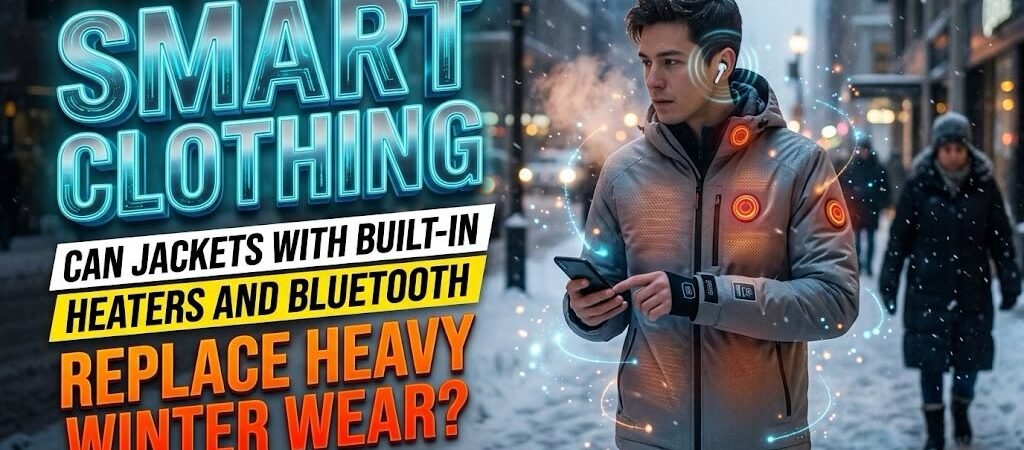
Introduction: The Evolution of Cold-Weather Layering
For generations, battling sub-zero winter temperatures meant adhering strictly to the principle of heavy, bulky layering. Staying warm during long outdoor commutes, winter alpine hikes, or hours spent working in freezing industrial environments required piling on heavy wool sweaters, dense fleece liners, and thick, rigid parkas stuffed with heavy down insulation. While these traditional garments trap body heat effectively, they often turn daily movement into an exhausting, restrictive chore, leaving you weighed down like an arctic explorer just to walk to the grocery store.
Today, advanced material science and consumer electronics are merging to upend traditional winter wardrobe rules. We have entered an era where smart clothing—specifically heated jackets integrated with Bluetooth connectivity and multi-zone thermal control—promises a compelling alternative. Instead of relying purely on heavy bulk to insulate against the cold, these garments generate active, adjustable warmth using flexible carbon-fiber heating elements powered by compact lithium-ion battery packs.
Can these high-tech garments truly replace heavy winter wear, or are they an expensive gimmick meant for niche outdoor enthusiasts? In this comprehensive, in-depth guide, we will deconstruct how smart heated jackets operate, evaluate their thermal efficiency compared against traditional down parkas, analyze Bluetooth app controls, and help you determine whether your next winter coat should run on electricity.
1. Defining Smart Heated Apparel: Moving Beyond Passive Insulation
To understand why heated jackets are transforming winter fashion, you must first examine the fundamental difference between traditional passive insulation and active electronic heating.
- The Limitation of Passive Insulation: Traditional coats are passive thermal barriers. They do not generate heat; they merely slow down the rate at which your body heat escapes into the cold environment. If you stand still in freezing winds for hours, your body stops producing enough heat to keep you warm, and your coat loses its efficacy.
- The Power of Active Thermal Generation: Smart heated jackets introduce active heat sources. Powered by rechargeable lithium-ion battery packs, micro-thin carbon-fiber or graphene heating elements woven into the lining emit gentle, consistent infrared warmth across vital core zones—typically targeting the chest, mid-back, and pockets.
For deeper technical breakdowns on conductive polymer fabrics and flexible heating webs, explore documentation via IEEE Spectrum Nanotechnology Portal or device design guides on My Tech Hub Hardware News.
2. The Core Heating Architecture: Carbon Elements and Battery Efficiency
The performance of any smart heated jacket hinges on two core components: the heating material embedded within the fabric and the energy density of the battery pack.
Advanced Heating Materials
- Carbon-Fiber and Graphene Webs: Modern smart jackets have largely abandoned bulky metal wires in favor of ultra-thin, flexible carbon-fiber films or graphene-enhanced conductive prints. These microscopic heating elements conform naturally to body movements, distribute warmth evenly, and deliver rapid thermal transfer within seconds of powering on.
- Multi-Zone Heat Customization: Premium heated jackets feature independent zone controls. You can dial up the warmth across your upper back while keeping the chest panels on a lower setting, tailoring comfort precisely to changing weather conditions.
3. Bluetooth Connectivity and Smart App Integration
What separates a basic heated jacket from true “smart clothing” is the integration of wireless connectivity. While early heated jackets required fumbling through bulky outer layers to press a stiff rubber chest button, modern iterations feature built-in Bluetooth modules.
Smart Control at Your Fingertips
- Smartphone App Management: Using a companion iOS or Android application, users can adjust temperature thresholds across individual heating zones with granular precision, check exact battery percentage levels, and save custom thermal presets for different outdoor activities.
- Automated Thermal Regulation: Advanced smart jackets incorporate ambient temperature sensors that communicate with your smartphone app, automatically modulating heating output up or down based on outside weather shifts to optimize battery runtime. For further software evaluations, read reviews via PCMag Mobile Lab or tutorials on My Tech Hub Productivity Portal.
4. Battery Life Realities: How Long Can Heated Jackets Actually Stay Warm?
The single most critical question for anyone considering trading their heavy parka for a smart jacket is battery endurance. Electricity is finite, and heating elements consume significant energy.
- The Runtime Spectrum: On average, a standard 7.4V lithium-ion battery pack delivers varying runtimes depending on the selected heat intensity:
- Low Setting: 8 to 10 hours of continuous, gentle warmth.
- Medium Setting: 4 to 7 hours of balanced thermal comfort.
- High Setting: 2 to 4 hours of maximum heating power (ideal for extreme sub-zero blasts).
- Cold Weather Battery Drain: Sub-zero temperatures naturally increase internal battery resistance, reducing chemical efficiency and shortening runtime faster than room-temperature tests suggest. For all-day outdoor workers or winter sports enthusiasts, carrying a lightweight secondary spare battery pack in an interior pocket is an essential operational strategy.
5. Can Smart Jackets Actually Replace Heavy Winter Coats?
To answer whether smart apparel can fully replace heavy winter wear, we must evaluate performance across different real-world scenarios.
Where Smart Jackets Win Decisively
- Urban Commuting and Transition Climates: If you spend your winter hopping between heated subway cars, office buildings, and brisk outdoor walks, a lightweight heated jacket eliminates the need for bulky down parkas. You get instant warmth outdoors without overheating the moment you step indoors.
- Mobility and Ergonomic Freedom: For construction workers, outdoor photographers, golfers, and drivers, the absence of bulky insulation layers restores complete shoulder mobility and arm flexibility.
Where Traditional Heavy Wear Still Holds Ground
- Extended Wilderness Exposure: If you are snowmobiling across deep backcountry trails or ice fishing in sub-zero wilderness where a dead battery leaves you stranded without backup heat, passive heavy down parkas remain safer and more reliable. Smart jackets augment warmth, but they should not yet be treated as sole survival gear in extreme expeditions.
6. Weatherproofing, Washability, and Maintenance Realities
Integrating delicate electrical circuits and USB power ports into clothing raises obvious concerns regarding durability, rain exposure, and routine cleaning.
- Machine Washable Engineering: Premium smart jackets are engineered with waterproof internal wiring harnesses and sealed USB ports. By simply removing the lithium-ion battery pack and zipping the connection cable into its secure pocket, the entire garment can be safely machine washed on a gentle cycle.
- DWR Weather-Resistant Shells: Outer fabrics feature durable water-repellent (DWR) membranes and windproof TPU laminates that shed snow, sleet, and freezing rain, protecting both the wearer and the internal heating grid from moisture intrusion.

7. Price Versus Value: The Economics of Heated Apparel
Upgrading your winter wardrobe to smart clothing requires navigating a higher price point than conventional mass-market coats.
- Upfront Hardware Investment: High-end smart heated jackets equipped with Bluetooth modules, multi-zone carbon elements, and certified lithium-ion battery packs typically retail between $150 and $400.
- Long-Term Utility: When you factor in that a single smart jacket can comfortably replace multiple seasonal coats—acting as a light windbreaker in autumn, a medium fleece in spring, and a heavy winter coat on high heat—the cost-to-benefit ratio becomes highly attractive for daily commuters. For further consumer market analyses, read reports via Consumer Reports Tech Lab or shopping guides on My Tech Hub Business Portal.
Comprehensive Smart Heated Apparel Comparison Matrix
To help you evaluate how smart heated jackets compare against traditional heavy winter wear, review the comparison matrix below:
| Performance Metric | Traditional Heavy Down Parka | Smart Heated Jacket (Bluetooth & Battery) | Winner |
| Bulk and Weight | Heavy, thick, and restrictive | Lightweight, slim profile, maximum mobility | Smart Jacket |
| Active Warmth Control | None (Relies entirely on body heat retention) | Adjustable multi-zone electronic heating levels | Smart Jacket |
| Power Autonomy | Infinite (Requires zero charging) | Limited by battery runtime (2 to 10 hours) | Traditional Parka |
| Weather Versatility | Fixed warmth level regardless of ambient shifts | Dynamic temperature modulation via app or button | Smart Jacket |
| Maintenance & Care | Specialized down-wash detergents required | Removable battery, machine washable design | Smart Jacket |
Smart Winter Wear Pricing & Feature Guide
To help you map out your smart winter apparel budget, review the tier guide below:
| Jacket Category | Estimated Price Range (USD) | Best Suited For | Key Features |
| Entry-Level Heated Fleece | $80 – $130 | Casual daily walks, mild winter climates | 3 heating zones, basic battery pack, fleece shell |
| Mid-Range Softshell Jacket | $140 – $220 | Urban commuters, outdoor workers | Water-resistant shell, 4 heating zones, USB-C fast charging |
| Flagship Bluetooth Smart Coat | $250 – $400+ | Tech enthusiasts, winter sports, cold-weather pros | App control, custom zone balancing, high-density battery |
Introduction: The Screen-Bound Reality of Modern Computing
For the better part of half a century, our digital existence has been strictly tethered to glowing rectangular glass panels. Whether reviewing spreadsheets on a desktop monitor, typing documents on a laptop screen, scrolling social media feeds on a smartphone, or watching entertainment on a television, our eyes remain perpetually locked onto physical glass displays. We carry them in our pockets, rest them on our desks, and mount them on our walls, accepting glowing rectangles as the definitive medium of human-computer interaction.
Yet, a profound architectural shift is quietly reshaping the personal technology landscape. As computational power decentralizes and optics engineering matures, the tech industry is striving toward a revolutionary horizon: the disappearance of physical screens altogether. Through lightweight augmented reality (AR) glasses, spatial computing headsets, and invisible laptop concepts that project holographic workspaces directly into your field of view, the year 2026 marks a pivotal turning point where physical displays begin to dissolve into ambient space.
Are screens finally disappearing in 2026, or are we still bound to physical glass? In this comprehensive, in-depth guide, we will deconstruct the breakthrough technologies driving invisible computing, analyze the rise of next-generation AR glasses, compare spatial workflows against traditional displays, and evaluate whether physical screens are truly on their way out.
8. Advanced Lithium-Ion Battery Chemistry and Energy Density Breakthroughs in Heated Apparel Power Systems
When examining the engineering triumphs and practical limitations of smart heated jackets, the absolute heart of the entire ecosystem is its portable power source. Unlike traditional garments that rely on passive insulation, active electronic heating requires a steady, reliable flow of electrical current to maintain warmth across carbon-fiber heating elements. Overcoming the historical constraints of heavy, cumbersome battery packs has been one of the most demanding engineering hurdles for smart clothing manufacturers. Early heated apparel relied on bulky, unergonomic lead-acid or nickel-metal hydride batteries that weighed down pockets, created awkward physical imbalances, and suffered from severe capacity degradation when exposed to freezing winter temperatures.
Today, advanced consumer electronics innovations have transformed heated apparel power systems through the integration of high-density lithium-ion cells and custom-molded polymer battery packs. These modern power banks pack massive milliamp-hour (mAh) capacities into razor-thin, lightweight enclosures that slip effortlessly into specialized interior zippered pockets without altering the garment’s silhouette. Furthermore, advanced battery management systems (BMS) monitor internal cell temperatures and voltage output continuously, preventing overcharging, short-circuiting, and thermal runaway even during rapid charging cycles. However, physics dictates that chemistry slows down in sub-zero environments; extreme cold increases internal electrical resistance, causing batteries to drain significantly faster outdoors than during indoor laboratory testing. To counteract this natural cold-weather penalty, premium smart clothing brands incorporate thermal insulation padding directly inside the battery storage holster, keeping the cell operating within optimal temperature ranges and ensuring dependable all-day warmth. For deeper technical insights into lithium-ion cell chemistry and advanced battery management architectures, explore technical reports via IEEE Power Electronics Society Portal alongside hardware evaluations at My Tech Hub Hardware News.
9. Bluetooth Low Energy (BLE) Connectivity and Companion App Customization in Smart Garments
The defining characteristic that separates basic electronic apparel from true smart clothing is the seamless integration of wireless connectivity, specifically through Bluetooth Low Energy (BLE) communication protocols. While early generations of heated jackets required wearers to unzip their outer shell and press stiff, illuminated rubber buttons located on the chest or sleeve to cycle through preset temperature levels, modern smart jackets put granular thermal control directly into the palm of your hand via smartphone applications.
By pairing your heated jacket with a companion iOS or Android app, you unlock a sophisticated suite of customization features. Rather than choosing between rigid low, medium, or high thermal settings, users can adjust individual heating zones—such as isolating warmth strictly to the upper back, lowering chest panel temperatures, or boosting pocket warmth—with exact percentage-based precision. Furthermore, advanced companion apps feature automated weather synchronization, communicating with local meteorological services to adjust your jacket’s internal heating output dynamically as ambient temperatures fluctuate throughout the day. This intelligent thermal modulation prevents overheating when stepping indoors and conserves battery life during extended outdoor excursions. For further developer insights into Bluetooth Low Energy pairing standards and smart accessory app integration, read documentation via Bluetooth Special Interest Group Portal or software tutorials on My Tech Hub Software Directory.
10. Ergonomic Placement of Carbon-Fiber and Graphene Heating Elements Across Core Zones
The human body’s physiological response to extreme cold is heavily centralized; when ambient temperatures plummet, blood vessels constrict in our extremities to preserve core body temperature around vital internal organs. Consequently, keeping your core chest and upper back warm is the most scientifically effective way to maintain overall thermal comfort and prevent shivering.
Smart clothing manufacturers leverage this physiological principle by strategically mapping flexible carbon-fiber and graphene heating elements across specific anatomical zones. Rather than attempting to heat every square inch of fabric—which would drain battery power instantly and add unnecessary weight—engineers concentrate heating webs across the upper back, lower lumbar region, left and right chest panels, and deep hand-warmer pockets. Carbon-fiber filaments are microscopic, lightweight, and exceptionally flexible, allowing them to bend naturally with shoulder movements, torso rotations, and arm swings without snapping or pinching the wearer. This anatomical precision ensures that active thermal energy is delivered directly to major nerve clusters and blood circulation pathways, creating an enveloping cocoon of warmth that mimics sitting in front of a cozy fireplace, even while braving howling winter winds.
11. Weatherproofing, Water Resistance Ratings, and Machine Washability Realities
Integrating delicate electrical circuits, USB power ports, and copper wiring harnesses into an article of clothing worn outdoors raises obvious consumer concerns regarding rain exposure, accidental liquid spills, and routine laundering. After all, mixing water and electricity is traditionally a recipe for disaster.
Fortunately, modern smart heated jackets are engineered with rigorous industrial weatherproofing and marine-grade electrical sealing. Outer shells utilize durable water-repellent (DWR) membranes and windproof TPU laminates that cause rain and melting snow to bead up and roll off instantly, preventing moisture from penetrating the inner lining. Meanwhile, internal wiring harnesses feature waterproof silicone housing and sealed USB-C connection ports. When it comes time to clean your jacket after a muddy winter hike or daily commute, routine maintenance is surprisingly straightforward: you simply disconnect and remove the lithium-ion battery pack, tuck the power cable securely inside its waterproof storage pocket, and place the garment into a washing machine on a gentle cold cycle. This fusion of rugged textile engineering and washable electronics ensures your smart jacket remains fresh, clean, and fully operational season after season.
12. Comparative Thermal Efficiency: Active Electronic Heating Versus Passive Down Insulation
When evaluating whether smart heated jackets can genuinely replace heavy winter wear, comparing active electronic heating directly against traditional passive down insulation reveals profound differences in thermodynamic performance.
Traditional down parkas operate as passive thermal barriers. They contain thousands of fluffy goose or duck plumes that trap dead air warmed by your body heat, slowing down thermal conductivity. However, if you stand motionless in freezing sub-zero temperatures for hours, your body’s metabolic heat production drops, and a passive down coat eventually loses its warming efficacy because no new heat is being generated. Furthermore, down insulation loses nearly all its thermal trapping capability if it gets soaked in freezing rain or heavy sleet. Active smart heated jackets solve this thermodynamic limitation entirely. By generating continuous infrared heat through carbon-fiber elements powered by a lithium-ion battery, a smart jacket actively pumps thermal energy into your core regardless of your metabolic activity level or ambient wind chill. While a slim smart jacket provides the warmth of a heavy expedition parka without the suffocating bulk, it relies entirely on battery charge—making a hybrid approach (combining moderate passive insulation with active heating elements) the ultimate gold standard for modern winter apparel.
13. Eco-Friendly Materials, Sustainable Manufacturing, and Circular Fashion in Wearables
The global apparel industry is facing intense regulatory scrutiny and consumer demand regarding its environmental footprint, carbon emissions, and massive contribution to textile waste. As smart clothing transitions from an experimental novelty into a mainstream wardrobe staple, manufacturers are under immense pressure to adopt eco-friendly materials and sustainable circular manufacturing practices.
Leading smart apparel brands are pioneering the use of recycled polyester outer shells derived from ocean-bound plastic bottles, bluesign-certified organic cotton linings, and cruelty-free synthetic down insulation that mimics the warmth of animal feathers without ethical compromises. Furthermore, because smart jackets incorporate electronic components and lithium-ion batteries, progressive companies are implementing comprehensive take-back and recycling programs. These initiatives ensure that when a battery eventually reaches the end of its chemical lifecycle, consumers can return it for safe recycling rather than discarding toxic metals into municipal landfills. By fusing high-tech thermal comfort with rigorous environmental accountability, sustainable smart clothing proves that future winter fashion can protect both the wearer and the planet.

14. Ergonomic Mobility, Weight Reduction, and the Psychological Freedom of Minimalist Layering
Beyond raw thermal metrics and battery runtime, one of the most compelling arguments for adopting smart heated jackets is the psychological and physical freedom of lightweight ergonomic mobility. Traditional winter layering requires packing on rigid wool sweaters, thick fleece hoodies, and heavy down parkas that restrict arm movement, make driving difficult, and leave you feeling physically exhausted by the end of a simple commute.
By replacing multiple heavy passive layers with a single, slim smart jacket equipped with active multi-zone heating, wearers regain complete shoulder flexibility and arm mobility. Whether you are shoveling snow, carrying grocery bags, driving a car, or enjoying winter sports, the absence of bulky insulation transforms your daily winter experience. You no longer need to shed layers frantically the moment you step inside a heated office building or public transit car; instead, you simply power off the heating elements or drop them to a low setting, enjoying effortless thermal comfort and unhindered physical movement throughout your entire day.
15. The Ultimate Decision Framework: Choosing Between Smart Heated Wear and Traditional Parkas
Navigating the modern winter apparel market ultimately comes down to balancing your daily commuting habits, your climate severity, and your personal tolerance for clothing bulk.
- Choose Smart Heated Apparel if: You live in an urban environment, commute daily through changing indoor and outdoor microclimates, despise bulky layers, and value lightweight ergonomic mobility combined with app-controlled warmth.
- Choose Traditional Heavy Parkas if: You spend your winters in extreme sub-zero wilderness where electrical grid access is unavailable, battery recharging is impossible, and survival depends entirely on passive, fail-safe insulation.
Evaluate your winter lifestyle, your daily commuting routine, and your comfort preferences, and decide whether stepping into the app-controlled warmth of smart winter wear elevates your cold-weather experience.
16. Technological Convergence: Integrating Ambient Smart Fabrics With Internet-of-Things (IoT) Ecosystems and Wearable Health Telemetry
As consumer electronics and textile manufacturing continue to dissolve into a singular unified industry, the architectural convergence of smart heated apparel with broader Internet-of-Things (IoT) ecosystems and wearable health telemetry represents the absolute pinnacle of smart clothing innovation. Historically, winter garments acted as isolated physical shells designed exclusively for thermal retention, operating entirely independent of your digital footprint or biometric data networks. Today, advanced smart heated jackets are evolving into dynamic, interconnected nodes within your personal IoT network, bridging the physical gap between environmental weather protection and advanced health monitoring. By embedding flexible micro-sensors directly into the inner lining and carbon-fiber heating webs of the jacket, modern smart clothing can continuously monitor vital physiological parameters—including core body skin temperature, resting heart rate variability, respiration frequency, and physical exertion levels—while you navigate sub-zero outdoor environments.
This biometric data streams seamlessly via Bluetooth Low Energy or secure local Wi-Fi protocols to your smartphone or smartwatch health dashboard, allowing the garment’s internal firmware to automate thermal adjustments in real time. For instance, if you transition from a leisurely winter stroll into a vigorous uphill snow-shoveling session, the smart jacket’s internal sensors detect your elevated heart rate and rising skin temperature, automatically reducing the carbon-fiber heating output to prevent overheating and excessive perspiration. Conversely, if you stop moving to wait at a freezing bus stop, the system detects your cooling skin temperature and boosts thermal output proactively before you even begin to shiver. Furthermore, this IoT integration extends into smart home automation; your heated jacket can communicate directly with your household thermostat, smart lighting, and connected door locks as you approach your residence, preparing your indoor environment for your arrival. For deeper technical insights into advanced IoT sensor integration and wearable health telemetry standards, explore documentation via IEEE Internet of Things Journal alongside smart textile architecture guides at My Tech Hub Wearables Portal.
17. Physiological Thermal Regulation and the Science of Core Body Temperature Preservation
Understanding why smart heated apparel provides such a profound upgrade over traditional heavy winter wear requires a deep dive into human physiology and thermodynamic regulation. The human body is a remarkable biological engine that works relentlessly to maintain a strict core internal temperature of approximately 37°C (98.6°F). When exposed to harsh winter environments, ambient cold robs thermal energy from your skin through conduction, convection, and radiation. In response to this thermal assault, the human autonomic nervous system initiates peripheral vasoconstriction—constricting blood vessels in your fingers, toes, and skin surface to redirect warm blood inward toward vital internal organs like the heart, lungs, and brain. While this survival mechanism protects your core, it starves your extremities of warm blood, triggering shivering, numbness, and discomfort.
Traditional heavy down parkas attempt to combat this by trapping metabolic body heat inside a thick, passive barrier of insulating feathers. However, if your physical activity level drops or ambient wind chills plunge below freezing, your metabolic heat production eventually falls short, and the passive barrier fails. Active smart heated jackets revolutionize this physiological interaction by introducing direct, targeted infrared thermal energy to major superficial blood vessels located across your upper back, lower lumbar region, and chest. By applying gentle, continuous electronic warmth directly to these high-circulation zones, the blood passing through those superficial vessels is warmed before it circulates back into your core and extremities. This physiological feedback loop prevents excessive vasoconstriction, maintains comfortable peripheral blood circulation, and eliminates the debilitating chill that compromises outdoor endurance. For further scientific analyses on human thermoregulation and cold-weather physiological responses, read research reports via Journal of Applied Physiology Portal or technical guides on My Tech Hub Innovation Blog.
18. Industrial Workwear Disruptions: Enhancing Safety and Productivity for Cold-Weather Professionals
While tech enthusiasts and urban commuters appreciate smart heated jackets for their sleek aesthetic and smartphone app connectivity, the most transformative commercial impact of active thermal apparel is unfolding across demanding industrial workwear sectors. Millions of outdoor professionals—including construction crews, highway maintenance workers, airport baggage handlers, utility linesmen, agricultural laborers, and commercial fishermen—face punishing winter conditions that compromise manual dexterity, increase physical fatigue, and elevate the risk of cold-stress injuries like frostbite and hypothermia. Historically, outfitting these workers required issuing bulky, multilayered heavy parkas that restricted arm movement, made operating heavy machinery awkward, and created severe safety hazards on busy job sites.
Integrating flexible carbon-fiber heating elements and high-capacity lithium-ion battery packs into rugged, high-visibility industrial workwear jackets has fundamentally transformed occupational safety and operational productivity. Workers can now experience consistent, adjustable core warmth while retaining complete shoulder mobility and fine motor dexterity in their hands, as warm core blood circulation prevents the numbness that impairs tool handling. Furthermore, employers benefit from reduced accident rates, fewer cold-weather sick days, and enhanced worker morale during grueling winter shifts. Industrial-grade smart jackets are engineered with reinforced tear-resistant Cordura outer shells, flame-retardant membranes, and ruggedized waterproof battery compartments capable of withstanding the punishing abuses of heavy construction environments. For comprehensive industrial safety analytics and workwear compliance studies, explore documentation via Occupational Safety and Health Administration (OSHA) Research Portal alongside commercial apparel evaluations at My Tech Hub Business Portal.
19. Advanced Textile Engineering: Waterproof Membranes, Breathability, and Moisture Management
One of the most complex engineering paradoxes in high-performance apparel design is achieving simultaneous waterproofing and breathability. When you move vigorously outdoors—whether shoveling snow, hiking a mountain trail, or power-walking to catch a morning train—your body generates significant metabolic sweat. If your winter jacket’s outer shell is completely waterproofed but lacks breathability, that internal sweat becomes trapped, condensing against your inner layers. Once moisture saturates your clothing, it conducts body heat away twenty-five times faster than dry air, triggering a dangerous phenomenon known as post-exertion chill.
Modern smart heated jackets resolve this thermodynamic trap through advanced textile engineering, utilizing microscopic hydrophilic-hydrophobic membrane laminates (such as multi-layer expanded polytetrafluoroethylene or polyurethane coatings). These high-tech membranes feature microscopic pores that are hundreds of times smaller than a water droplet—preventing external rain, sleet, and melting snow from penetrating the jacket—yet wide enough to allow microscopic vaporized sweat molecules to escape freely into the atmosphere. When combined with active carbon-fiber heating elements, this sophisticated moisture-management system ensures that your inner microclimate remains perfectly dry, warm, and comfortable, regardless of how intensely your physical activity level fluctuates throughout the day.
20. Aesthetic Versatility, Tailoring Minimalism, and Breaking the Stigma of Bulky Winter Wear
For decades, dressing for sub-zero winter weather meant sacrificing personal style and submitting to the inevitable aesthetic penalty of looking like a bulky, overstuffed marshmallow. Traditional arctic parkas, heavy down coats, and layered fleece combinations prioritize thermal mass over silhouette design, creating rigid, boxy shapes that clash heavily with professional office wear, formal evening attire, and modern minimalist fashion sensibilities. This persistent sartorial compromise forced many urban professionals to endure freezing commutes in thin, stylish coats rather than wearing functional, protective winter gear.
Smart heated apparel shatters this long-standing fashion compromise by proving that high thermal performance no longer requires suffocating physical bulk. Because active carbon-fiber and graphene heating elements generate abundant electronic warmth from razor-thin fabric layers, smart jacket designers can craft sleek, tailored silhouettes that mirror the refined aesthetics of high-end designer overcoats and modern softshell jackets. Whether you are wearing a tailored wool-blend smart overcoat to a corporate board meeting, a sleek softshell jacket on a weekend coffee run, or a lightweight vest beneath a suit jacket, active electronic heating delivers uncompromising warmth without distorting your personal style. This fusion of cutting-edge thermal technology and sophisticated tailoring has elevated smart clothing from a niche technical novelty into a coveted mainstream fashion category.
21. Global Supply Chain Logistics, Manufacturing Yields, and Semiconductor Integration in Apparel
The commercial scaling of smart heated apparel introduces a fascinating industrial intersection between traditional textile manufacturing and advanced semiconductor supply chain logistics. For centuries, the global garment industry relied on manual cut-and-sew labor pools concentrated in developing regions, utilizing mechanical sewing machines and bulk textile weaving mills. However, producing a modern Bluetooth-enabled smart jacket requires an entirely different manufacturing ecosystem—one that seamlessly integrates precision electronics assembly, surface-mount technology (SMT) circuit boards, lithium-ion battery cell testing, and automated robotic textile welding inside cleanroom factory environments.
This cross-industry convergence exposes smart apparel brands to the complex global economic pressures that typically plague consumer electronics manufacturers rather than traditional fashion houses. When global semiconductor shortages, microcontroller supply bottlenecks, or lithium-ion battery mineral pricing fluctuations occur, smart clothing production lines experience immediate cost pressures and fulfillment delays. To maintain competitive retail pricing, leading apparel innovators are investing heavily in automated smart-textile fabrication facilities, vertical supply chain integration, and standardized modular electronic harnesses that can be easily snapped or zipped into various garment styles during assembly. For deeper economic analyses on global apparel supply chain logistics and manufacturing trend reports, read studies via World Trade Organization (WTO) Textile Desk alongside business strategy guides at My Tech Hub Business Portal.
22. Regulatory Compliance, Electromagnetic Fields (EMF) Safety, and Consumer Certification Standards
Whenever an article of clothing incorporates active electrical circuits, copper wiring harnesses, lithium-ion battery packs, and wireless Bluetooth radio transmitters worn directly against the human body, rigorous regulatory oversight and safety certification become absolute prerequisites. Consumers naturally harbor valid questions regarding electrical safety: Can a heated jacket short-circuit in heavy rain? Do carbon-fiber heating elements emit harmful radiation? Are the lithium-ion batteries secure against thermal runaway?
To secure consumer trust and clear strict international retail standards, reputable smart clothing manufacturers submit their garments to rigorous third-party laboratory testing. Smart jackets must comply with stringent electromagnetic fields (EMF) safety limits, ensuring that the low-voltage DC current flowing through internal heating webs generates negligible electromagnetic radiation well below safety thresholds established by international health organizations. Furthermore, electronic components must earn comprehensive certifications—such as CE, FCC, RoHS, and UL listings—guaranteeing that internal wiring harnesses feature robust short-circuit protection, waterproof insulation, and fail-safe thermal cut-off switches that deactivate power instantly if internal temperatures exceed safe operating limits. This unwavering commitment to safety compliance ensures that wearing a smart heated jacket is as electrically secure as carrying a modern smartphone in your pocket.
23. The Future Horizon: Solar-Harvesting Fabrics, Kinetic Energy Generators, and Self-Sustaining Smart Garments
Looking far beyond the immediate horizon of rechargeable lithium-ion battery packs and Bluetooth smartphone apps, visionary textile engineers and materials scientists are already engineering the next evolutionary leap in smart clothing: self-sustaining energy-harvesting garments. While modern heated jackets deliver impressive all-day warmth, they remain fundamentally tethered to electrical wall outlets and USB charging cables. The ultimate holy grail of smart textile research is eliminating external battery recharging entirely by transforming your winter coat into an independent micro-power plant.
Experimental laboratory prototypes demonstrate that advanced piezoelectric and triboelectric nanogenerators woven directly into flexible fabrics can capture kinetic mechanical energy from your body movements—converting the simple swinging of your arms while walking into usable electrical current. Simultaneously, microscopic flexible solar cells integrated seamlessly into exterior shell fabrics harvest ambient daylight and indoor lighting throughout the day, trickle-charging internal ultra-capacitors. While self-sustaining, continuously heated winter coats powered purely by kinetic and solar harvesting remain in early developmental stages, their conceptual trajectory underscores the profound technological transformation underway: our clothing is no longer a passive dead-weight fabric, but an active, intelligent, self-sustaining extension of our digital and physical lives.
24. The Ultimate Decision Framework: Evaluating Your Personal Winter Wardrobe Upgrade
As the consumer apparel market stands at this fascinating crossroads between traditional passive winter wear and high-tech smart heated clothing, evaluating your personal readiness for an upgrade requires a clear-eyed assessment of your daily lifestyle, local climate severity, and budget thresholds. Rushing out to purchase an expensive Bluetooth-enabled smart jacket without analyzing your specific thermal bottlenecks can lead to buyer’s remorse, whereas failing to upgrade may leave you trapped in unnecessarily bulky, restrictive layering systems.
To determine whether transitioning to smart heated apparel makes strategic sense for your wardrobe today, evaluate three core pillars: your daily commuting microclimates, your outdoor exposure duration, and your tolerance for clothing bulk. If you spend your winter navigating rapid transitions between freezing outdoor walks and overheated indoor environments, or if you despise the physical restriction of heavy down parkas, investing in a multi-zone smart heated jacket delivers immediate, transformative comfort. Conversely, if your winter routine involves multi-day isolation in sub-zero wilderness where electrical grid access is non-existent and battery recharging is impossible, sticking with fail-safe traditional expedition gear remains the pragmatic choice. Evaluate your daily routine, balance active thermal convenience against passive reliability, and decide whether you are ready to step into the app-controlled warmth of next-generation smart winter wear.

Frequently Asked Questions (FAQ)
Q1: Can I put my heated jacket in a washing machine?
A: Yes, provided you disconnect and remove the lithium-ion battery pack beforehand and secure the power cable inside its designated waterproof pocket. Always check the manufacturer’s specific care label, but most quality heated jackets are fully machine washable on a gentle cycle.
Q2: Are heated jackets safe from short-circuiting if it rains heavily?
A: Modern heated jackets feature thoroughly insulated, waterproof wiring harnesses and low-voltage electrical systems (typically 5V, 7.4V, or 12V) that pose no shock hazard to the wearer, even when exposed to heavy rain or snow.
Q3: Can I use my own portable power bank to run a smart heated jacket?
A: It depends on the jacket’s electrical specifications. Many USB-powered heated jackets operate on standard 5V/2V portable power banks, allowing you to use third-party power banks, while jackets requiring proprietary 7.4V or 12V connections necessitate brand-specific battery packs.
Conclusion: Can Smart Jackets Replace Heavy Winter Wear?
So, can jackets with built-in heaters and Bluetooth replace heavy winter wear? The definitive answer is a conditional yes for daily urban life and moderate outdoor activities, but no for extreme wilderness survival.
- Smart heated jackets win decisively on mobility, weight reduction, and adaptive comfort. If you hate feeling like a stuffed snowman during your morning commute or outdoor errands, active electronic heating lets you stay warm in a slim, lightweight garment.
- Traditional heavy wear remains essential only when you face prolonged, multi-day isolation in sub-zero wilderness where battery recharging is impossible.
Evaluate your winter lifestyle, your tolerance for bulky layers, and your daily commuting habits, and consider stepping into the comfortable, app-controlled warmth of next-generation smart winter apparel.