
Introduction:
For decades, the trajectory of personal computing has followed an unyielding law of miniaturization. The tech industry has pushed even closer to the body with augmented reality (AR) glasses and invisible computing headsets, attempting to blend digital interfaces directly into our natural field of view.
Yet, even the sleekest AR glasses still require frames resting on your nose bridge, electronic temples housing batteries, and lenses sitting a fraction of an inch away from your eyes. To a visionary hardware engineer, that tiny physical distance represents an unacceptable barrier. What if you could remove the frames entirely? What if the computer display, the power management system, the wireless transceiver, and the augmented reality interface were engineered to fit into a soft, biocompatible contact lens resting directly on the cornea?
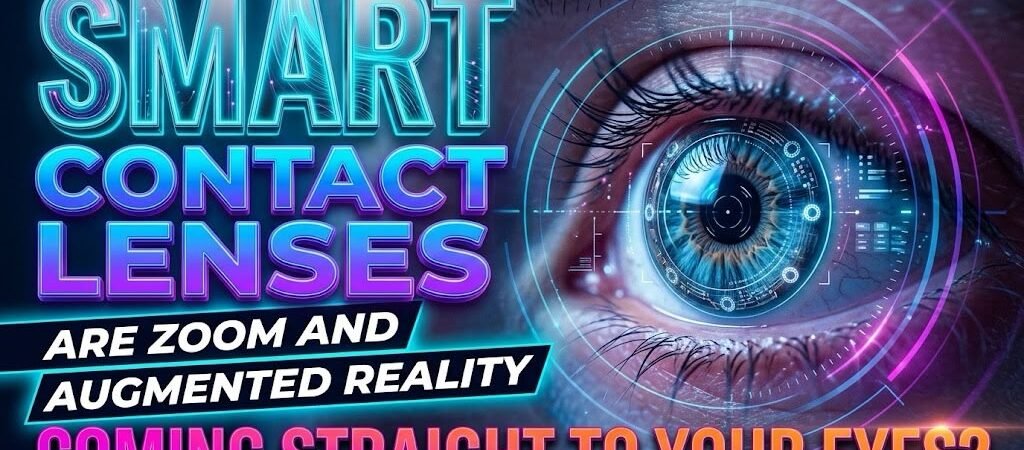
Are smart contact lenses featuring built-in zoom, augmented reality overlays, and real-time health telemetry finally becoming a commercial reality, or are they destined to remain an elusive science-fiction dream? In this comprehensive, in-depth guide, we will deconstruct the materials science behind smart contact lenses, analyze breakthrough micro-LED displays, evaluate tear-fluid biometric health sensors, and explore whether zoom functionality is truly coming straight to your eyes.
1. Defining the Smart Contact Lens Ecosystem: Engineering Constraints on a Microscopic Scale
To appreciate the monumental engineering challenge of building a smart contact lens, you must first comprehend the brutal physical constraints of the human eye. A contact lens is an ultra-thin medical device designed to float comfortably on a delicate layer of tear fluid covering the cornea, consuming no more than a fraction of a millimeter in total thickness.
- The Brutal Form-Factor Limit: Every single component—including the display panel, power management integrated circuit, wireless antenna, and biosensors—must be miniaturized to the scale of a human hair. There is no physical space for traditional lithium-ion battery blocks or bulky copper wiring.
- Biocompatibility and Oxygen Permeability: The cornea has no blood supply; it breathes oxygen directly from the surrounding air. A smart contact lens must maintain high oxygen permeability so that electronic circuitry does not suffocate or starve the eye of vital nutrients during extended wear.
2. Micro-LED and Waveguide Breakthroughs: Projecting Displays Directly Onto the Cornea
The primary historical hurdle stalling the development of smart contact lenses has been display technology. How do you manufacture a functional digital display panel measuring less than a millimeter across that remains bright enough to view in direct sunlight while consuming virtually zero power?
Recent deep-tech breakthroughs are finally cracking this barrier. Collaborative research between advanced micro-LED innovators and smart lens pioneers has successfully produced functioning sub-millimeter display prototypes.
- Ultra-Efficient Micro-LEDs: Utilizing microscopic inorganic gallium nitride LEDs, these displays project crisp monochromatic or full-color imagery directly onto the retina.
- Sub-10-Microwatt Power Draw: To prevent overheating and accommodate microscopic battery limitations, these revolutionary display panels operate on under 10 microwatts of power—roughly 100 to 300 times less energy than prospective AR glasses.
3. The Zoom Mystery: Can Smart Lenses Magnify Your Vision?
When consumers hear the phrase “smart contact lenses,” the most common question revolves around zoom functionality: Will these lenses give humans superhero telescopic vision or digital zoom capabilities?
- Dynamic Zoom Mechanics: Prototype development points toward electronic and liquid-crystal optical layers embedded within the lens matrix that can alter their refractive index on demand. By blinking in a specific pattern or activating a neural cue, the user could theoretically trigger a localized magnification effect.
- Assisting Low-Vision Patients: Rather than superhuman telescopic spying, initial medical applications focus heavily on helping individuals with severe visual impairments. Smart lenses can dynamically enhance contrast, adjust lighting levels, and digitally magnify text for patients suffering from macular degeneration or legal blindness, restoring functional independence.
4. Biometric Health Monitoring: Analyzing Biomarkers in Tears
While augmented reality visual overlays capture consumer imagination, the medical and clinical reality of smart contact lenses is already materializing around continuous health monitoring.
- Tear-Fluid Telemetry: Human tear fluid is a rich bio-fluid packed with chemical biomarkers, electrolytes, proteins, and glucose molecules. Smart contact lenses equipped with electrochemical biosensors can analyze tear chemistry in real time.
- Continuous Glucose Tracking for Diabetics: For diabetes management, smart lenses monitor glucose fluctuations non-invasively through tears, eliminating the painful requirement of daily finger-prick blood tests and providing continuous glycemic curves straight to a smartphone.
5. Power Management Solutions: Harvesting Energy and Micro-Batteries
Powering a computer that floats on your eyeball is an extraordinary engineering paradox. Because there is no room for external charging ports or thick battery blocks, smart contact lenses rely on ingenious micro-power architectures.
- Medical-Grade Micro-Batteries: Integrated solid-state micro-batteries combined with custom power management integrated circuits (PMICs) store electrical charge safely within the soft polymer matrix.
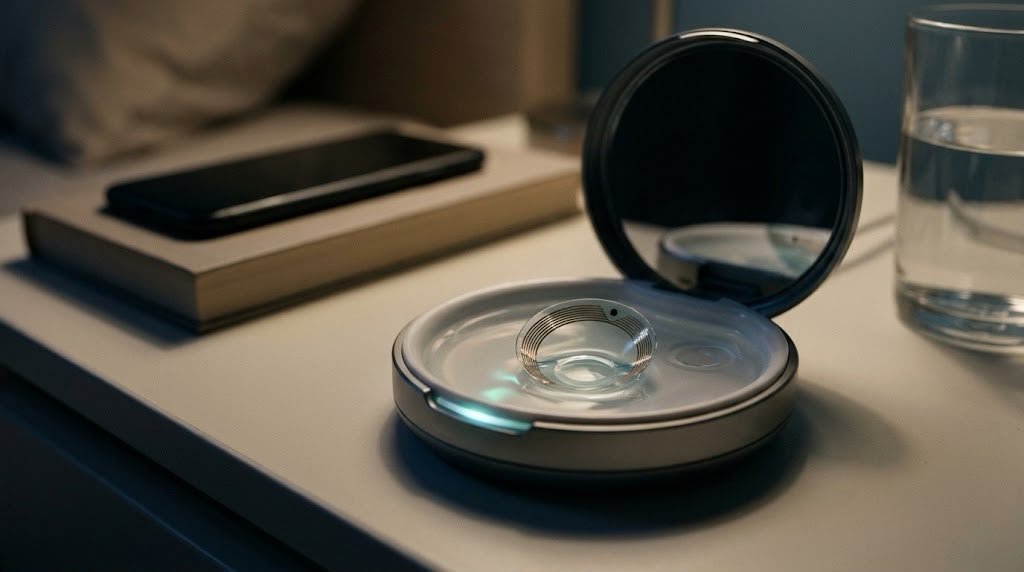
- Wireless RF Power Transfer: Utilizing tiny inductive radio-frequency (RF) charging coils embedded along the outer rim of the lens, devices can receive safe wireless power transfers overnight from a specialized storage case or bedside charging station.
6. Hands-Free Navigation: Controlling Augmented Reality with Natural Eye Movements
Interacting with a computer screen typically requires a keyboard, mouse, or touch gesture. When a display is mounted directly on your eyeball, traditional input devices are completely unusable.
- In-Eye Tracking Sensors: Smart lens prototypes integrate microscopic motion sensors and gaze-tracking infrared detectors that monitor your natural pupillary adjustments.
- Intentional Control: By glancing toward the edge of your field of view or executing a deliberate sequence of micro-blinks, you can select menu items, scroll through text prompts, or toggle zoom levels without lifting a finger. For deeper UI design insights, read documentation via ACM Computer-Human Interaction Portal or guides on My Tech Hub Productivity Portal.
7. Safety, Regulatory Approval, and Clinical Testing Realities
Transitioning any technology from a physics laboratory benchmark into a commercially available medical or consumer device requires navigating rigorous regulatory hurdles.
- FDA and Clinical Trials: Because smart contact lenses are classified as prescription medical devices or advanced wearable electronics resting directly on ocular tissue, they must undergo extensive biocompatibility studies, multi-phase clinical trials, and strict regulatory evaluations by health agencies like the FDA.
- Long-Term Corneal Safety: Clinical trials must prove beyond a shadow of a doubt that wearing electronic lenses for 8 to 12 hours a day causes zero long-term damage to corneal cell structures, tear film stability, or ocular pressure.
Comprehensive Smart Contact Lens vs. AR Glasses Matrix
To help you evaluate how smart contact lenses compare against traditional augmented reality glasses, review the comparison matrix below:
| Technical Feature | Smart Contact Lenses (Emerging Tech) | Augmented Reality Glasses (Current Gen) | Winner |
| Form Factor & Visibility | Completely invisible, lightweight, worn directly on eye | Visible frames, temples resting on ears and nose | Smart Lenses |
| Field of View Integration | Moves synchronously with natural eyeball movement | Fixed frame field of view; requires head movement | Smart Lenses |
| Power Autonomy | Highly constrained by sub-millimeter battery limits | Accommodates larger batteries in frame temples | AR Glasses |
| Thermal & Ocular Safety | Strict biocompatibility and oxygen permeability limits | Sits off the face; zero direct corneal contact | AR Glasses |
| Health Telemetry Potential | Direct tear fluid biosensing and continuous glucose tracking | Limited to peripheral health tracking (if sensors included) | Smart Lenses |
Smart Biometric & Display Tech Pricing & Tier Guide
To help you map out the projected financial landscape of advanced ocular technology, review the industry tier guide below:
| Product Category | Estimated Timeline / Pricing | Primary Target Market | Core Capabilities |
| Medical Smart Health Lenses | $500 – $1,500+ (Prescription medical) | Diabetics, glaucoma patients, low-vision support | Continuous glucose monitoring, contrast enhancement |
| Consumer AR Display Lenses | Projected $1,000 – $2,500+ | Early adopters, tech enthusiasts | Monochromatic HUD overlays, micro-LED projection |
| Advanced Spatial Optics | Long-term R&D horizon | Enterprise, defense, specialized surgical use | Full-color dynamic zoom, hands-free eye tracking |
8. Material Science, Biocompatible Hydrogels, and Oxygen Permeability in Microscopic Ocular Substrates
When evaluating the monumental leap from traditional corrective contact lenses to advanced smart contact lenses housing micro-LED displays, RF antennas, and electrochemical biosensors, the foundational hurdle lies in complex material science. A traditional contact lens is a simple, passive medical device engineered from hydrogel or silicone-hydrogel polymers designed to correct refractive errors by bending light across the cornea. These materials are chemically formulated to absorb moisture, maintain structural flexibility, and permit a high rate of oxygen transmission. The cornea—the transparent outer dome of the human eye—has no dedicated blood supply; it breathes oxygen directly from the surrounding ambient atmosphere. If an electronic smart lens blocks that oxygen flow, the corneal tissue suffocates, leading to severe hypoxia, neovascularization, corneal swelling, and potential permanent vision damage.
To overcome this physical barrier, materials scientists and biomedical engineers have developed entirely new classes of nanotech-enabled biocompatible hydrogels and micro-perforated polymer matrices. These next-generation substrates incorporate microscopic hydrophilic channels and gas-permeable nanopores that allow oxygen molecules to diffuse freely across the lens matrix to the cornea even while solid-state microelectronic circuits, power management chips, and display emitters are embedded within the polymer layers. Furthermore, the electronic components themselves must be encapsulated in hermetically sealed medical-grade silicone coatings or atomic-layer-deposited alumina barriers that prevent toxic micro-components, lithium traces, and electrical currents from leaking into delicate tear fluid. Balancing extreme mechanical flexibility, high optical transparency, and absolute biocompatibility represents one of the most grueling interdisciplinary achievements in modern materials engineering. For deeper academic insights into biocompatible polymers and corneal oxygenation dynamics, read research papers via Biomaterials Science Journal alongside advanced materials evaluations at My Tech Hub Innovation Portal.
9. Micro-LED Emitters and Sub-Millimeter Display Integration for Retinal Projection
The single most significant technical bottleneck stalling the commercialization of consumer-ready smart contact lenses for decades has been the absolute lack of suitable display technology. Traditional liquid crystal displays and standard organic light-emitting diode (OLED) panels are far too bulky, power-hungry, and rigid to be embedded inside a soft, millimeter-thin contact lens. Projecting crisp, legible text, graphical HUDs, or augmented reality visual overlays directly onto the human retina required a complete reinvention of optoelectronic display physics.
Recent deep-tech breakthroughs have successfully broken this barrier through the development of ultra-dense micro-LED arrays. These microscopic inorganic gallium nitride light-emitting diodes measure mere micrometers across—fractional widths compared to human hair fibers—yet pack millions of individual pixel emitters onto a single sub-millimeter silicon chip. When embedded within the outer periphery of a smart contact lens, these micro-LEDs project focused photon streams through specialized microscopic holographic diffractive optics or curved waveguide channels directly onto the retina. This optical pipeline allows wearers to perceive vivid, full-color digital imagery floating naturally in their field of view without obstructing their normal vision of the physical world. Crucially, these microscopic displays operate on under 10 microwatts of electrical power, ensuring they generate zero harmful thermal heat against the sensitive corneal surface during extended wear. For further technical analyses on micro-LED physics and display manufacturing, explore documentation via IEEE Photonics Journal or hardware reviews on My Tech Hub Hardware News.
10. Dynamic Zoom Optics and Liquid-Crystal Refractive Index Modulation
When consumers and technology enthusiasts discuss the future of smart contact lenses, the most anticipated and sensationalized capability is visionary zoom—the ability to dynamically magnify distant objects, read tiny text from across a room, or utilize telescopic vision without physical binoculars. While science fiction has long romanticized superhuman telescopic eyes, engineering true optical zoom into a soft contact lens resting directly on the cornea requires mastering complex physics and molecular optics.
Achieving dynamic zoom without adding mechanical lenses or heavy moving parts relies on liquid-crystal refractive index modulation and tunable polymer membranes. By embedding microscopic layers of liquid-crystal molecules or electroactive optical fluids within the central optic zone of the smart lens, engineers can alter the focal length and refractive power of the lens instantaneously when a tiny electrical voltage is applied. When a user triggers a zoom command via intentional eye movements or neural cues, the liquid-crystal matrix rearranges its molecular alignment, shifting light refraction and magnifying the visual field by two-to-threefold. While initial commercial implementations focus heavily on medical assistance—such as helping patients with macular degeneration read magnified text—the long-term consumer trajectory points toward seamless, blink-activated digital zoom.
11. Electrochemical Tear-Fluid Biosensing and Continuous Medical Telemetry
While augmented reality visual displays capture consumer headlines, the immediate clinical reality and medical life-changing impact of smart contact lenses are materializing rapidly around continuous health monitoring and tear-fluid telemetry. Human tears are an extraordinarily rich biological fluid containing a vast array of chemical biomarkers, electrolytes, proteins, enzymes, and metabolic molecules that correlate directly with systemic health conditions.
Smart contact lenses equipped with ultra-sensitive electrochemical biosensors can analyze tear chemistry non-invasively and continuously throughout the day and night. Furthermore, advanced clinical prototypes are expanding tear telemetry to monitor intraocular pressure spikes for glaucoma detection, track inflammatory proteins for autoimmune evaluations, and measure lactic acid levels during athletic training. This continuous medical telemetry transforms a simple contact lens into an invisible, autonomous diagnostic laboratory operating directly on the surface of your eye.
12. Wireless Power Harvesting, RF Induction, and Micro-Battery Architecture
Powering a microcomputer, wireless transmitter, and display panel that float effortlessly on your eyeball represents one of the most punishing electrical engineering paradoxes in modern science. Because there is absolutely no physical space for traditional lithium-ion battery blocks, charging ports, or external power cables, smart contact lenses must rely on ingenious micro-power architectures that combine ultra-dense solid-state micro-batteries with wireless radio-frequency (RF) power harvesting.
The power management integrated circuits (PMICs) embedded within the soft polymer matrix manage electrical distribution down to the microwatt level. To replenish energy without surgical battery replacements, smart lenses utilize microscopic inductive charging coils looped along the outer perimeter of the lens rim. When removed at night, the lens rests in a specialized smart storage case or bedside charging pod that transmits safe, wireless inductive RF energy across the polymer barrier, fully recharging the micro-battery while you sleep. Additionally, research into ambient radio-frequency energy harvesting explores capturing stray Wi-Fi and cellular signals to trickle-charge the lens during daytime use, moving closer to true perpetual power autonomy.
13. Hands-Free Ocular Navigation, Gaze Tracking, and Intentional Blinking Controls
Interacting with a conventional computer or smartphone requires tactile input devices—a physical keyboard, a mouse cursor, or a touchscreen. When a computing display is mounted directly on your cornea, traditional input hardware is completely obsolete. Designing an intuitive, frictionless user interface for smart contact lenses requires leveraging the natural movements of the human eye itself as the primary navigational input mechanism.
Smart lens prototypes integrate microscopic motion sensors, accelerometers, and infrared gaze-tracking detectors that monitor your natural pupillary adjustments and eyeball rotations in real time. This allows the spatial operating system to register where you are looking instantly. To execute a command—such as answering a phone call, scrolling through an incoming notification, or toggling a digital zoom level—users execute deliberate, intentional input gestures, such as a specialized double-blink sequence or glancing toward a specific corner of their visual field. This hands-free ocular navigation eliminates cognitive friction and creates a seamless, instinctive bridge between human visual intent and digital computing execution.
14. Ocular Safety, Biocompatibility, and Rigorous FDA Clinical Trials
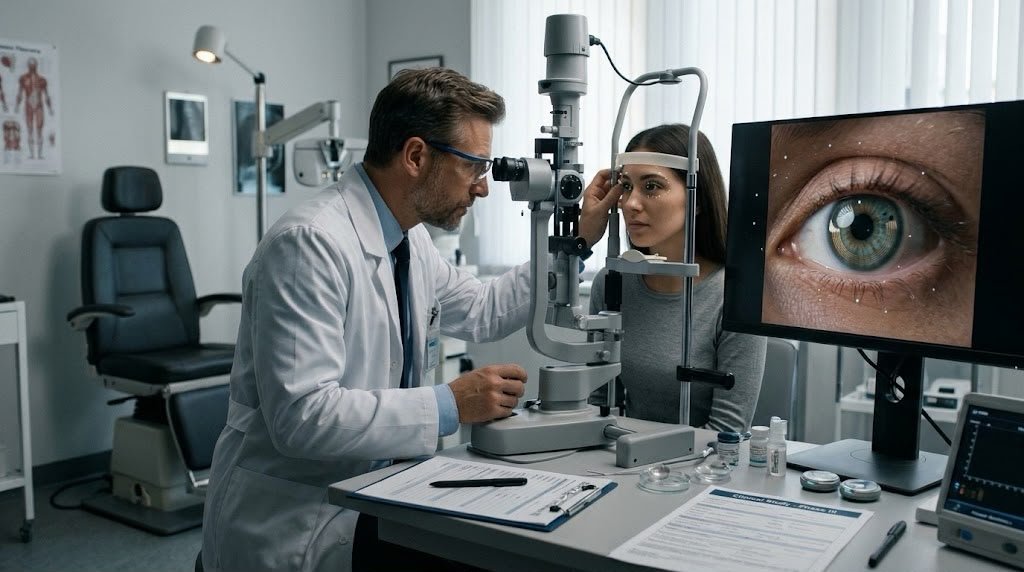
Transitioning any emerging technology from a physics laboratory prototype into a commercially available medical or consumer device requires navigating an exceptionally rigorous gauntlet of clinical safety testing and regulatory approvals. Because smart contact lenses are classified as advanced prescription medical devices or wearable electronics resting directly on delicate living ocular tissue, health agencies like the U.S. Food and Drug Administration (FDA) enforce stringent evaluation frameworks before granting commercial clearance.
Clinical trials must prove beyond a shadow of a doubt that wearing electronic smart lenses for 8 to 14 hours daily induces zero long-term cellular damage to the cornea, alters tear film stability minimally, and prevents any localized thermal or electrical irritation. Researchers must demonstrate that internal battery components are chemically stable and completely isolated from fluid exposure even under extreme environmental conditions. Navigating these multi-phase human clinical trials ensures that when consumer-ready smart contact lenses finally hit the market, they prioritize human biological safety above all else.
15. Generative AI & Ocular Augmented Reality Interfaces
The true transformative catalyst accelerating the practical utility of smart contact lenses is the simultaneous integration of wearable ocular displays with advanced generative artificial intelligence models. While micro-LEDs provide the visual medium and biocompatible hydrogels provide the physical platform, artificial intelligence acts as the cognitive engine driving the entire contextual computing experience.
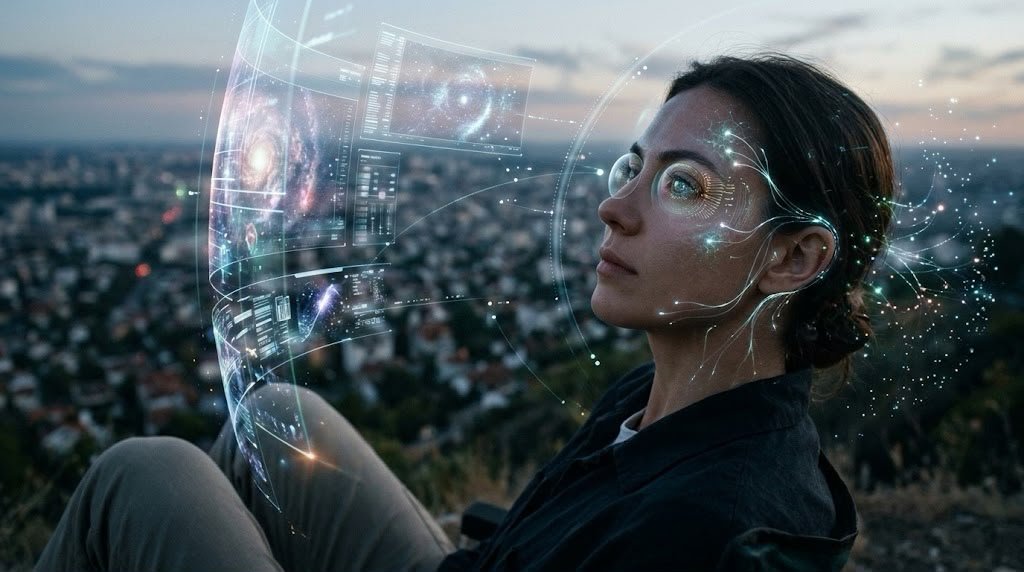
Imagine walking through a foreign city wearing smart contact lenses. Rather than pulling out a smartphone to search for restaurant reviews or translate street signs, your AI assistant analyzes your live field of view in real time. Foreign text is translated instantly and projected as subtle, native-language subtitles over physical storefronts. If you spot a historic landmark, contextual historical facts and architectural details appear seamlessly in your peripheral vision.
16. Intellectual Property, Patent Landscapes, and Global Corporate Rivalries in Ocular Nanotechnology
The rapid commercial maturation of smart contact lenses and micro-display ocular electronics has triggered an intense, multi-billion-dollar corporate race for intellectual property dominance. Major technology conglomerates, specialized deep-tech startups, and legacy optical giants are fiercely patenting every conceivable breakthrough in biocompatible micro-electronics, wireless power harvesting, tear-fluid electrochemical bio-sensing, and liquid-crystal refractive zoom optics. Securing foundational patents in this nascent industry dictates which corporations will control the supply chains, licensing frameworks, and commercial distribution channels of the upcoming screenless computing era.
This high-stakes corporate rivalry has transformed university research laboratories and nanotech spin-offs into prime acquisition targets. Venture capital firms and sovereign wealth funds are pouring massive capital injections into biomedical engineering teams capable of solving the notoriously difficult manufacturing yield hurdles associated with sub-millimeter silicon integration and soft hydrogel bonding. Furthermore, navigating global patent landscapes requires aggressive legal strategies to prevent intellectual property infringement across international jurisdictions.
17. The Ethical and Societal Implications of Constant Ocular Recording and In-Eye Surveillance
The transition toward invisible, body-worn computing devices—specifically smart contact lenses capable of projecting digital displays and capturing visual data directly from the wearer’s line of sight—introduces profound ethical dilemmas regarding privacy, surveillance, and personal consent.This absolute invisibility raises terrifying dystopian possibilities concerning unauthorized, covert recording, secret photography, and non-consensual biometric data harvesting in public spaces.
When individuals can record high-definition video or stream live visual feeds to cloud servers simply by blinking or executing subtle eye movements, the fundamental social contract of public privacy is shattered. Bystanders lose any reasonable expectation of privacy in elevators, public transit, private offices, and social gatherings. To mitigate these catastrophic societal risks, ethicists, legal scholars, and privacy advocates are arguing for rigorous legislative guardrails and mandatory hardware indicators—such as localized optical polarization shifts or subtle visual cues—that alert bystanders when an in-eye sensor is actively recording. Balancing the immense medical and lifestyle benefits of ocular computing against the absolute preservation of civil liberties represents one of the most critical societal challenges of our technological future. For deeper ethical explorations into wearable surveillance and privacy rights, read papers via Electronic Privacy Information Center (EPIC) Legal Portal alongside security guides on My Tech Hub Security Portal.
18. Medical Disruption: Non-Invasive Diagnostics and Chronic Disease Management via Tear Telemetry
While consumer enthusiasts fixate on augmented reality HUDs and digital zoom capabilities, the most profound and immediate societal impact of smart contact lenses will undoubtedly unfold within the clinical medical sector. Traditional chronic disease management—particularly for systemic disorders like diabetes, glaucoma, cardiovascular complications, and neurological conditions—relies heavily on intermittent, invasive diagnostic testing. Diabetics must endure the daily pain of finger-prick blood draws multiple times a day, while glaucoma patients face infrequent, highly subjective intraocular pressure measurements taken during clinical eye exams.
Smart contact lenses equipped with continuous electrochemical tear-fluid biosensors completely eliminate these invasive diagnostic friction points. By analyzing complex biomarkers dissolved in basal and reflex tears in real time, smart lenses generate continuous, unbroken physiological curves that track glucose fluctuations, chemical imbalances, and pressure spikes twenty-four hours a day. This continuous medical telemetry empowers physicians with unprecedented diagnostic precision, enabling automated insulin delivery triggers, early pharmacological interventions for glaucoma before irreversible optic nerve damage occurs, and proactive health alerts sent directly to mobile medical records. For further clinical research documentation on non-invasive diagnostics, explore papers via National Institutes of Health (NIH) Biomedical Portal or clinical evaluations on My Tech Hub Software Directory.
19. Neurological Integration, Cognitive Load, and Human Information Processing Limits
The integration of augmented reality visual displays and real-time data overlays directly onto the human retina forces neuroscientists and cognitive psychologists to re-examine the biological limits of human information processing. Throughout human evolutionary history, our brains evolved to filter and process sensory input from our physical surroundings at a measured, organic pace. When digital notifications, text messages, navigation prompts, and generative AI data summaries are projected continuously into our direct field of view through smart contact lenses, the human brain faces an unprecedented barrage of cognitive stimulation.
Cognitive load theory suggests that overloading the visual cortex with persistent augmented reality HUDs can lead to severe mental fatigue, diminished situational awareness, and dangerous distraction hazards—especially if users attempt to navigate physical traffic or operate machinery while processing in-eye data streams. To combat cognitive exhaustion, user interface designers working on spatial operating systems are pioneering attention-aware notification frameworks. These intelligent algorithms ensure that digital overlays appear only when explicitly requested or contextually vital, preserving natural human cognitive bandwidth and preventing sensory overload.
20. Environmental Sustainability and E-Waste Challenges in Microscopic Electronics
As consumer electronics manufacturers race to miniaturize wearable technology down to the microscopic scale of soft contact lenses, the long-term environmental consequences of deploying disposable micro-electronics warrant rigorous ecological scrutiny. Traditional contact lenses are already notorious contributors to environmental microplastic pollution; millions of users flush disposable plastic lenses down bathroom sinks or discard them into household trash, where they break down into toxic micro-pollutants that infiltrate aquatic ecosystems and food chains.
Integrating solid-state micro-batteries, gallium nitride micro-LED emitters, gold RF inductive coils, and delicate semiconductor silicon chips into disposable daily or monthly contact lenses introduces severe e-waste hazards. Discarding microscopic electronic components into municipal waste streams risks leaching heavy metals and toxic chemicals into soil and groundwater. Consequently, materials scientists and sustainable manufacturing engineers are heavily prioritizing the development of biodegradable semiconductors, edible polymer electronics, and eco-friendly hydrogel matrices that dissolve harmlessly into organic byproducts after use, ensuring that the dawn of ocular computing does not come at the devastating expense of planetary health.
21. Accessibility, Low-Vision Rehabilitation, and Empowering the Visually Impaired
While mainstream consumer marketing frequently frames smart contact lenses as futuristic gaming and productivity gadgets, their most noble and transformative application lies in low-vision rehabilitation and medical accessibility for individuals suffering from severe visual impairments. Millions of people globally suffer from degenerative eye conditions—such as advanced macular degeneration, retinitis pigmentosa, Stargardt disease, and legal blindness—that leave them unable to read printed text, recognize faces, or navigate independently.
Smart contact lenses equipped with dynamic liquid-crystal zoom optics, real-time contrast enhancement algorithms, and digital edge-detection processors offer life-changing visual restoration. By dynamically magnifying text in real time, amplifying ambient light in low-visibility environments, and projecting high-contrast visual outlines around physical obstacles in the user’s field of view, smart lenses can restore functional independence to legally blind patients. This profound medical rehabilitation transcends mere entertainment, empowering vulnerable populations to navigate the physical world with renewed confidence and dignity.
22. The Ultimate Convergence: Ambient Computing, Neural Linking, and Post-Screen Realities
Looking far beyond the immediate horizon of micro-LED smart contact lenses and augmented reality eyewear, visionary computer scientists and neurotech futurists are charting the ultimate trajectory of human-computer interaction: the total dissolution of physical screens, external wearable hardware, and mechanical input devices. Smart contact lenses represent an extraordinary, necessary stepping stone on humanity’s journey toward ambient computing—demonstrating that digital information can be seamlessly fused with our natural biological field of view without encumbering our bodies with bulky computers.
As research into direct brain-computer interfaces and retinal-cortical neural bridging accelerates over the coming decades, the boundaries between human biological perception and digital intelligence will continue to blur. Whether through soft hydrogel contact lenses resting on the cornea or direct neural impulses transmitted straight to the visual cortex, computing is ceasing to be an external tool that we hold in our hands or strap to our faces. It is rapidly becoming an invisible, ambient, organic extension of human consciousness itself—redefining what it means to see, to learn, and to connect in an increasingly digital universe.
Frequently Asked Questions (FAQ)
Q1: Can smart contact lenses give me superhuman zoom vision?
A: Initial commercial and medical smart contact lenses focus primarily on assisting low-vision patients with contrast enhancement and modest digital magnification (such as helping those with macular degeneration read text). While optical liquid-crystal zoom mechanics are being actively researched, full superhuman telescopic vision remains in early experimental stages.
Q2: Are smart contact lenses safe for daily 12-hour wear?
A: Consumer-ready smart contact lenses are still undergoing rigorous clinical trials and FDA safety evaluations. Ensuring absolute corneal oxygen permeability and biocompatibility during extended wear is the primary focus of ongoing medical research.
Q3: How do smart contact lenses prevent electrical shorts from eye moisture?
A: Smart lenses utilize advanced hermetic sealing, atomic-layer-deposited alumina barriers, and medical-grade silicone coatings that completely isolate internal micro-circuits and power systems from fluid exposure and tear chemistry.
Conclusion: Are Zoom and Augmented Reality Coming Straight to Your Eyes?
So, are zoom and augmented reality coming straight to your eyes? The definitive answer is yes, the technological foundation is officially under construction, but mass-market commercial availability is still unfolding.
- The engineering barriers are real. Fitting micro-LED displays, wireless power antennas, and biometric sensors into a soft lens thinner than a human hair represents one of the most grueling challenges in modern electronics.
- The medical and visual future is undeniable. As clinical trials validate ocular safety and manufacturing yields improve, smart contact lenses will transition from laboratory curiosities into life-changing medical diagnostics and seamless augmented reality HUDs.
Keep your eyes open; the boundary between human biology and digital computing is dissolving faster than ever before.