
Introduction:
For decades, consumer artificial intelligence has existed primarily as disembodied software entities living behind glass screens—answering queries through smart speakers, generating text in browser windows, or optimizing algorithmic recommendations on smartphones. While these digital assistants transformed how we search for information, manage schedules, and consume media, they remained fundamentally detached from the physical reality of our daily lives. They could tell you how to bake a cake or schedule a calendar reminder, but they could not walk into your kitchen, retrieve the ingredients from the refrigerator, stir the batter, or load the dishwasher.
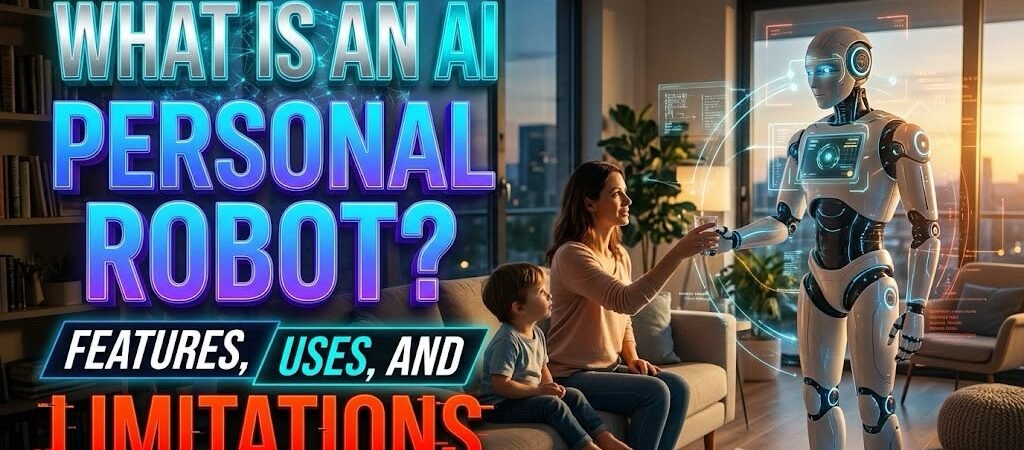
Today, rapid breakthroughs in edge computing, computer vision, LLM-powered reasoning, and lightweight mechanical engineering are collapsing the barrier between digital software and physical reality. We have entered the era of the AI personal robot—autonomous, mobile, embodied artificial intelligence systems engineered to navigate human living spaces, interact with everyday household objects, understand natural conversational commands, and assist humans with domestic, educational, and caregiving labor.
What is an AI personal robot, what architectural features define its capabilities, how are households utilizing these machines, and what technical, ethical, and financial limitations constrain their mainstream adoption? In this comprehensive, exhaustive guide, we will deconstruct the anatomy of domestic social robots, analyze computer vision and manipulation algorithms, explore eldercare and household automation use cases, and evaluate whether personal robots are ready to become standard fixtures in modern homes.
1. Defining the AI Personal Robot: Beyond Sci-Fi Trope to Embodied Domestic Intelligence
To understand what an AI personal robot is, one must first distinguish it from traditional industrial robotic arms, single-purpose robotic vacuum cleaners, and remote-controlled telepresence toys. For generations, science fiction popularized anthropomorphic androids capable of human-level versatility, emotional empathy, and physical labor. While fully general-purpose humanoid androids remain on the bleeding edge of deep-tech development, contemporary AI personal robots represent a pragmatic commercial stepping stone: mobile, task-flexible robotic platforms equipped with onboard neural networks that enable autonomous adaptation to unstructured indoor environments.
An AI personal robot is fundamentally characterized by embodied artificial intelligence. Unlike cloud-bound large language models, an embodied robot possesses a physical body complete with sensor arrays (cameras, LiDAR, microphones, tactile skin), local computation units (onboard NPUs and GPUs), and actuators (servomotors, hydraulic or electric joints, mobile wheel bases or legs). It perceives its physical surroundings, constructs real-time spatial maps, reasons about tasks using multimodal AI models, and manipulates physical objects.
Whether designed in a sleek desktop companion form factor or as an upright mobile humanoid chassis, a personal robot bridges the gap between digital computation and physical assistance, transforming passive home automation into active, dynamic physical labor.
2. Historical Evolution: From Industrial Robotic Arms to Mobile Autonomous Companions
The historical lineage of AI personal robots traces its roots through decades of industrial automation, academic robotics competitions, and early experimental social robots. In the mid-20th century, industrial robotics was confined strictly to caged, high-precision mechanical arms welding automotive chassis on repetitive factory assembly lines. These industrial systems possessed zero autonomy; they executed rigid, hard-coded G-code scripts in sterile environments isolated from human workers.
As microprocessors grew cheaper and sensor technologies matured through the 1990s and 2000s, roboticists began venturing out of industrial cages and into unstructured human environments. Landmark academic projects—such as Honda’s ASIMO humanoid robot and Sony’s AIBO robotic dog—demonstrated that machines could navigate walking bipedal paths or exhibit rudimentary social behaviors, though their underlying cognitive software remained brittle and rule-based. The commercial watershed moment arrived with the introduction of autonomous robotic vacuum cleaners (like the Roomba), proving that consumers embraced autonomous mobile hardware for tedious domestic chores.
The true modern renaissance of AI personal robots, however, was unlocked by the generative AI boom of the 2020s. By replacing rigid, hard-coded path-planning algorithms with multimodal foundational vision-language-action (VLA) models, roboticists finally endowed personal robots with common-sense reasoning, open-vocabulary object recognition, and conversational adaptability. This historical convergence of cheap sensors, advanced neural simulation, and generative AI transformed personal robotics from a fragile academic novelty into a viable consumer product category.
3. Hardware Anatomy: Sensors, Actuators, End-Effectors, and Mechanical Chassis Design
Building a personal robot capable of operating safely and effectively inside a chaotic residential home requires orchestrating a complex symphony of advanced hardware components. Every physical subsystem must balance mechanical robustness, energy efficiency, aesthetic appeal, and manufacturing cost.
The primary hardware layers of an AI personal robot include:
- Perception Sensor Arrays: High-resolution RGB cameras, stereoscopic depth sensors, LiDAR units, ultrasonic proximity sensors, and spatial microphone arrays that capture continuous multimodal streams of the environment.
- Locomotion and Drive Actuators: High-torque brushless DC motors powering omnidirectional wheel bases, articulated legs, or continuous tracks that enable smooth indoor navigation.
- Manipulation End-Effectors: Articulated robotic arms featuring multi-fingered dexterous hands or soft pneumatic grippers capable of applying variable grasping force without crushing delicate objects.
- Skeletal Chassis and Materials: Lightweight carbon-fiber composites, high-impact polycarbonate plastics, and anodized aluminum frames designed to withstand accidental bumps and falls while keeping total robot weight manageable.
Orchestrating these physical hardware layers demands sophisticated real-time control loops, ensuring that sensory inputs translate into smooth, human-safe mechanical actuation within milliseconds.
4. Edge Computing and Onboard Neural Processing Units (NPUs) in Domestic Hardware
A foundational architectural decision in designing AI personal robots is determining where computation occurs: in remote cloud data centers or locally on the robot’s onboard edge hardware. While cloud-based processing offers virtually limitless compute capacity for heavy large language models, relying exclusively on cloud connectivity for domestic robotics introduces fatal operational liabilities.
If a personal robot relies on a cloud server to process real-time computer vision data for obstacle avoidance or emergency braking, a sudden Wi-Fi outage, network latency spike, or cloud gateway timeout could cause the robot to collide with a pet, tumble down a flight of stairs, or fail to respond to an emergency safety stop command.
Consequently, modern AI personal robots feature powerful edge computing architectures anchored by dedicated on-board Neural Processing Units (NPUs), Tensor Processing Units (TPUs), and high-performance GPU silicon. These local processors execute lightweight, highly optimized foundation models directly on the robot’s motherboard. Cloud connectivity is reserved strictly for high-level semantic planning, memory synchronization, and complex task decomposition, ensuring that safety-critical perception, obstacle avoidance, and emergency motor control remain entirely local, autonomous, and lightning-fast. For further hardware architecture case studies, explore documentation via IEEE Computer Society Portal alongside hardware evaluations on My Tech Hub Hardware News.
5. Natural Language Processing and Conversational Understanding in Social Robotics
Interacting with early-generation consumer robots required memorizing rigid command syntaxes, pressing physical button arrays, or navigating clunky smartphone companion apps. This linguistic friction prevented mainstream consumer adoption because machines failed to understand natural, unscripted human speech.
AI personal robots revolutionize human-robot interaction through advanced Natural Language Processing (NLP) and multimodal conversational agents powered by on-board large language models. When a user speaks a casual, ambiguous command—such as “Hey robot, could you grab me my reading glasses from the coffee table and maybe turn down the living room lights?
- Intent Recognition: Identifies the primary user goals (retrieving glasses, adjusting home automation).
- Entity Extraction: Identifies specific objects (“reading glasses”) and spatial locations (“coffee table,” “living room”).
- Task Decomposition: Breaks the compound request into sequential physical sub-tasks (navigate to living room, identify glasses on table, grasp gently, navigate back to user, release).
Furthermore, modern social robots synthesize expressive vocal tones, pitch modulation, and conversational pauses, transforming cold mechanical automation into an engaging, empathetic social dialogue that builds natural rapport with human users.
6. Computer Vision, Depth Sensing, and Spatial Mapping (SLAM) in Indoor Environments
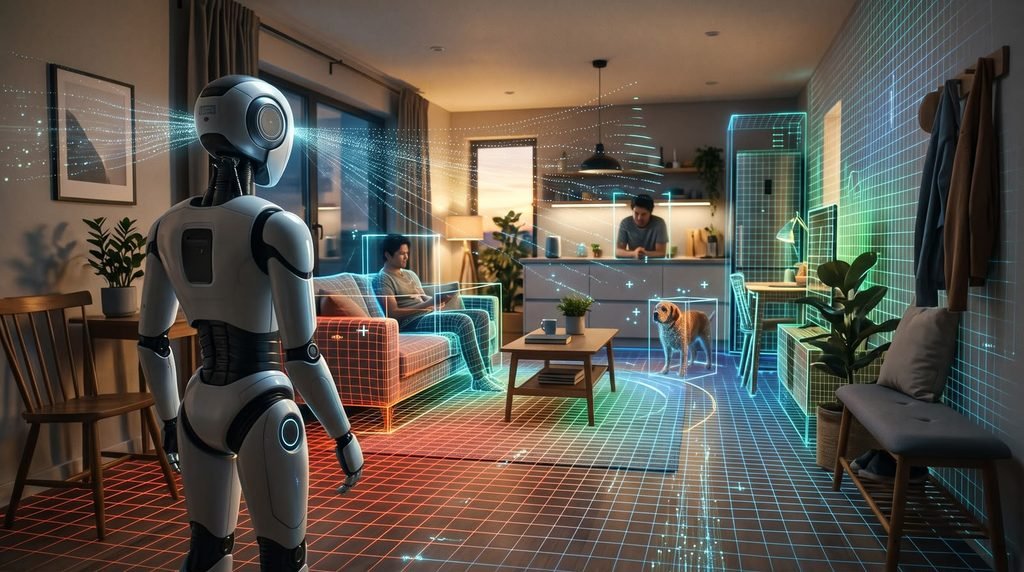
To navigate a home without bumping into furniture, crushing misplaced toys, or tumbling down staircases, an AI personal robot must possess sophisticated spatial awareness. This perceptual capability is driven by advanced computer vision and Simultaneous Localization and Mapping (SLAM) algorithms.
As the robot moves through a home, its stereoscopic depth cameras and LiDAR sensors capture millions of spatial data points per second, constructing a real-time, three-dimensional metric and semantic map of the interior architecture. SLAM algorithms calculate the robot’s exact position within that map concurrently while updating structural obstacles as furniture is rearranged or doors are closed.
Beyond basic obstacle avoidance, advanced computer vision empowers personal robots with semantic scene understanding. The robot does not merely see a generic bounding box; it recognizes semantic categories—distinguishing between a fragile ceramic vase, a sleeping cat, a electrical power cord, and a human foot. This semantic intelligence allows the robot to dynamically adjust its navigation speed and path-planning parameters, prioritizing safety and courtesy when operating in shared human spaces.
7. Bipedal Locomotion vs. Wheeled Mobility: Navigating Domestic Architectural Layouts
When engineering the physical mobility platform of an AI personal robot, roboticists face a fundamental mechanical design dilemma: should the robot travel on wheels or walk on bipedal legs? Each locomotion paradigm possesses distinct engineering trade-offs regarding mechanical complexity, energy efficiency, and environmental adaptability.
- Wheeled and Tracked Mobility: Wheeled bases (differential drive or omnidirectional mecanum wheels) represent the commercial gold standard for domestic robots. Wheels are mechanically simple, highly energy-efficient, stable, and cost-effective to manufacture. However, wheeled robots face severe architectural limitations in multi-story residential homes: they cannot climb flights of stairs, step over threshold strips, or navigate cluttered floors littered with laundry.
- Bipedal and Quadrupedal Legged Locomotion: However, bipedal walking requires complex dynamic balancing control loops, massive computational power, expensive servo actuators, and consumes battery power at alarming rates.
Consequently, current consumer personal robots rely primarily on stable wheeled or hybrid wheeled-leg bases, reserving expensive bipedal humanoid form factors for industrial logistics and luxury domestic markets.
8. Dexterous Robotic Manipulation: Grippers, Tactile Feedback, and Object Handling
Navigating a home is useless if a personal robot cannot physically interact with household objects. Robotic manipulation—the science of grasping, holding, lifting, and utilizing everyday items—represents one of the most notoriously difficult challenges in artificial intelligence and mechanical engineering.
Human hands possess an extraordinary combination of multi-joint dexterity, adjustable grip force, and rich tactile feedback. Picking up an egg requires applying mere grams of pressure to avoid crushing the shell, whereas lifting a heavy cast-iron skillet requires firm, high-torque gripping force. Replicating this biological versatility in mechanical end-effectors involves combining several advanced subsystems:
- Underactuated Multi-Fingered Hands: Robotic fingers embedded with independent micro-motors and tendon cables that mimic human grasp configurations.
- Tactile Electronic Skin: High-resolution arrays of pressure, vibration, and temperature sensors covering the gripper pads, giving the robot a synthetic sense of touch.
- Vision-Based Grasp Planning: Neural networks that analyze an object’s geometry, weight distribution, and surface friction in real time, calculating optimal contact points for stable grasping.
These manipulation breakthroughs allow modern personal robots to perform delicate domestic tasks, from folding laundry and organizing bookshelves to pouring drinks without spilling.
9. Emotional Intelligence (EQ) and Affective Computing in Human-Robot Interaction
Unlike industrial robots designed to operate inside sterile, human-free factory cages, AI personal robots are engineered to live intimately alongside human families. In this domestic context, raw computational speed and mechanical efficiency are insufficient; machines must exhibit emotional intelligence (EQ) and affective computing capabilities to foster harmonious, trusting relationships with human users.
Affective computing empowers personal robots to recognize, interpret, process, and simulate human emotional states. Utilizing multimodal sensory inputs, the robot analyzes human facial micro-expressions, vocal tone inflection, body posture, and physiological indicators (when synced with wearable health monitors) to assess whether a user is feeling stressed, lonely, happy, fatigued, or anxious.
Based on these emotional cues, the robot adapts its behavioral responses dynamically. If an elderly user sounds confused or distressed, the robot adopts a gentle vocal cadence, offers comforting conversational reassurance, or alerts designated family members. By synthesizing empathetic social cues and responsive companionship, affective computing bridges the psychological chasm between cold silicon hardware and warm human companionship.
10. Home Ecosystem Integration via IoT Protocols
An AI personal robot does not operate in a vacuum; in a modern smart home, it functions as the mobile, physical avatar of the home’s broader ambient intelligence and IoT ecosystem. While fixed smart home hubs like wall-mounted touch panels or smart speakers remain stationary, a personal robot roams freely, acting as a mobile control interface for household automation.
Through secure IoT communication protocols (such as Zigbee, Z-Wave, Matter, and Thread), the personal robot integrates seamlessly with smart home appliances:
- Automated Environmental Adjustments: As the robot moves from a chilly bedroom into a sunlit kitchen, it communicates directly with smart thermostats and motorized window blinds to optimize ambient temperature and lighting.
- Appliance Telemetry Monitoring: The robot can physically check whether the oven was left on, verify if exterior doors are locked during its evening security patrol, or inspect a smart washing machine reporting an error code.
This deep IoT integration transforms the personal robot from a standalone gadget into the central coordinating intelligence of the entire smart residence. For further smart home integration case studies, explore documentation via Connectivity Standards Alliance Matter Portal alongside industry guides at My Tech Hub Business Portal.
11. Elderly Care and Assisted Living: Supporting Aging Populations at Home
Perhaps the most socially impactful and commercially urgent application domain for AI personal robots lies in elderly care and assisted living. Across developed nations globally, aging demographic curves—characterized by shrinking birth rates and expanding elderly populations—have created an unprecedented caregiving crisis. Millions of aging seniors desire to age in place within their own homes, yet face growing vulnerability regarding fall risks, medication adherence, chronic disease management, and social isolation.
AI personal robots offer a transformative technological safety net for aging-in-place seniors:
- Fall Detection and Emergency Response: Equipped with continuous computer vision monitoring and spatial radar, personal robots detect accidental slips or falls instantly, initiating emergency calls to family members or medical services if the senior fails to respond.
- Medication Reminders and Dispensing: Robots track complex pharmacological schedules, delivering the correct prescription dosages at precise times and confirming ingestion.
- Cognitive and Social Stimulation: Through interactive games, memory-recall exercises, and conversational companionship, robots combat the devastating psychological toll of senior loneliness and cognitive decline.
These caregiving capabilities alleviate severe pressures on human nursing infrastructure while preserving dignity and independence for aging adults.
12. Childcare, Education, and Interactive STEM Learning Companionship
In addition to supporting aging populations, AI personal robots are carving out a powerful niche in childcare, early childhood education, and interactive STEM learning. Traditional screen-based educational devices (tablets and computers) frequently encourage passive consumption, sedentary behavior, and digital fatigue in young children. Social robots, by contrast, offer an embodied, physically engaging educational partner.
Educational personal robots function as patient, endlessly adaptive tutors:
- Personalized Language Learning: Acting as native-speaking conversation partners for children practicing foreign languages, adjusting vocabulary complexity in real time based on the child’s comprehension level.
- STEM and Coding Education: Teaching fundamental programming logic, robotics mechanics, and mathematical problem-solving through interactive, game-based physical challenges.
- Storytelling and Imagination: Narrating dynamic children’s stories where the robot utilizes expressive gestures, sound effects, and spatial movement to bring characters to life.
By blending educational pedagogy with physical social interaction, personal robots foster active curiosity, critical thinking, and social-emotional development in young learners.
13. Household Chores, Cleaning, Kitchen Assistance, and Domestic Chore Automation
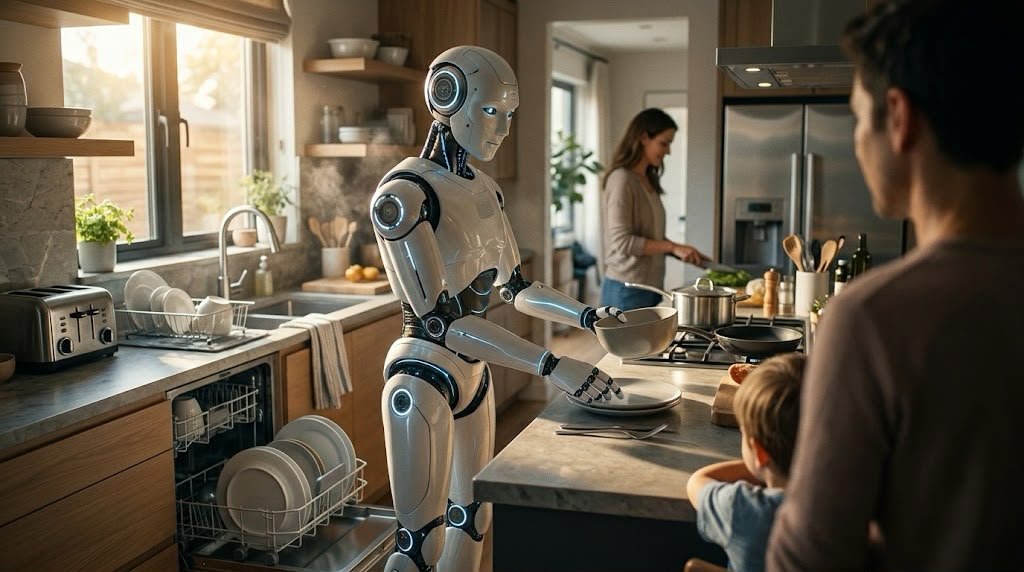
The ultimate consumer fantasy driving the commercial marketing of AI personal robots is the total automation of tedious domestic labor—the iconic “robot butler” depicted in science fiction for over a century. While current domestic robots cannot yet clean an entire multi-story home, fold every basket of laundry, and cook gourmet meals simultaneously, they are rapidly mastering core household chores.
Current chore automation capabilities span several key domains:
- Advanced Floor Care: Moving beyond basic random-bounce vacuuming, AI robots perform autonomous deep cleaning, spot scrubbing, and obstacle navigation around delicate rugs and pet waste.
- Kitchen Assistance: Retrieving beverage cans from refrigerators, loading dishwasher racks, and operating microwave appliances via smart IoT integration.
- Tidying and Organization: Picking up stray shoes, gathering scattered toys, and returning items to designated storage containers using adaptive computer vision and soft gripping hands.
As manipulation algorithms and battery endurance improve, domestic chore automation will transition from a luxury novelty into an indispensable household utility.
14. Security, Surveillance, and Home Monitoring Capabilities of Personal Robots
Home security has traditionally relied on static security cameras mounted in fixed wall corners, leaving blind spots, requiring complex wiring, and frequently generating annoying false alarms triggered by pets or shifting shadows. AI personal robots introduce a revolutionary upgrade to residential safety through autonomous mobile security patrolling.
Equipped with night-vision cameras, thermal sensors, glass-break acoustic detectors, and smoke-alarm audio recognition, personal robots conduct scheduled or random patrol routes throughout a residence while human occupants are asleep or away at work.
- Dynamic Blind-Spot Elimination: Unlike fixed cameras, a mobile robot investigates strange noises, checks open windows, and inspects unusual heat signatures by rolling directly to the source of the anomaly.
- Intruder Deterrence: Upon detecting an unrecognized human presence, the robot can stream live encrypted video feeds to the homeowner’s smartphone, sound an audible alarm, and issue verbal challenges.
This active mobile monitoring provides comprehensive, privacy-conscious home security without requiring unsightly wall-mounted hardware installations across every room.
15. Privacy and Data Governance: Managing Video and Audio Feeds in Private Spaces
While the security, convenience, and companionship benefits of AI personal robots are undeniable, their deployment inside the most intimate sanctuary of human life—the private home—raises profound privacy and data governance concerns. A personal robot is essentially a rolling data collection nexus, equipped with continuous video cameras, spatial LiDAR scanners, and always-on microphones capturing your private domestic life twenty-four hours a day.
This continuous data ingestion creates severe privacy vulnerabilities:
- Cloud Data Transmission Risks: If raw video feeds or audio logs are transmitted to external cloud servers for processing, they become vulnerable to corporate data mining, government subpoena access, and devastating cybersecurity breaches.
- Inadvertent Recording of Guests: Visitors, children, and domestic workers entering the home are filmed and monitored without explicit, granular consent.
To mitigate these severe privacy risks, ethical robotics manufacturers prioritize edge-first processing (processing all video and audio locally on the robot’s hardware without cloud storage), physical camera shutter privacy lids, hardware microphone mute switches, and end-to-end cryptographic encryption for any necessary remote app telemetry. Ensuring uncompromising data governance is non-negotiable for consumer trust in personal robotics.
16. Power Management, Battery Autonomy, and Autonomous Docking Mechanics
One of the most persistent engineering bottlenecks plaguing mobile consumer robotics is power management and battery autonomy. Unlike stationary smart home hubs plugged permanently into wall outlets, an AI personal robot must carry its entire electrical energy reserve inside a mobile battery chassis while powering high-torque motors, intensive NPU edge computing chips, continuous vision sensors, and active audio amplifiers.
Under heavy operational loads—such as continuous spatial navigation, conversational interaction, and robotic arm manipulation—current consumer personal robots typically achieve a continuous battery runtime ranging from two to four hours before requiring a recharge.
To maintain continuous operational readiness without demanding constant human intervention, personal robots rely on sophisticated autonomous docking mechanics. When battery levels drop below a critical threshold (e.g., 15%), the robot’s navigation software interrupts its current task, utilizes SLAM mapping to locate its wall-mounted charging station, guides itself precisely onto the inductive charging contacts, replenishes its battery autonomously, and resumes its paused workflow once fully energized.
17. Safety, Compliance, and Collision Avoidance Around Children and Pets
Operating autonomous mechanical hardware in shared living spaces inhabited by unpredictable human toddlers and excitable household pets introduces severe safety risks and strict regulatory compliance requirements. An industrial robotic arm operates safely inside a locked cage; a personal robot rolls freely through a living room floor where a toddler might suddenly crawl into its path or a cat might dart beneath its wheels.
To prevent accidental collisions, crushing injuries, or tipping hazards, AI personal robots incorporate multi-layered safety architectures:
- Redundant Proximity Sensors: Combining capacitive touch-sensitive outer skins, ultrasonic bumpers, and infrared time-of-flight sensors that trigger immediate emergency motor braking within milliseconds of physical contact.
- Compliant Actuators and Soft Materials: Utilizing low-mass chassis designs, soft rubberized bumpers, and variable-impedance actuators that absorb impact energy rather than delivering rigid mechanical force.
- Behavioral Speed Limiting: Automatically restricting maximum movement speeds when operating within proximity of detected human faces or pets.
Ensuring absolute safety compliance is the single most critical engineering hurdle that manufacturers must clear before consumer personal robots can achieve mass-market distribution.
18. Pricing, Commercial Accessibility, and Market Adoption Tiers for Consumers
Like any transformative consumer electronics category during its early commercial infancy, AI personal robots face a steep financial barrier to entry. While a basic robotic vacuum cleaner retails for a few hundred dollars, a fully featured AI personal robot equipped with mobile navigation bases, articulated robotic arms, high-performance edge NPUs, and multimodal conversational AI currently commands luxury price tags ranging from $1,500 to over $10,000.
This premium pricing structure restricts initial commercial adoption primarily to affluent early adopters, high-end tech enthusiasts, luxury smart-home integrators, and specialized assisted-living facilities. However, following the traditional consumer electronics cost-reduction curve observed in smartphones, laptops, and drones, component manufacturing costs for micro-motors, depth sensors, and NPU chips are steadily declining.
As mass-market production scales over the coming decade and modular robotic platforms are subsidized by subscription software services, pricing is projected to drop toward accessible consumer appliance thresholds, mirroring the mainstream adoption trajectory of early washing machines and personal computers.
19. Intellectual Property, Patent Landscapes, and Global Corporate Rivalries
The rapid commercial maturation of AI personal robots, embodied intelligence algorithms, and VLA manipulation models has triggered an intense, multi-billion-dollar corporate race for global intellectual property dominance. Major consumer electronics conglomerates, specialized social robotics startups, autonomous driving spinoffs, and elite academic labs are fiercely patenting every conceivable breakthrough in bipedal balance control, soft robotic gripping, edge-computed SLAM mapping, and multimodal conversational synthesis.
This high-stakes corporate rivalry has transformed robotics research laboratories and artificial intelligence spin-offs into prime acquisition targets. Venture capital firms and multinational tech giants are pouring massive capital injections into mechanical and neural engineering teams capable of solving the notoriously difficult manufacturing yield hurdles associated with consumer-grade domestic robots. Furthermore, navigating global patent landscapes requires aggressive international legal strategies to prevent intellectual property infringement across competing jurisdictions. For comprehensive analyses on robotics patent filings and intellectual property trends in embodied artificial intelligence, explore reports via World Intellectual Property Organization (WIPO) Analytics Portal alongside market strategy guides at My Tech Hub Business Portal.
20. The Future Horizon: Humanoid Form Factors vs. Specialized Functional Design
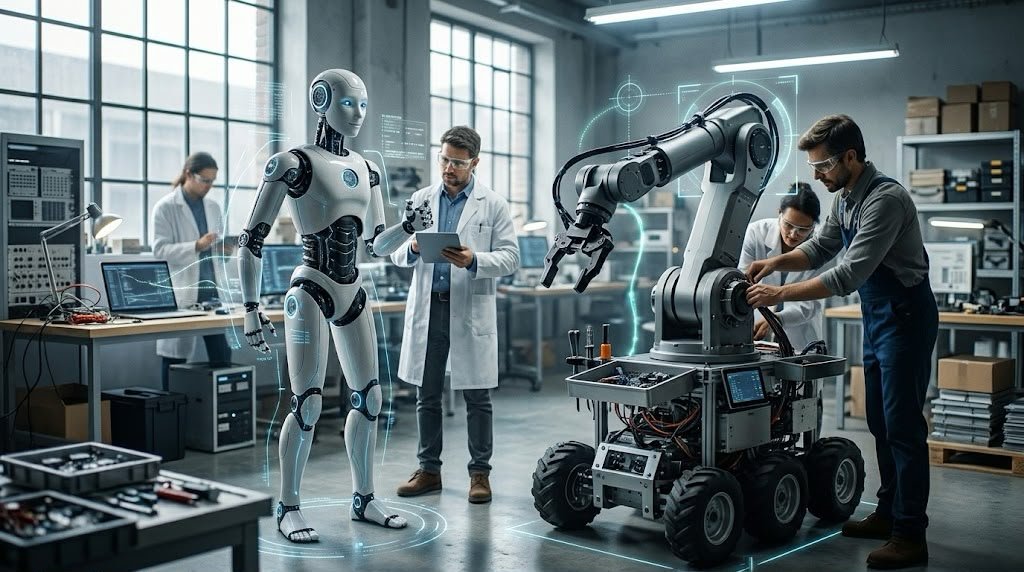
As the consumer personal robotics market matures over the coming decade, a fierce architectural debate divides robotics engineers regarding the ideal physical form factor: upright humanoid bipedal androids versus specialized functional domestic appliances.
- The Humanoid Vision: Advocates for humanoids argue that human living spaces—doors, staircases, kitchen counters, and tool designs—are custom-engineered for human bodies. Therefore, a general-purpose bipedal humanoid can utilize existing human infrastructure without requiring specialized home retrofitting.
- The Specialized Functional Vision: Skeptics argue that humanoid bipedalism is mechanically inefficient, dangerously unstable, and prohibitively expensive for routine domestic chores. They advocate for specialized, modular appliances—such as rolling utility bases with swiable arms or dedicated countertop assistants—optimized specifically for functional efficiency rather than human mimicry.
Whether homes of the future feature sleek bipedal androids or specialized functional robotic assistants, the overarching goal remains identical: empowering humans with intelligent physical assistance.
25. The Ultimate Decision Framework: Evaluating Household Readiness for Personal Robots
As tech-savvy consumers, modern families, and smart-home enthusiasts stand at this historic crossroads between traditional home automation and emerging AI personal robotics, evaluating household readiness requires disciplined strategic planning. Rushing out to purchase a luxury personal robot without analyzing architectural layout, Wi-Fi network stability, family safety requirements, and specific daily pain points can lead to operational frustration and unjustified capital expenditures.
To determine whether integrating an AI personal robot makes financial and practical sense for your household today, evaluate three core pillars: daily labor bottlenecks, budget threshold flexibility, and smart home ecosystem compatibility. If you manage an assisted living situation for an aging parent, require intensive home security patrols, or struggle intensely with daily household chores while commanding a flexible luxury budget, purchasing a personal robot delivers transformative practical value. Evaluate your domestic blueprint, balance upfront capital investment against long-term lifestyle convenience, and decide whether your home is ready to embrace the personal robotics revolution.
Frequently Asked Questions (FAQ)
Q1: What is an AI personal robot?
A: An AI personal robot is an autonomous, mobile, embodied artificial intelligence system designed to navigate indoor human spaces, understand natural conversational commands, and assist humans with domestic chores, security monitoring, education, or elderly care.
Q2: Can AI personal robots do all my household chores?
A: Not yet. While current personal robots can perform basic floor care, retrieve specific items, and assist in the kitchen, they cannot yet handle complex, unstructured multi-step chores like deep cleaning an entire home or cooking complex meals independently. They serve as supportive assistants rather than total replacements for human labor.
Q3: Are AI personal robots safe to use around children and pets?
A: Yes. Modern personal robots incorporate multi-layered safety architectures—including redundant proximity sensors, touch-sensitive capacitive skins, soft materials, and automatic speed-limiting algorithms—to ensure they operate safely and avoid collisions around children and pets.
Conclusion: Are AI Personal Robots Ready for the Modern Home?
So, what is an AI personal robot, and are these machines ready to become standard fixtures in our daily lives? The definitive answer is yes, the technological foundation of embodied AI, edge computing, and robotic manipulation has arrived, but consumer-ready mass-market adoption is still unfolding through luxury pricing and functional refinement.
- The paradigm shift is unmistakable. By blending multimodal conversational intelligence with mobile physical hardware, personal robots bridge the long-standing gap between digital software and domestic physical labor.
- The future of the smart home is embodied. As edge hardware costs decline, manipulation dexterity improves, and safety standards mature, personal robots will transition from exclusive luxury novelties into trusted household companions.
Evaluate your household labor bottlenecks, your budget flexibility, and your enthusiasm for cutting-edge technology, and consider whether welcoming an AI personal robot into your home aligns with your future lifestyle roadmap.